


Forex (foreign exchange) is the market where one currency is priced against another. A quote such as EUR/USD 1.0850 means one euro is valued at 1.0850 US dollars. Forex is a global, over-the-counter market with different liquidity providers and execution conditions. Understanding pairs, costs, margin and uncertainty matters more than treating any single chart signal as a promise.
This guide is educational and is not an invitation to open an account or a recommendation to trade a currency pair.
What Is Forex?
Forex is the exchange of currencies through a network that includes banks, central banks, corporations, funds, liquidity providers and retail brokers. Unlike a centralized stock exchange, there is no single global order book for spot Forex. Prices, spreads and available liquidity can therefore differ by venue and time. A broker account gives access to a quoted product; it does not remove market or execution risk.
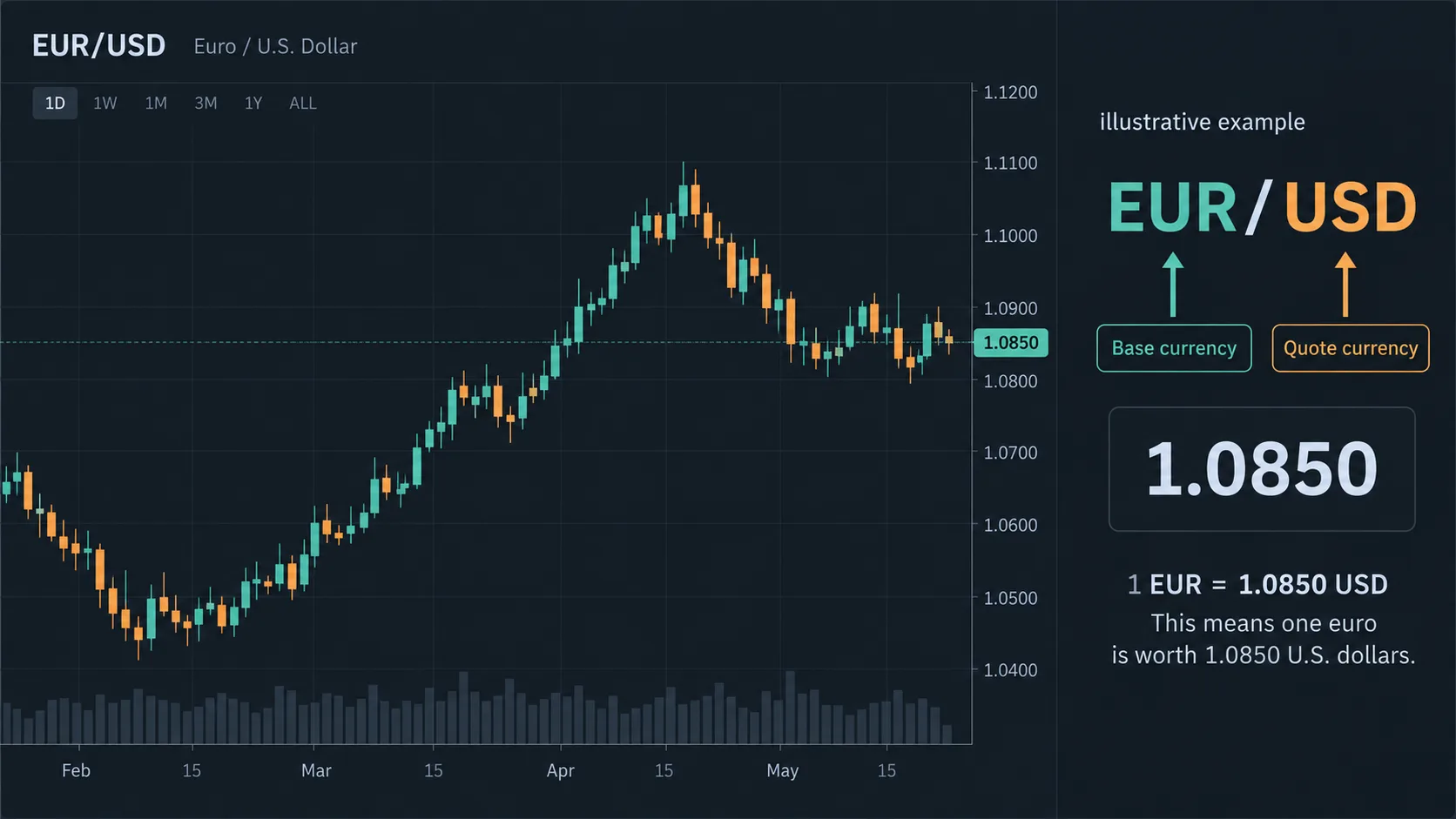
How a Currency Pair Is Quoted
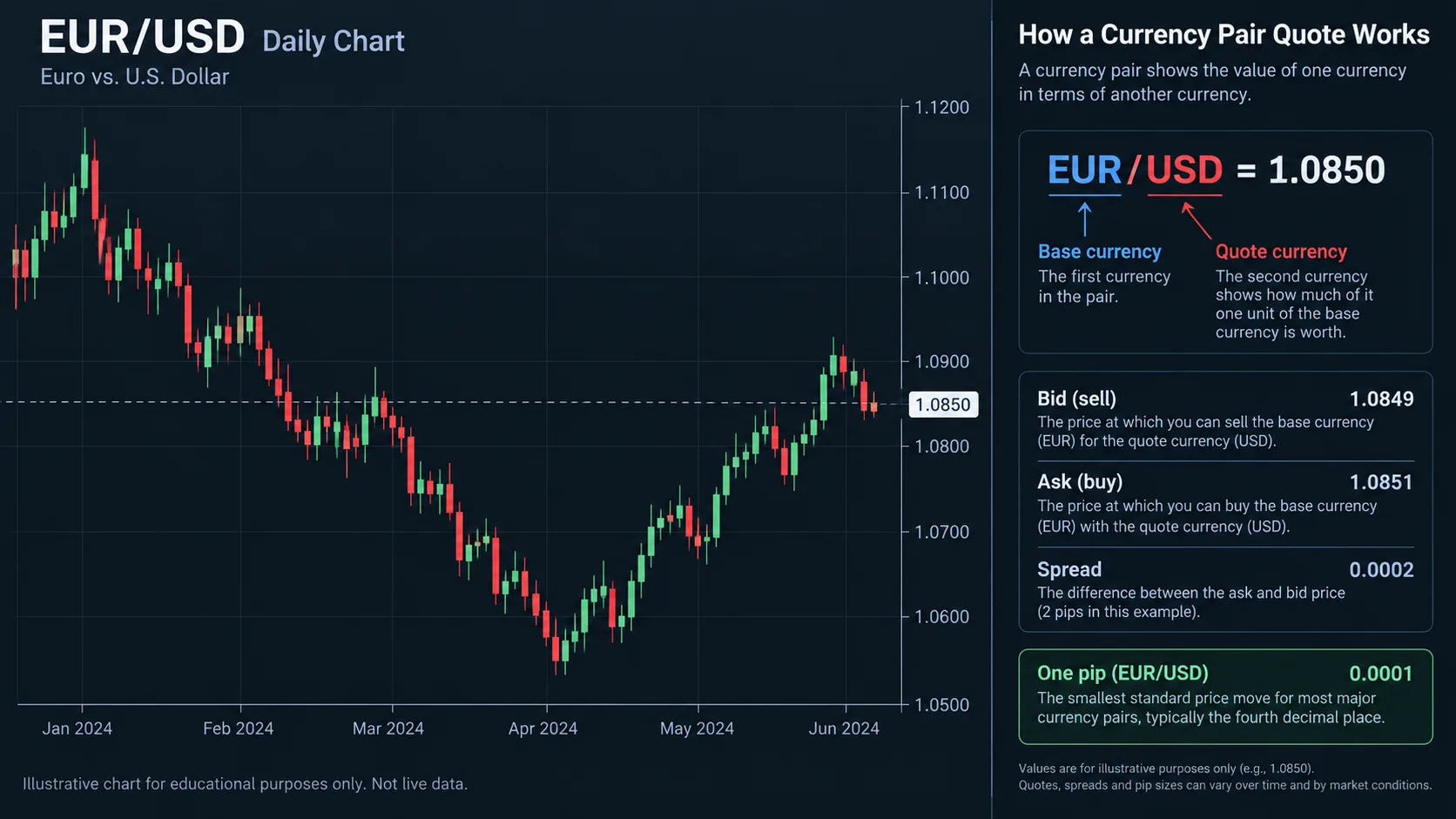
In EUR/USD, EUR is the base currency and USD is the quote currency. At 1.0850, one euro is quoted as 1.0850 US dollars. A rising quote means the euro has appreciated relative to the dollar over the period shown, all else equal. It does not, by itself, determine whether a long or short position would be profitable.
- Bid and ask: the prices at which a provider is willing to buy or sell; the difference is the spread.
- Pip: a conventional price increment. Its cash value depends on the pair, size and account currency.
- Lot or contract size: the quantity controlled by a position; specifications vary by product and provider.
Major, Minor and Exotic Pairs
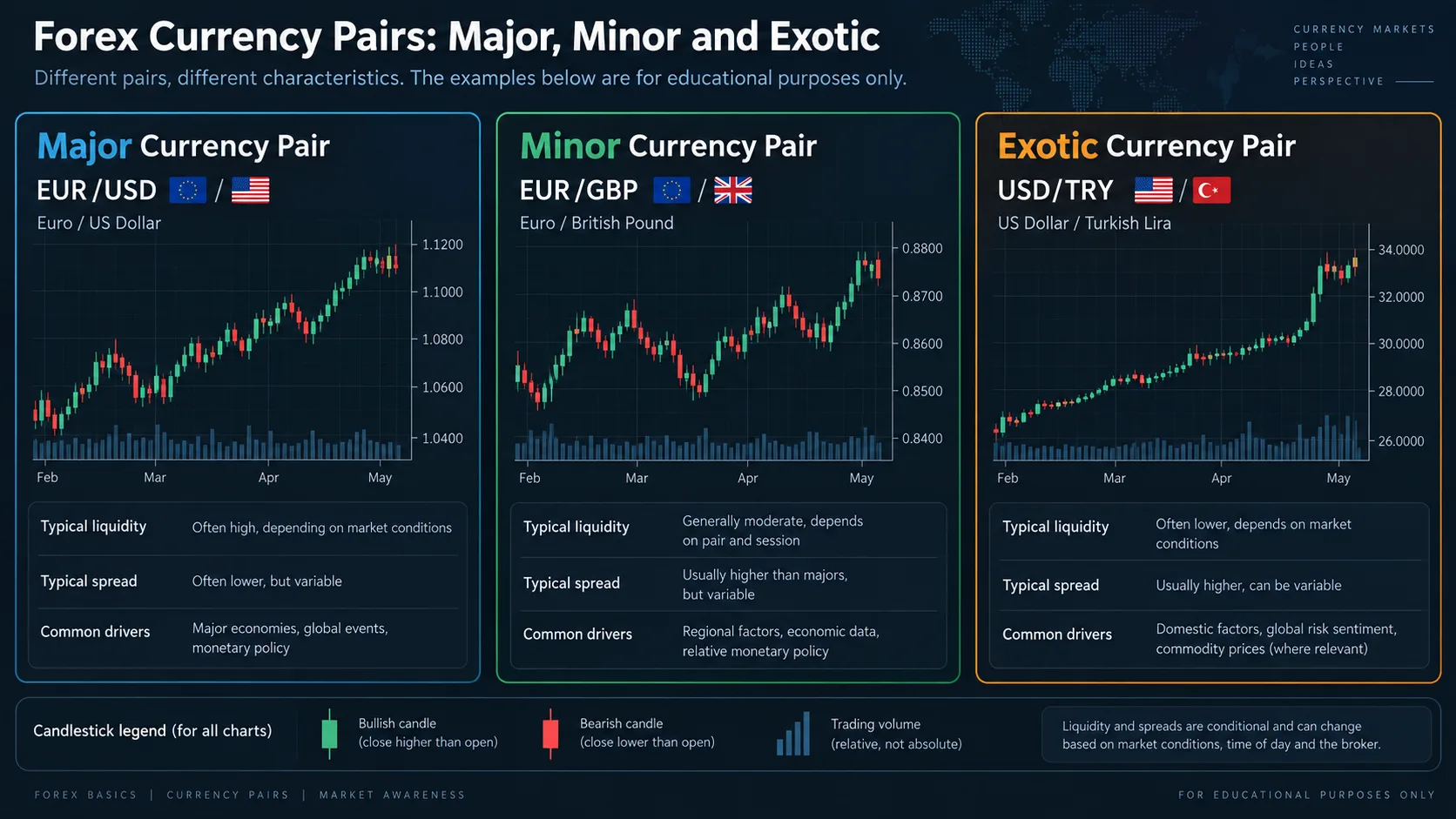
Major pairs commonly include the US dollar and often have deeper liquidity during active sessions. Minor pairs omit USD from the pair. Exotic pairs combine a major currency with a currency from a smaller or emerging economy. These labels are descriptive, not guarantees about spread, slippage or suitability. Check the actual instrument specification and recent execution conditions before making assumptions.
Who Participates in Forex?
- Central banks manage monetary policy and reserves.
- Commercial banks and dealers quote prices and manage flows.
- Importers, exporters and other companies hedge currency exposure.
- Funds and asset managers trade or hedge portfolios.
- Retail traders access broker products whose pricing and margin terms depend on the provider and jurisdiction.
What Moves Exchange Rates?
Interest-rate expectations, inflation and employment data, capital flows, hedging demand, geopolitical risk and positioning can all affect exchange rates. Relationships are conditional: a release may already be priced in, produce a delayed response or be overwhelmed by another event. A headline is context to investigate, not independent proof of direction.
Leverage, Margin and Execution Risk
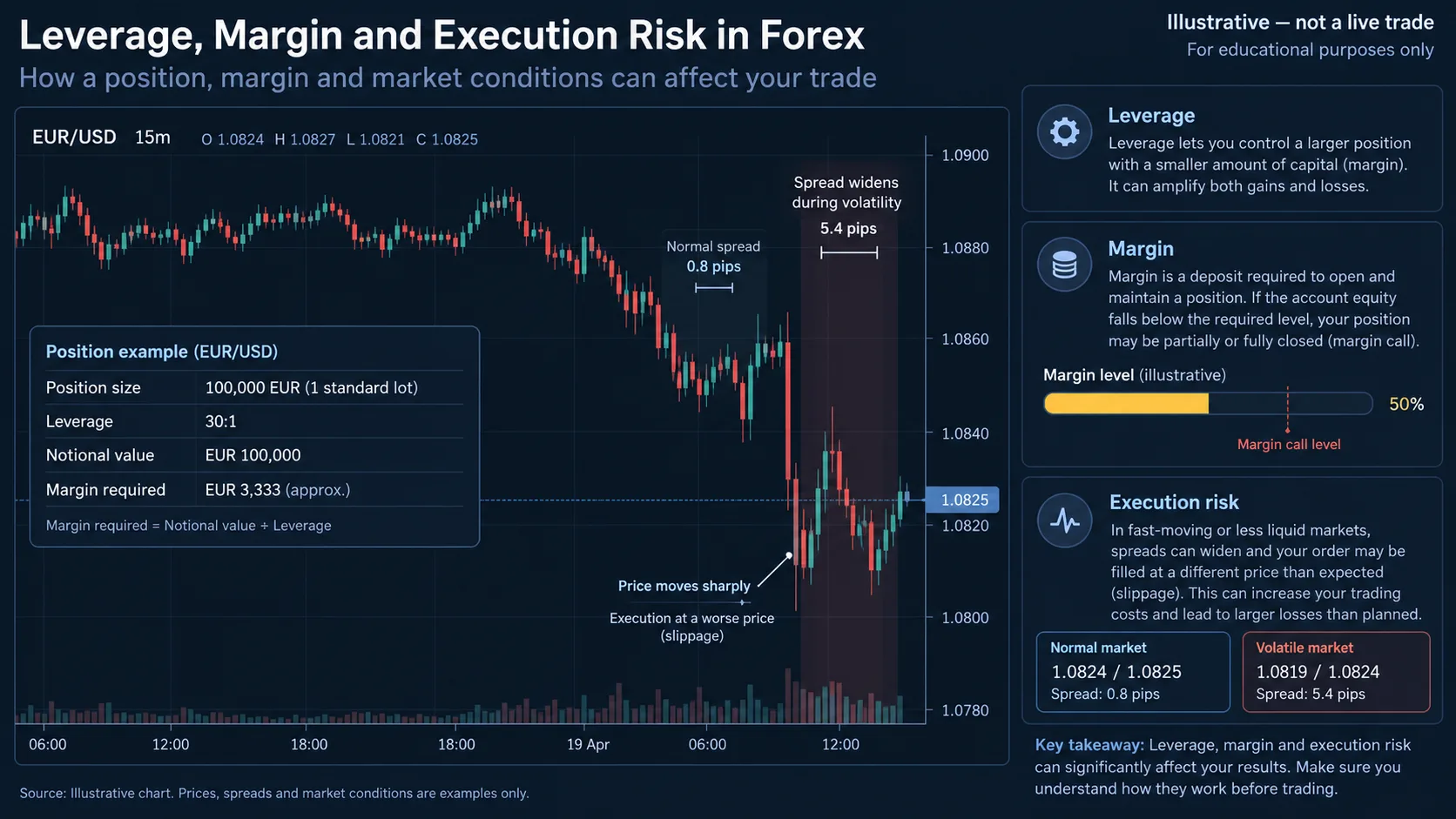
Leverage increases the position controlled per unit of margin; it does not reduce the position’s notional exposure. Margin calls and stop-out rules depend on the product, provider and jurisdiction. Spread widening, slippage, requotes, gaps, platform outages and delayed execution can change the realized result. Read the contract specification and terms that apply where you live. The published position-sizing formula for Forex and CFD trades shows how contract value affects exposure.
For a practical way to compare an outcome with the amount placed at risk, see the risk–reward ratio explanation and check the instrument specification before applying it.
Questions to Ask Before Using a Forex Product
- Which legal entity provides the product, and where can its regulator or register be checked?
- How are spread, commission, swap and margin requirements calculated?
- What are the pip value, contract size and maximum planned cash risk?
- What happens during thin liquidity, market gaps or major news?
- Which data period and assumptions support any published performance claim, and are costs included?
Key Takeaways
- Forex prices one currency in terms of another.
- Base/quote, bid/ask, pip and spread are foundational concepts.
- Leverage changes margin needs and can magnify losses.
- Exchange-rate responses depend on context and expectations, not one headline.
- Understanding the market is not the same as forecasting it reliably.
References
- Bank for International Settlements: Triennial Central Bank Survey
- CFTC: Must-know Forex risk advisory
Risk warning: Forex trading can result in loss of capital, especially when leverage is used. This is educational information, not investment advice. Verify the product, costs, legal entity and suitability for your circumstances.