


A one-step and a two-step prop-firm challenge are different evaluation structures: one has one qualifying stage, while the other has two sequential stages. The number of steps does not tell you which programme is better. Compare the full rule set: loss limits, target, time limits, fees, minimum days, reset, news rules and payout conditions.
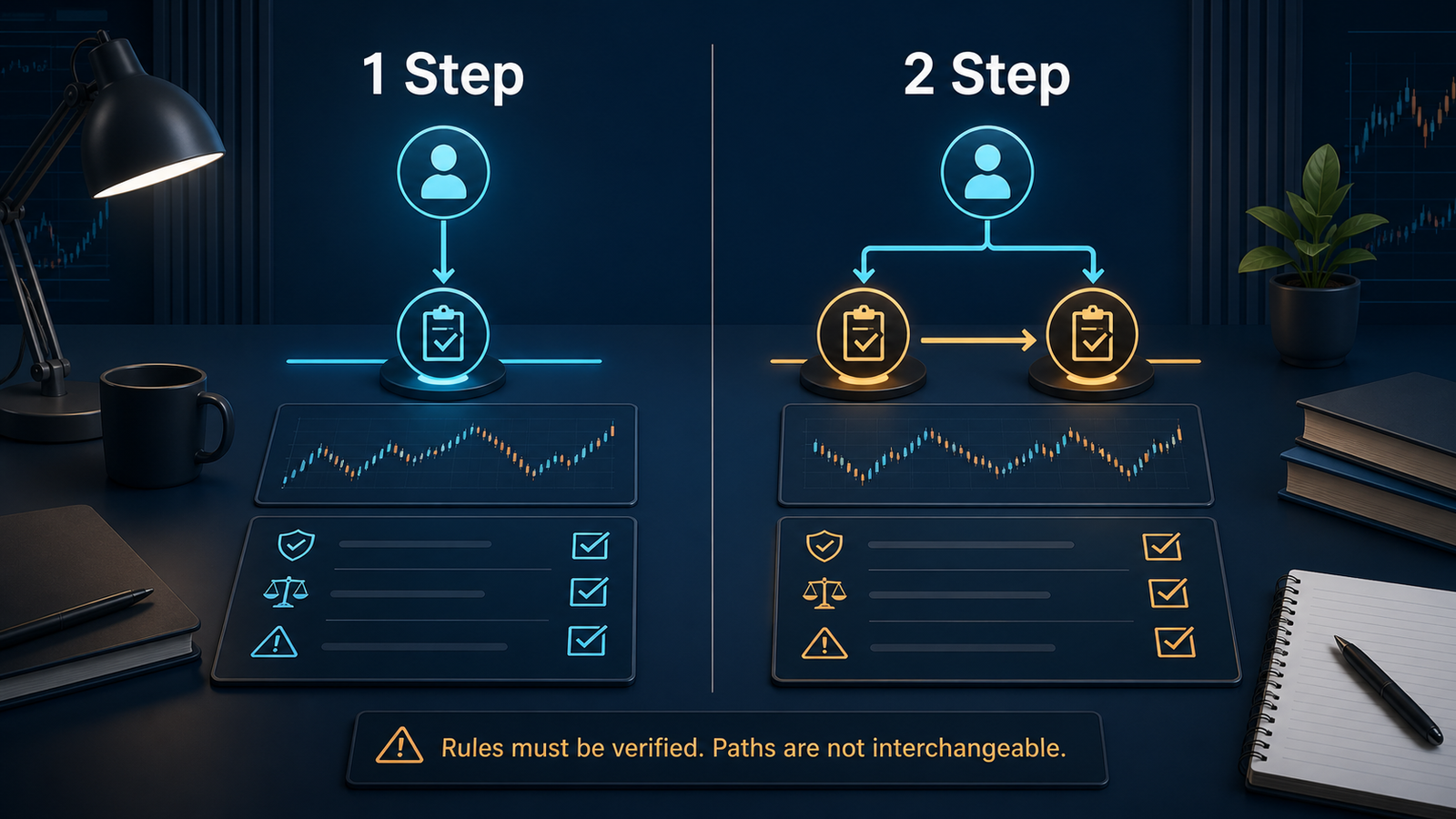
One-step challenge
A one-step evaluation has one stage before a status change under the programme terms. It may look simpler procedurally, but it is not automatically easier. Loss-limit formulas, target, cost and execution restrictions can materially change the risk.
Two-step challenge
A two-step evaluation requires completion of two stages, often with separate requirements. The second stage is not necessarily a simpler copy of the first; inspect target, limits and reset behaviour at each stage.
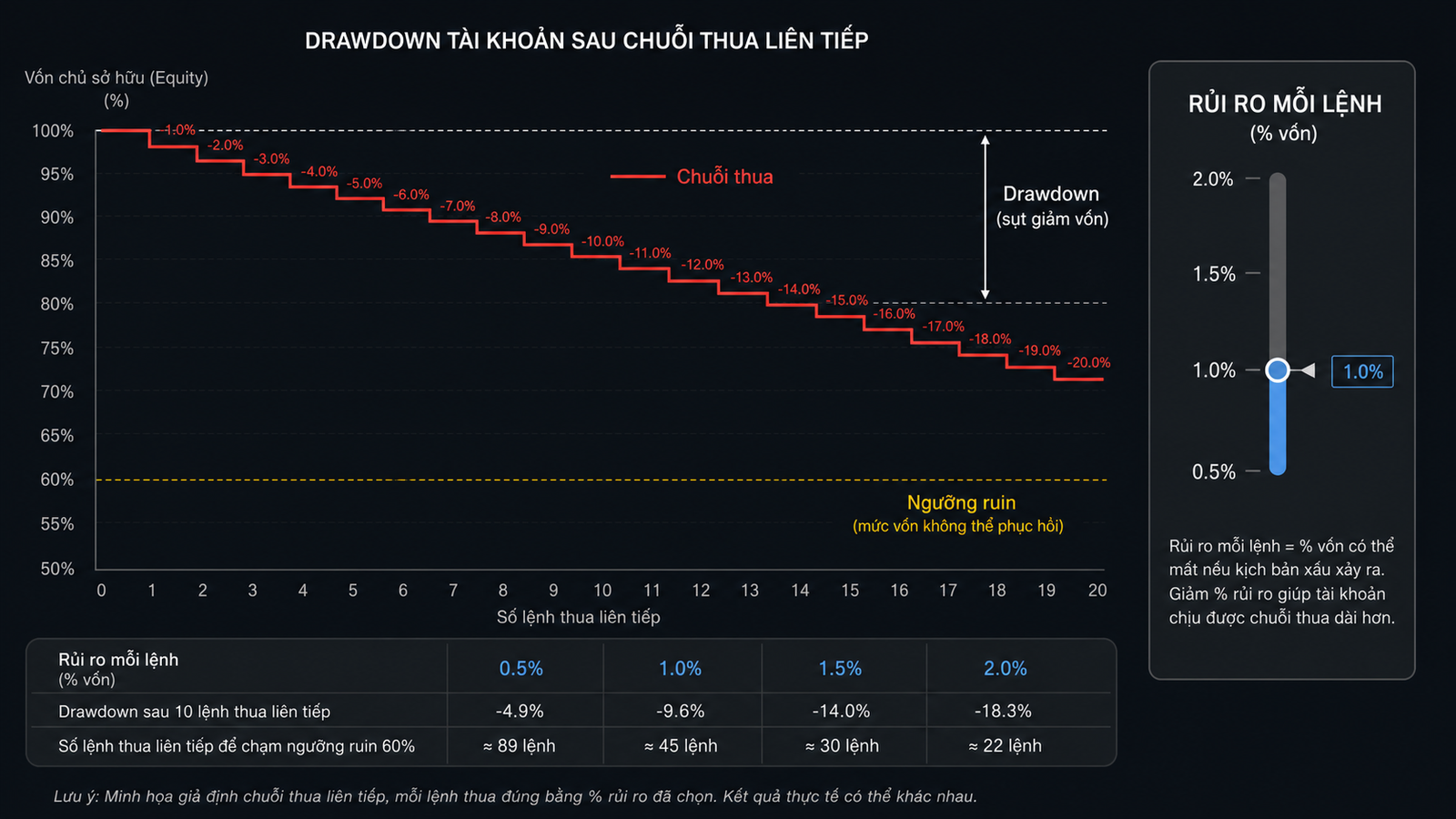
Neutral comparison table
| Item | One-step | Two-step |
|---|---|---|
| Qualifying stages | One | Two |
| Loss limits | Provider-specific formula | Provider-specific and possibly stage-specific |
| Target / time rule | No universal standard | No universal standard |
| Suitability | Depends on method and rule discipline | Depends on method and rule discipline |
Choose with your own evidence
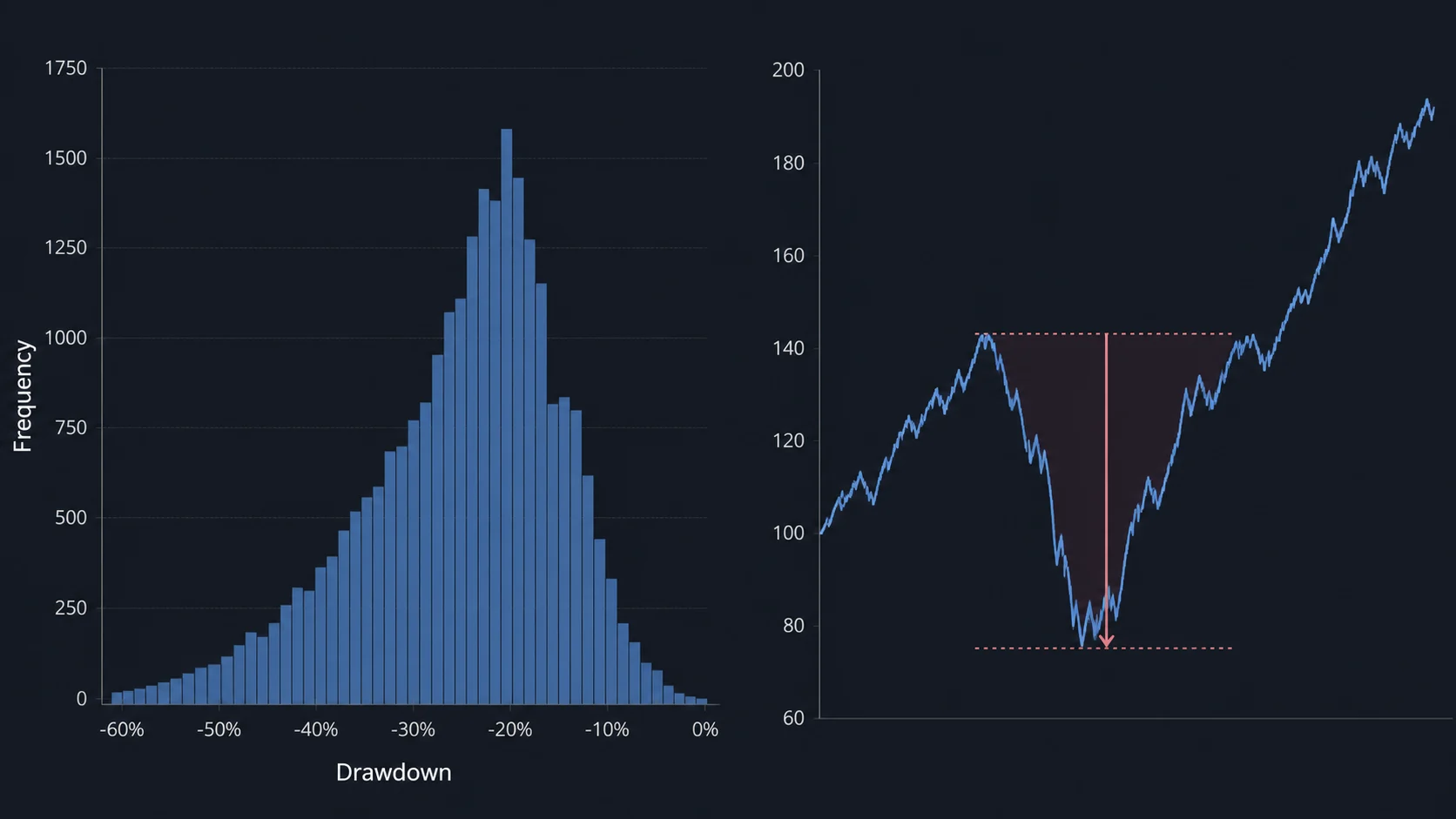
Use your backtest and forward-test journal: longest losing streak, drawdown, trade frequency, holding time and news sensitivity. Place those data beside each programme’s written rules. If you do not have reliable process data, a demo account and journal are usually a safer next step than paying for an evaluation.
Continue learning
Read what is a prop firm, the daily-loss-versus-maximum-loss guide in this Prop Firm Academy and the Trading Glossary.
Read fees, timing and targets together
Two challenges can have the same number of steps but very different total cost, refund terms, time limits, active-day requirements and trading restrictions. Keep your own comparison sheet with the terms URL and verification date. Do not choose from a headline such as “low target” or “fast pass”.
Pre-selection checklist
- Does the method hold positions through news or overnight?
- What is the longest losing streak in your test?
- Is size based on stop distance and loss limits?
- Does the time limit pressure you to increase risk?
- Do the terms support your region and payment options?
FAQ
Is one-step always faster?
It has fewer stages, but that does not establish completion speed or suitability because the detailed rules can differ.
Is two-step always cheaper?
There is no universal standard; compare total cost and current conditions.
Risk disclosure: This is educational information, not investment advice, a solicitation to trade or a promise of passing an evaluation. Prop-firm terms can change. Trading can result in loss of capital; verify the official rules, jurisdiction and your own risk tolerance.