


Margin level, margin call and stop out describe different stages of account equity relative to used margin. Margin level is a ratio; a margin call is a broker-defined warning or restriction; stop out is an automated action that may reduce or close positions. Exact thresholds, sequence and terminology vary by broker, jurisdiction and account agreement.
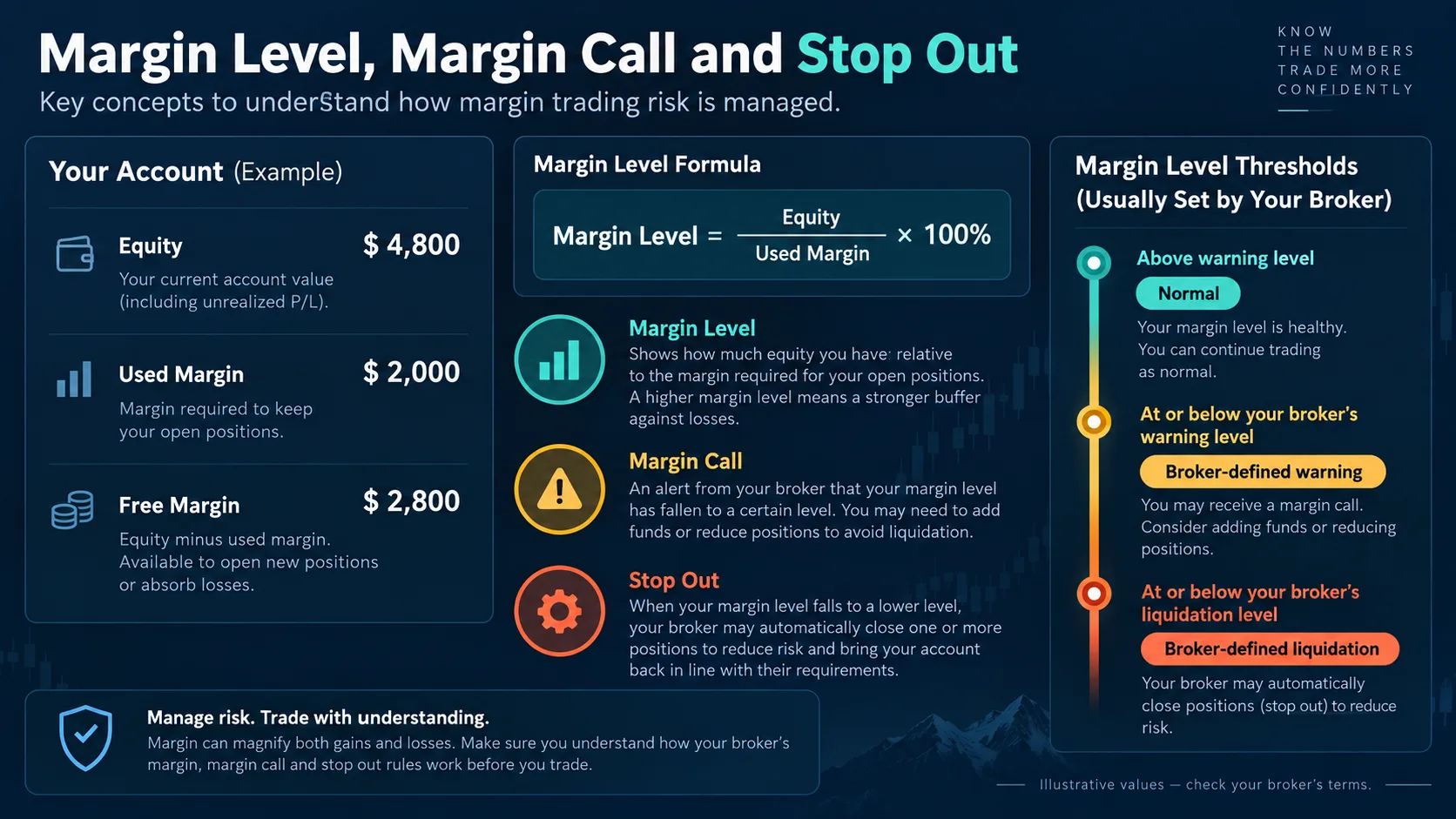
Margin level: the ratio
A common formula is Margin Level = Equity ÷ Used Margin × 100%. Equity includes the account balance plus or minus floating profit/loss; used margin is the collateral held for open positions. Free margin is often Equity − Used Margin. The formula is useful for orientation, but the platform’s specification and broker terms control the actual calculation.
Margin level can fall because equity decreases, used margin increases, leverage changes, or a new position is opened. It can also move quickly when spreads widen or prices gap.
Margin call: a broker-defined warning
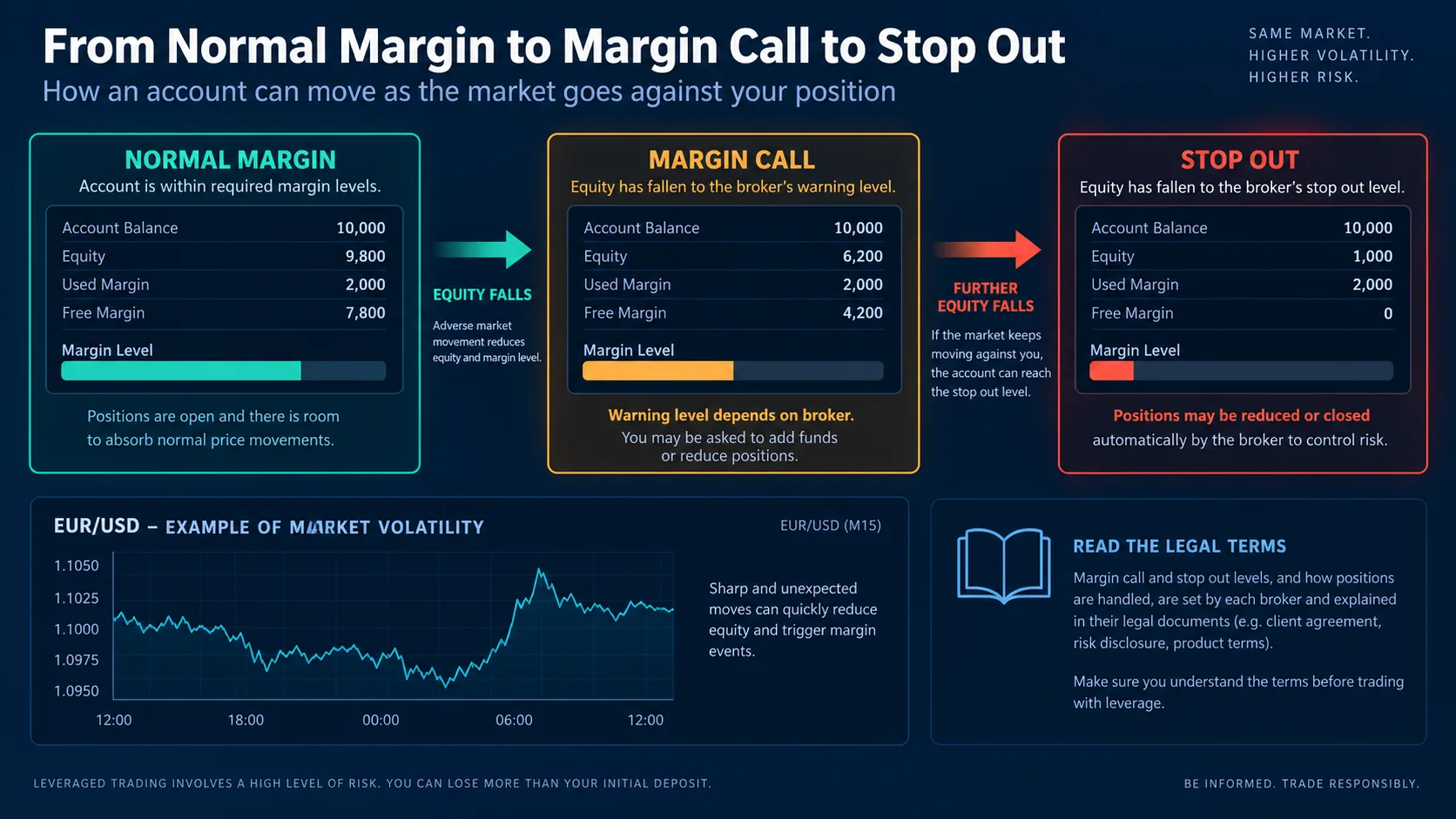
“Margin call” may mean a notification, a restriction on opening new trades, or a requirement to add funds, depending on the agreement. It is not a universal percentage and it does not guarantee that a trader has time to respond. Read the exact wording, calculation time and communication channel in the current terms.
Stop out: a liquidation rule
Stop out is a risk-control process in which the broker may close positions when a specified margin condition is reached. The order of closing, price used, gap handling and whether partial liquidation occurs are provider-specific. A stop out can happen at a worse price than expected during fast markets; it is not a substitute for position sizing.
Illustrative calculation — not a broker threshold
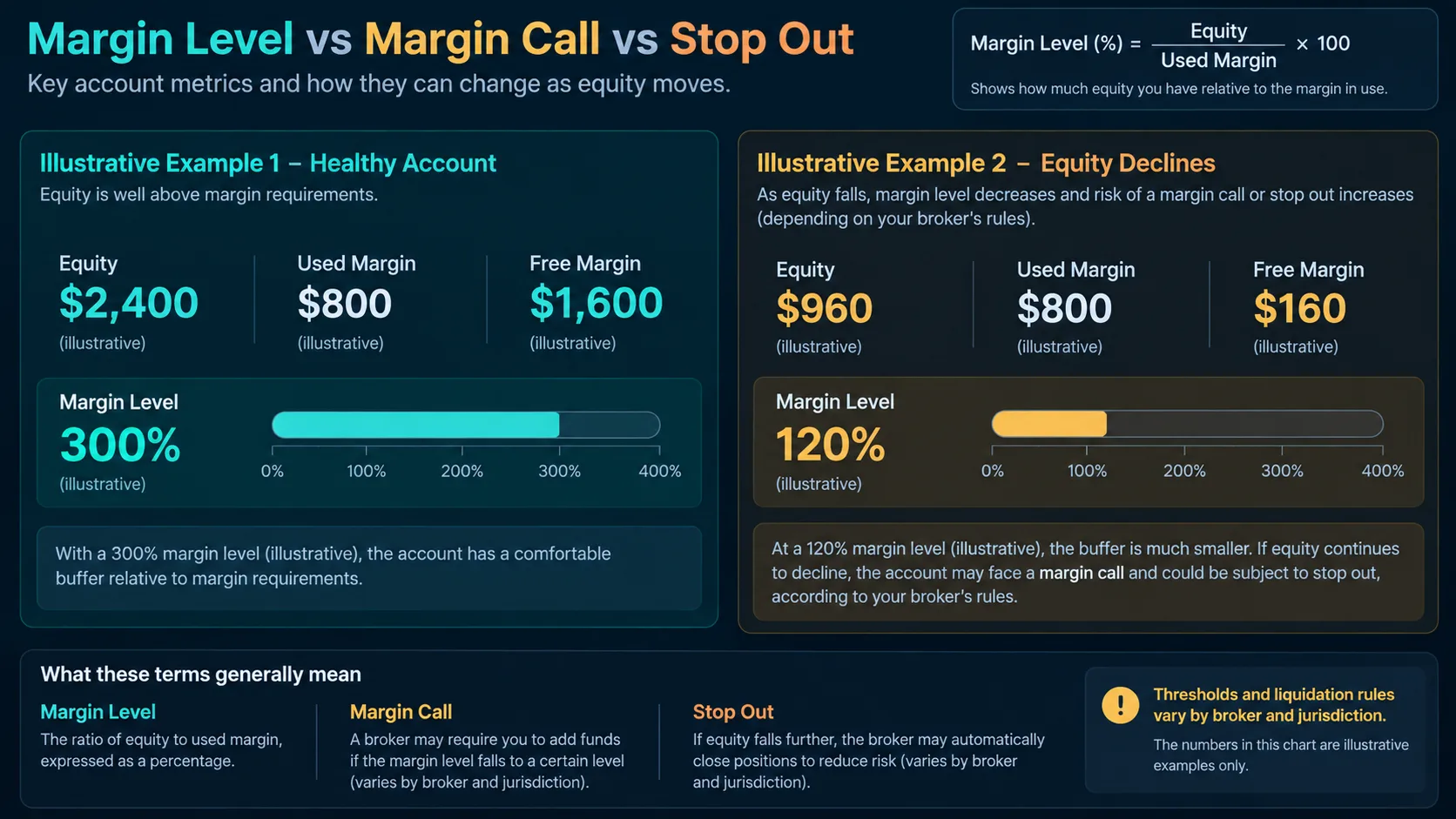
Suppose an illustrative account shows Equity = 2,400 and Used Margin = 800. Margin Level = 2,400 ÷ 800 × 100% = 300%. If equity later falls while used margin is unchanged, the ratio falls. This example demonstrates the formula only; it does not state when any broker will issue a warning or close a position.
What moves margin level?
- Floating P/L and rapid price changes.
- Opening, scaling or hedging positions with different margin rules.
- Leverage, contract size, conversion currency and symbol specification.
- Spread widening, swaps, commissions and financing deductions.
- Gaps, market closures, news and broker-specific liquidation policy.
Controls that reduce margin stress
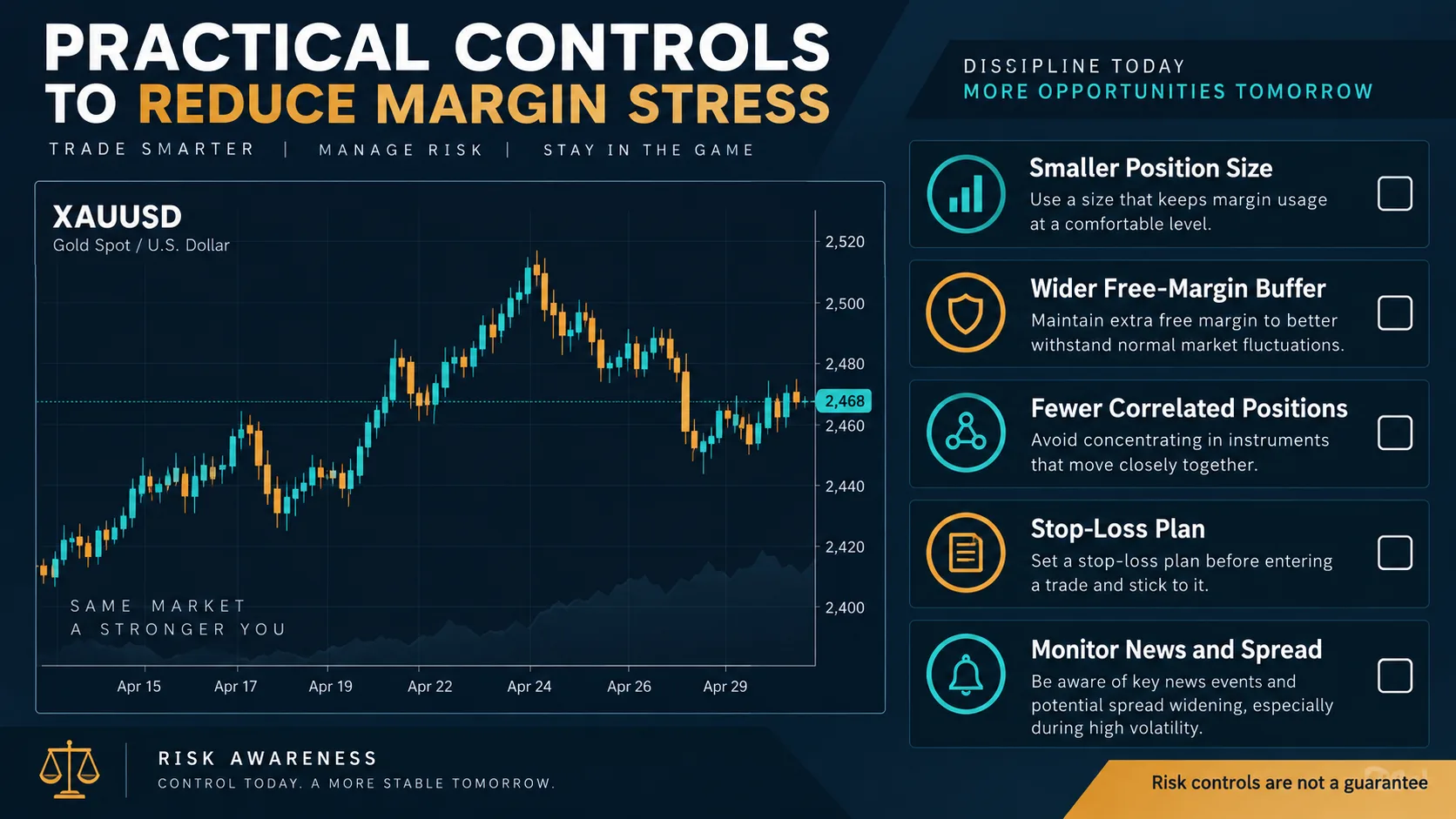
Use a written maximum risk per idea, limit correlated exposure, keep a buffer of free margin, and size positions from stop distance and tick value. Monitor the account before high-impact events and know whether stops are guaranteed or subject to slippage. The position-sizing formula and risk–reward framework help separate exposure decisions from a broker’s liquidation threshold.
Questions to ask before using leverage
- What are the current margin-call and stop-out definitions?
- Are thresholds calculated per position, per account or by product?
- What happens to hedged positions, pending orders and negative equity?
- Which costs are included in equity and when is swap charged?
- How are gaps, slippage and partial liquidation handled?
Key takeaways
- Margin level is a ratio, not a risk limit by itself.
- Margin call and stop out are broker-defined processes.
- Thresholds and liquidation rules vary; never assume a universal percentage.
- Position sizing and free-margin buffer matter more than a high leverage setting.
Sources and further reading
- MetaTrader 5 – Symbol and trading information
- CFTC – Eight Things You Should Know Before Trading Forex
Risk warning: This is educational content, not investment advice. Forex and CFD trading can result in losses. Verify current broker terms, test assumptions on a demo account and risk only an amount you can afford to lose.