


Interest rates affect Forex through policy expectations, yield differentials, capital flows and the way markets price risk. A rate increase does not automatically strengthen a currency: the decision may already be priced in, or forward guidance may change the expected path. This is an analytical framework, not a standalone buy or sell signal.
This article is educational and does not forecast any currency pair.
How Do Interest Rates Affect Forex?
Policy rates influence the expected return and funding cost of a currency, but spot exchange rates respond to relative expectations rather than one number in isolation. Inflation, growth, liquidity and fiscal risk can move yields and risk premia at the same time. Note the release date, jurisdiction and time horizon whenever you make a comparison.
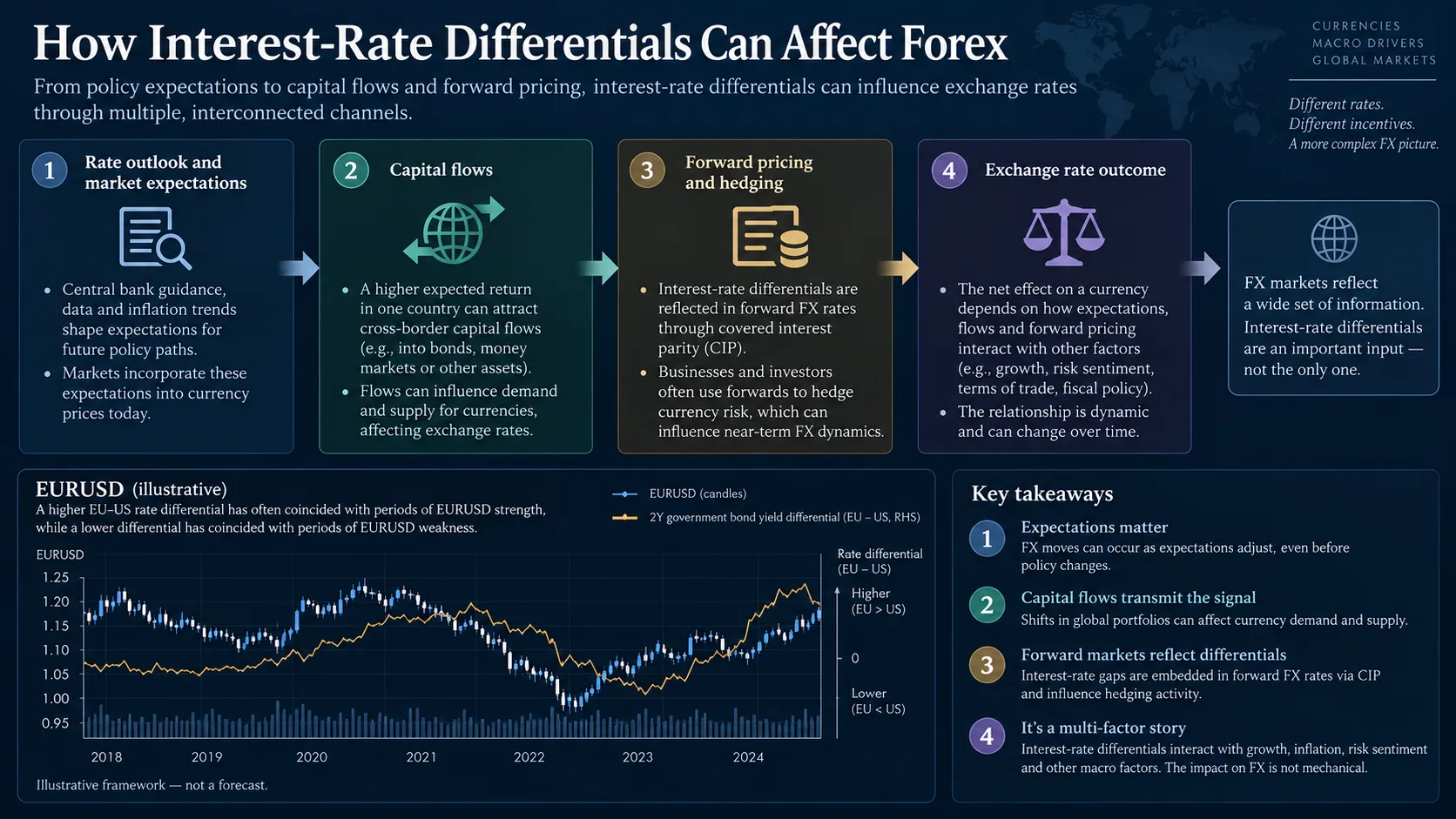
Yield Differentials and Forward Expectations
Analysts often compare expected policy paths between the two economies in a currency pair. The comparison is conditional: nominal yields can rise while real yields or risk appetite move differently. A wider differential may be offset by valuation, hedging demand or a change in expected future cuts. Treat the differential as context that needs corroboration.
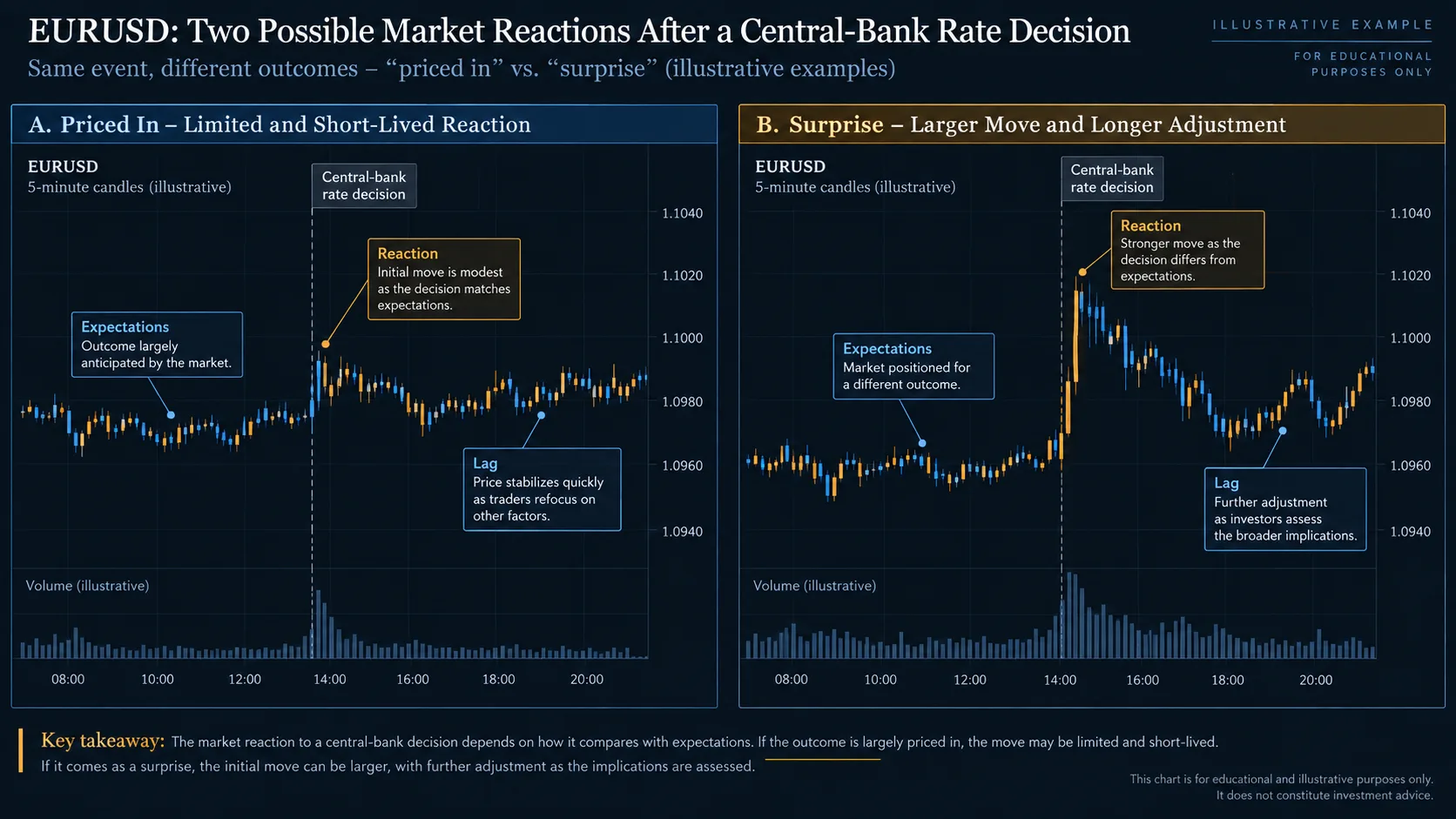
Priced-In Decisions Versus Surprises
When a decision matches consensus, the first move can be muted or reverse as traders read the statement and guidance. A surprise can increase volatility, yet the follow-through still depends on positioning, data and liquidity. The two panels below organize hypotheses; they are not historical results or trade instructions.
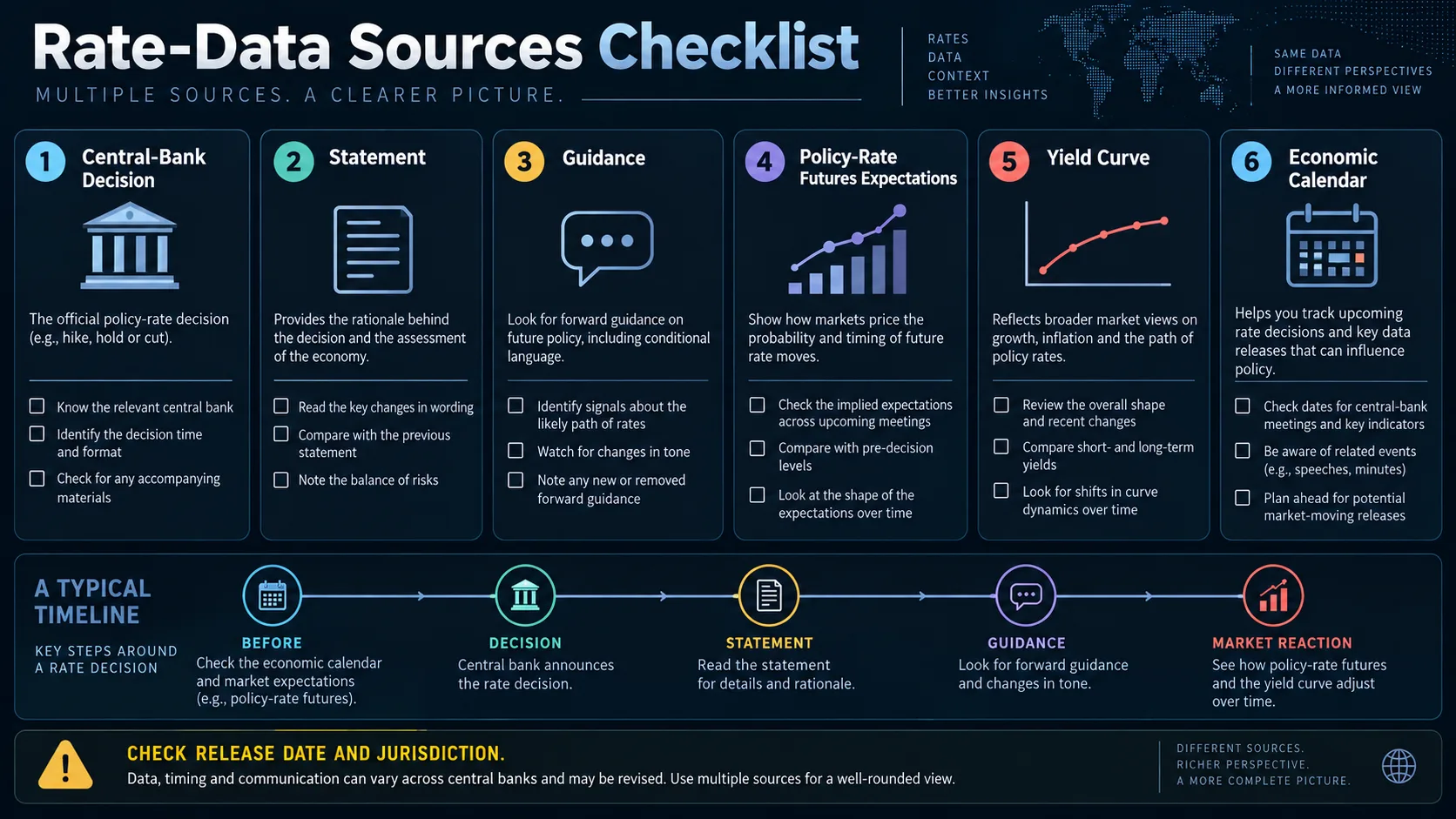
Which Data Sources Matter?
Start with the central bank decision, statement and guidance, then check inflation, employment, policy-rate futures expectations, the yield curve and the economic calendar. Each source has a different release schedule and revision risk. A single headline or yield chart is not enough to establish the direction of a currency.
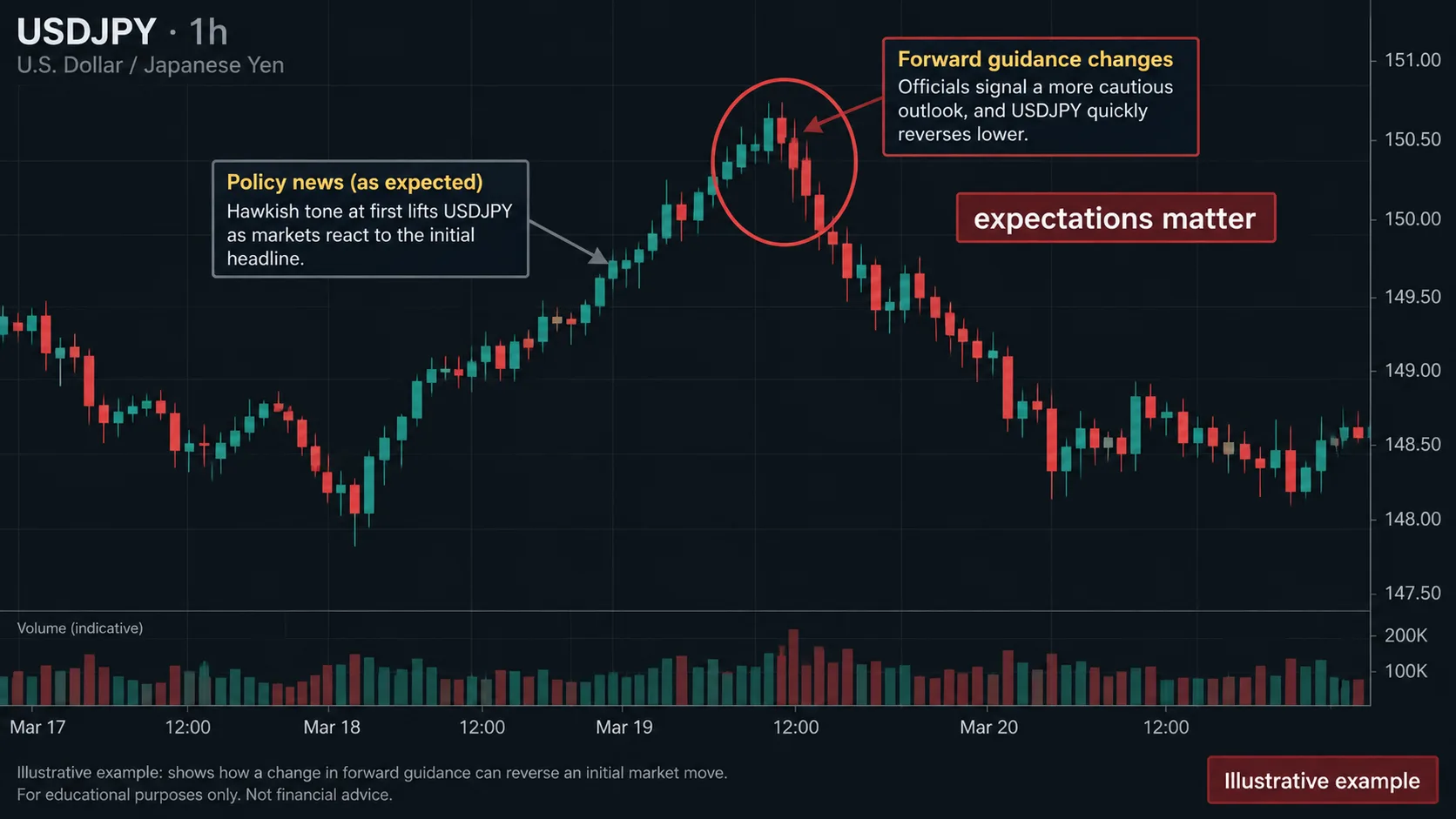
Illustrative Failure Case
Suppose a policy rate is unchanged but forward guidance becomes less hawkish than expected. An initial currency move can reverse as the expected path changes. This example separates the announced decision from the information about future policy; it is illustrative and contains no live or backtested price claim.
Common Misreadings
- A currency can fall after a hike when the hike was fully priced in.
- Nominal yields and real yields can send different signals.
- Spot, futures and forward markets may react on different schedules.
- New data can change the expected path faster than the policy decision.
- Thin liquidity can exaggerate a news candle and subsequent reversal.
Combine Macro Context With a Separate Trading Process
Rates can frame a scenario, while a chart-based process still needs an independent context, trigger, invalidation and position-size rule. The Forex sessions guide helps place releases in a time context; the position-sizing formula connects stop distance with exposure.
Key Takeaways
- Forex reacts to relative expectations, not one rate in isolation.
- Guidance and pricing before the decision can dominate the headline.
- Nominal yields, real yields and risk appetite can diverge.
- Record source, date, jurisdiction and time horizon.
- Interest rates are context, not an independent trade signal.
References
Risk warning: Interest-rate news can create volatility and slippage. This is educational information, not investment advice; verify data and use a risk limit appropriate to your circumstances.