


If you have spent any time looking at price charts, you have likely come across the Relative Strength Index (RSI). It shows up on virtually every trading platform by default, and for good reason: it is versatile and relatively easy to read.
But its popularity is a double-edged sword. The biggest mistake new traders make is assuming an “overbought” reading means it is time to sell, and an “oversold” reading means it is time to buy. In real market conditions, trading that way will quickly drain your account.
This guide goes beyond the basics. You will learn how the RSI is built, the optimal settings for your style, how to spot high-probability divergence, and how it behaves differently across various asset classes.
What is the Relative Strength Index (RSI)?
Developed by J. Welles Wilder Jr. in 1978, the RSI is a momentum oscillator. It measures the speed and magnitude of recent price changes to determine whether an asset is moving with unusual strength—and whether that strength is overextended.
The indicator oscillates between 0 and 100 and is plotted as a line below your main price chart. You don’t need to calculate it by hand, but understanding the formula helps you grasp what the indicator is actually telling you:
RSI = 100 – [100 / (1 + RS)]
(Where RS = Average Gain over N periods / Average Loss over N periods)
When an asset has several days of strong bullish momentum, the average gains outweigh the average losses, pushing the RSI closer to 100. When losses dominate, the line sinks toward 0.
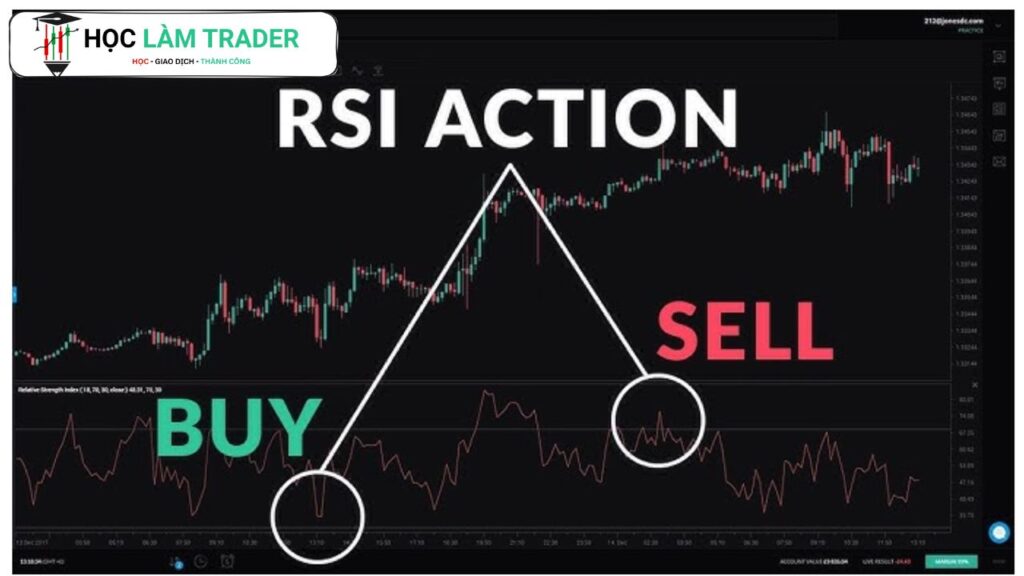
Best RSI Settings for Different Trading Styles
The default setting is 14 periods with 70/30 thresholds. While these defaults have held up for decades, “reasonably well” isn’t the same as “optimal.” Here is how to adjust your inputs depending on market volatility and your timeframe.
| Trading Style | Preferred Periods | Overbought / Oversold | Why It Works |
| Standard (Default) | 14 | 70 / 30 | Offers a balanced, time-tested view of momentum. Best for general analysis on Daily and 4-hour charts. |
| Day Trading / Scalping | 5, 7, or 9 | 80 / 20 or 75 / 25 | Lower periods make the RSI highly sensitive to quick intraday moves. Wider thresholds filter out the “noise” of sudden price spikes. |
| Swing Trading | 14 to 21 | 70 / 30 (or 60 / 40 in trends) | Higher periods smooth out the data, providing cleaner signals for multi-day trades. In strong trends, moving the oversold threshold to 40 helps catch shallow pullbacks. |
The 4 Core RSI Signals
To trade effectively, you need to understand the nuance behind the signals.
1. The Overbought/Oversold (OBOS) Trap
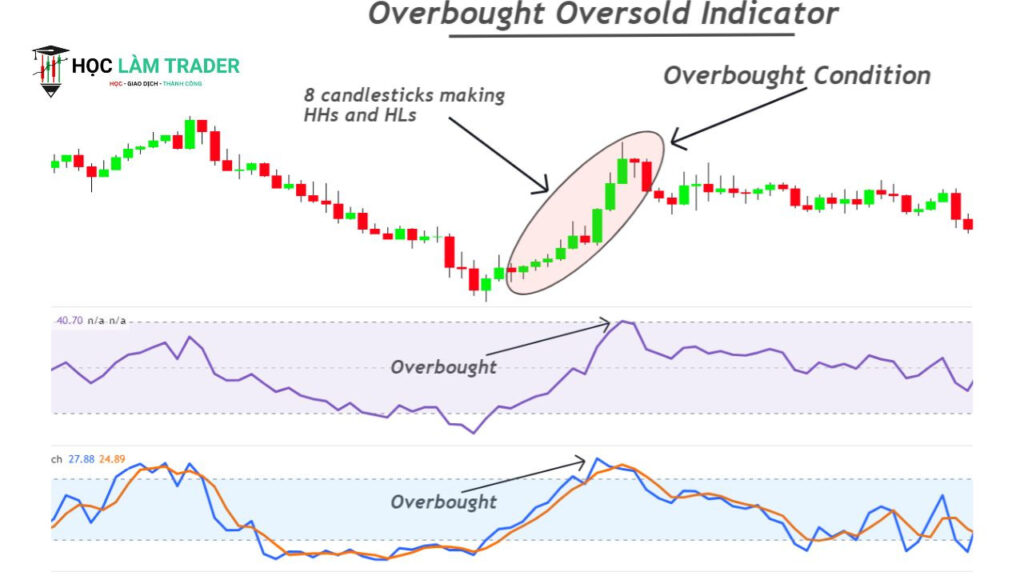
An RSI above 70 does not mean “sell now.” In a powerful trend, an asset can remain overbought for weeks. The proper use of these levels is as alert zones, not automatic triggers. The actual signal comes when momentum breaks:
- Sell Signal: The RSI rises above 70, exhausts its momentum, and then crosses back below 70.
- Buy Signal: The RSI falls below 30, finds a floor, and then crosses back above 30.
2. The Centerline (50) Filter
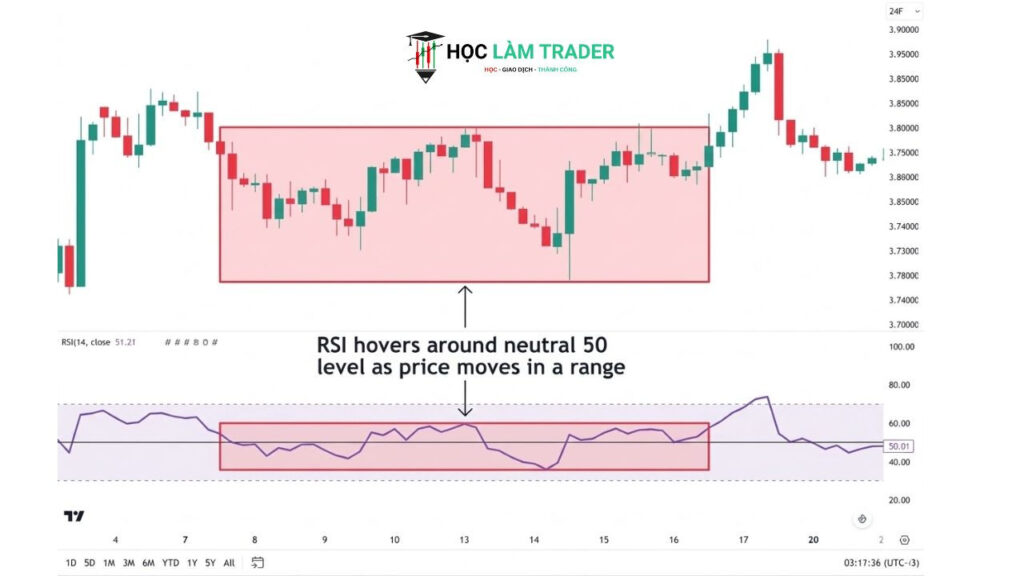
The 50 level is surprisingly powerful but often ignored. It is one of the best filters for underlying trend direction.
- When the RSI crosses and holds above 50, bulls are winning the momentum battle.
- When the RSI crosses and holds below 50, sellers are taking over.
- Many trend-following traders use a simple rule: only take long setups when the RSI is above 50, and short setups when it is below 50.
3. RSI Divergence
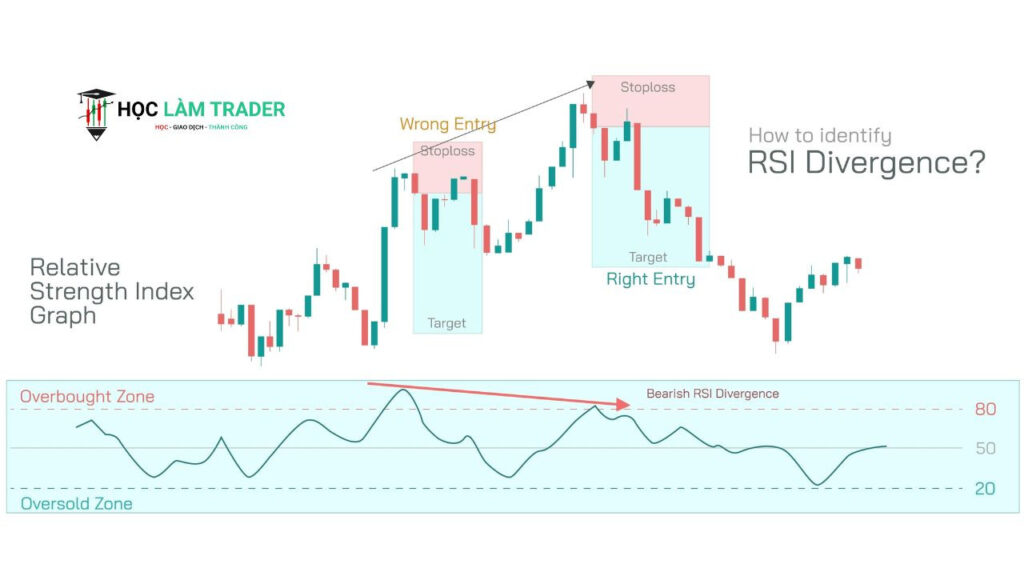
Divergence occurs when price and the RSI are telling different stories. It often precedes meaningful reversals.
- Bullish Divergence: Price makes a lower low, but the RSI makes a higher low. Selling pressure is fading.
- Bearish Divergence: Price makes a higher high, but the RSI makes a lower high. The uptrend is running out of gas.
4. RSI Swing Rejection
This pattern tends to generate stronger signals than a simple crossover. Here is the bullish setup:
- RSI falls below 30 (oversold).
- RSI bounces back above 30.
- RSI pulls back but forms a higher low (stays above 30).
- RSI breaks above its previous pullback high.
- That final break is the entry trigger, confirming that the asset tested the lows and is showing renewed upward force.
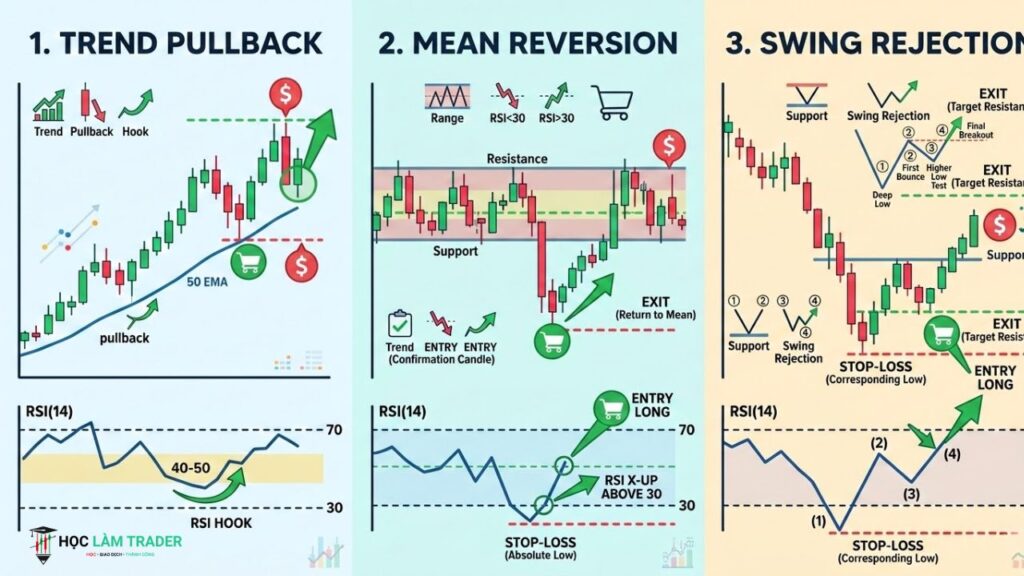
3 Practical RSI Trading Strategies
Strategy 1: The Trend Pullback
Best for entering an established trend at a discount.
- Setup: Identify a clear uptrend (e.g., price is above the 50 EMA on the daily chart).
- Entry: Wait for the RSI(14) to pull back to the 40–50 zone, then hook upward. Enter long on confirmation (a bullish candle close).
- Stop-Loss: Below the recent swing low.
- Exit: Near the previous swing high, or when the RSI reaches 70.
Strategy 2: Mean Reversion
Best for range-bound or consolidating markets.
- Setup: Wait for the RSI to drop below 30.
- Entry: Do not buy yet. Enter long only when the RSI crosses back above the 30 line.
- Stop-Loss: Below the absolute low of the recent price drop.
- Exit: Ride the reversion back to the mean, exiting when the RSI hits 60–70.
Strategy 3: The Swing Rejection
Best for high-confidence reversal trades at key support/resistance levels.
- Setup: Look for the 4-step Swing Rejection pattern described above.
- Entry: Enter when the RSI breaks the high of its first bounce out of the oversold zone.
- Stop-Loss: Place below the price low that corresponds to the RSI’s initial dip below 30.
How RSI Behaves Across Different Asset Classes
Context matters as much as the indicator.
- Crypto: Crypto tends to trend harder and longer than traditional assets. In bull markets, overbought readings are often entry signals rather than exit signals. Many crypto traders shift thresholds to 80/20.
- Forex: The 14-period RSI works well on 4-hour and daily charts for major pairs. However, during major news events (such as central bank rate decisions), the RSI can remain extreme for extended periods.
- Stocks: On individual equities, be cautious about acting on a single candle’s RSI reading if an earnings report is imminent, as prices can gap violently and distort the indicator.
Where RSI Gets Traders in Trouble
RSI’s most serious weakness is in strong directional trends. Every “overbought” signal is wrong, and every bounce generates a false sell trigger. On the flip side, in choppy, sideways markets, the RSI whipsaws constantly, generating dozens of signals that cancel each other out.
The Fix: Never use the RSI in isolation. Pair it with Moving Averages for dynamic support, volume analysis to validate the move, or trade it only at obvious structural levels on the chart.