


Daily loss is a programme’s loss limit for a defined day, while maximum loss is the total loss limit for an account or stage. Both terms require a written calculation basis: balance or equity, treatment of floating P&L, reset time, and treatment of fees or rollover.
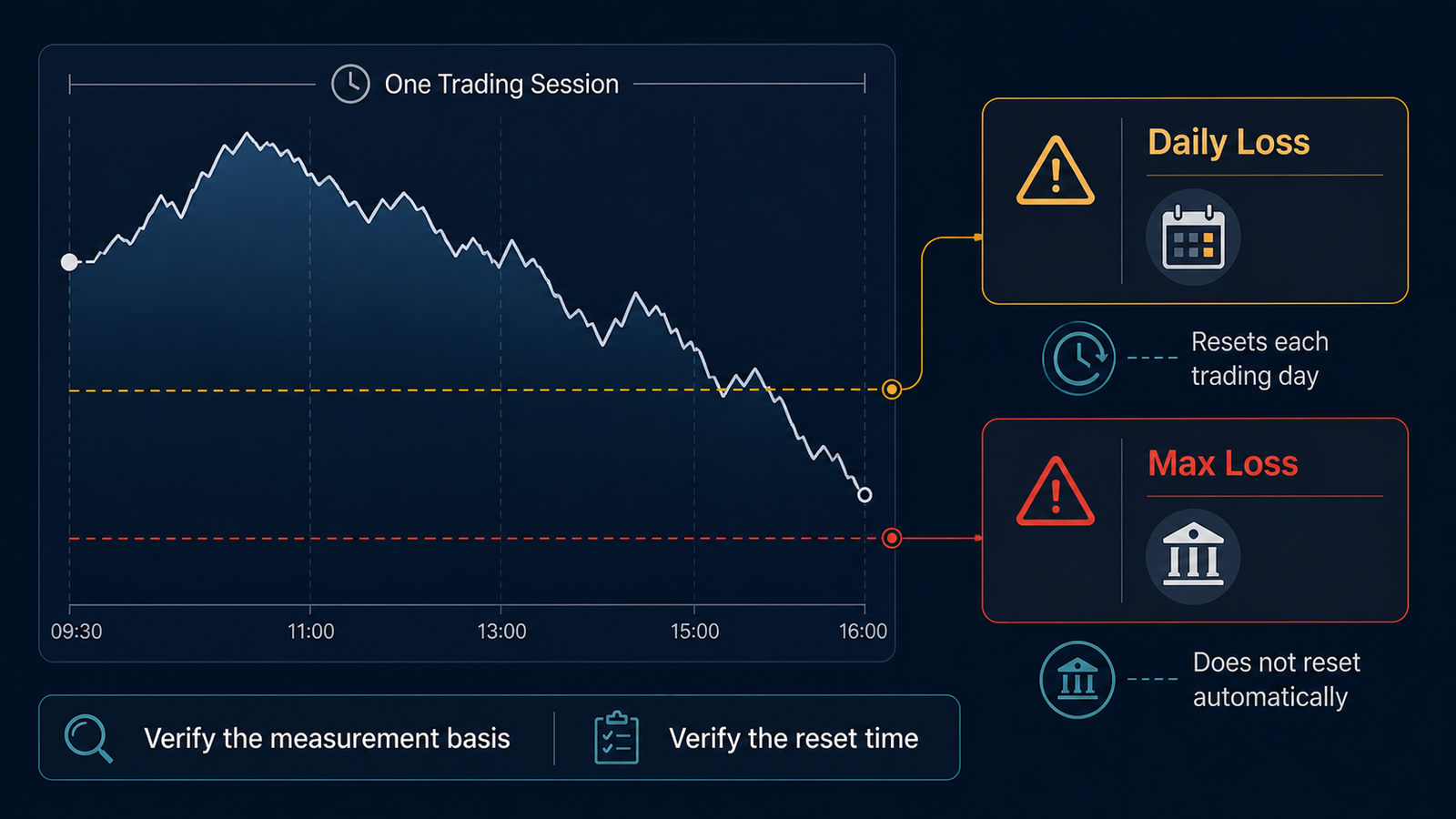
Daily loss
Daily loss typically limits decline during a defined daily period. That period may use the provider’s time zone rather than yours. A position held over reset, widened spreads or financing can affect the calculation depending on the terms. Do not rely on a percentage alone without reading the formula.
Maximum loss
Maximum loss is an overall loss limit. It may be measured from starting balance, equity or a high-water mark. The label “max loss” is not a complete formula; use official examples and request clarification when the calculation is unclear.
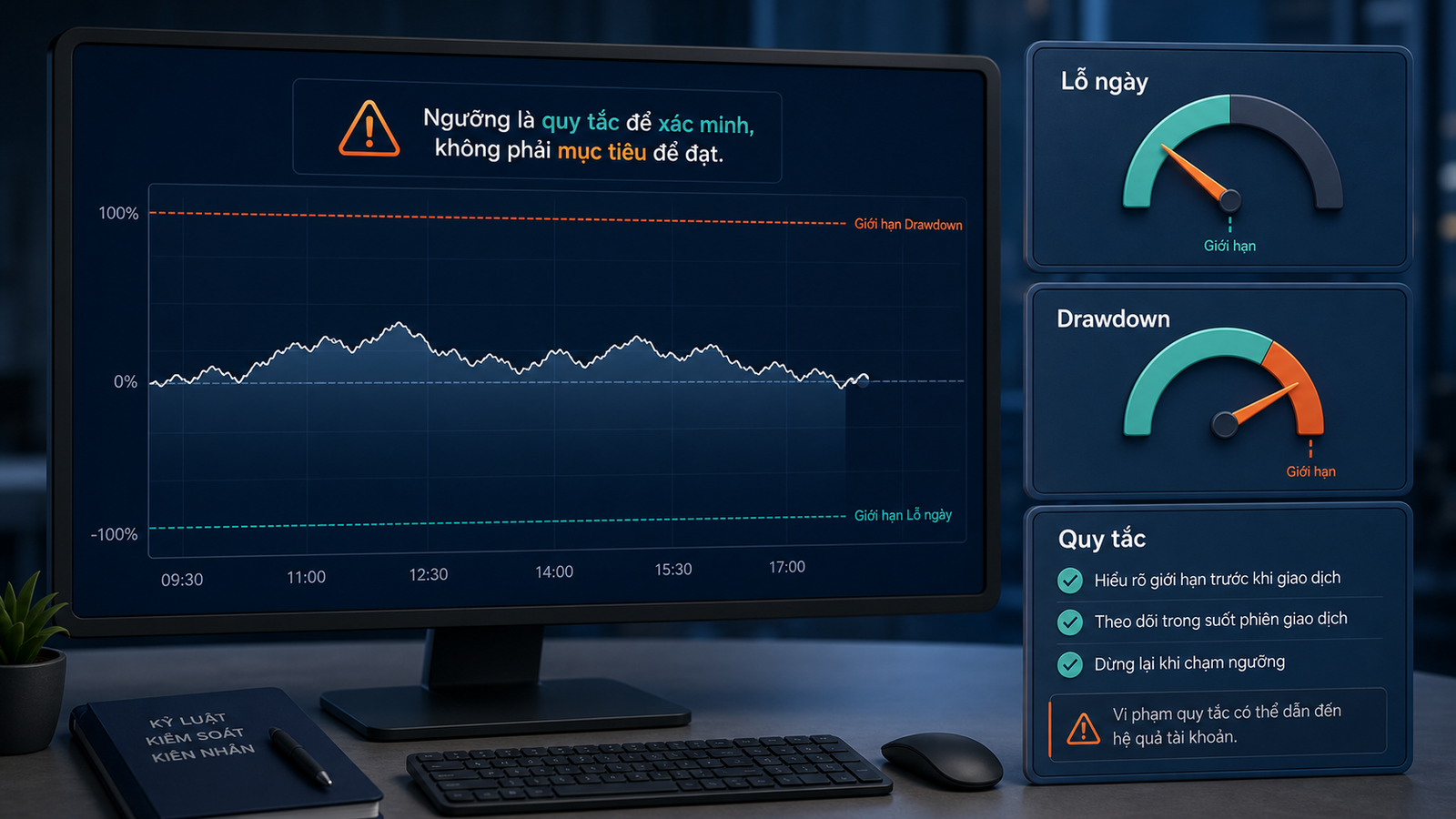
Questions that must be answered
If an open position is losing, does that floating loss count toward daily loss or maximum loss? If it does, an unfilled stop can still trigger a breach. If the answer is unclear, do not choose size based only on the balance display.
Risk-management process
- Write the formula and reset time into your trading plan.
- Set risk per trade well below the stated threshold.
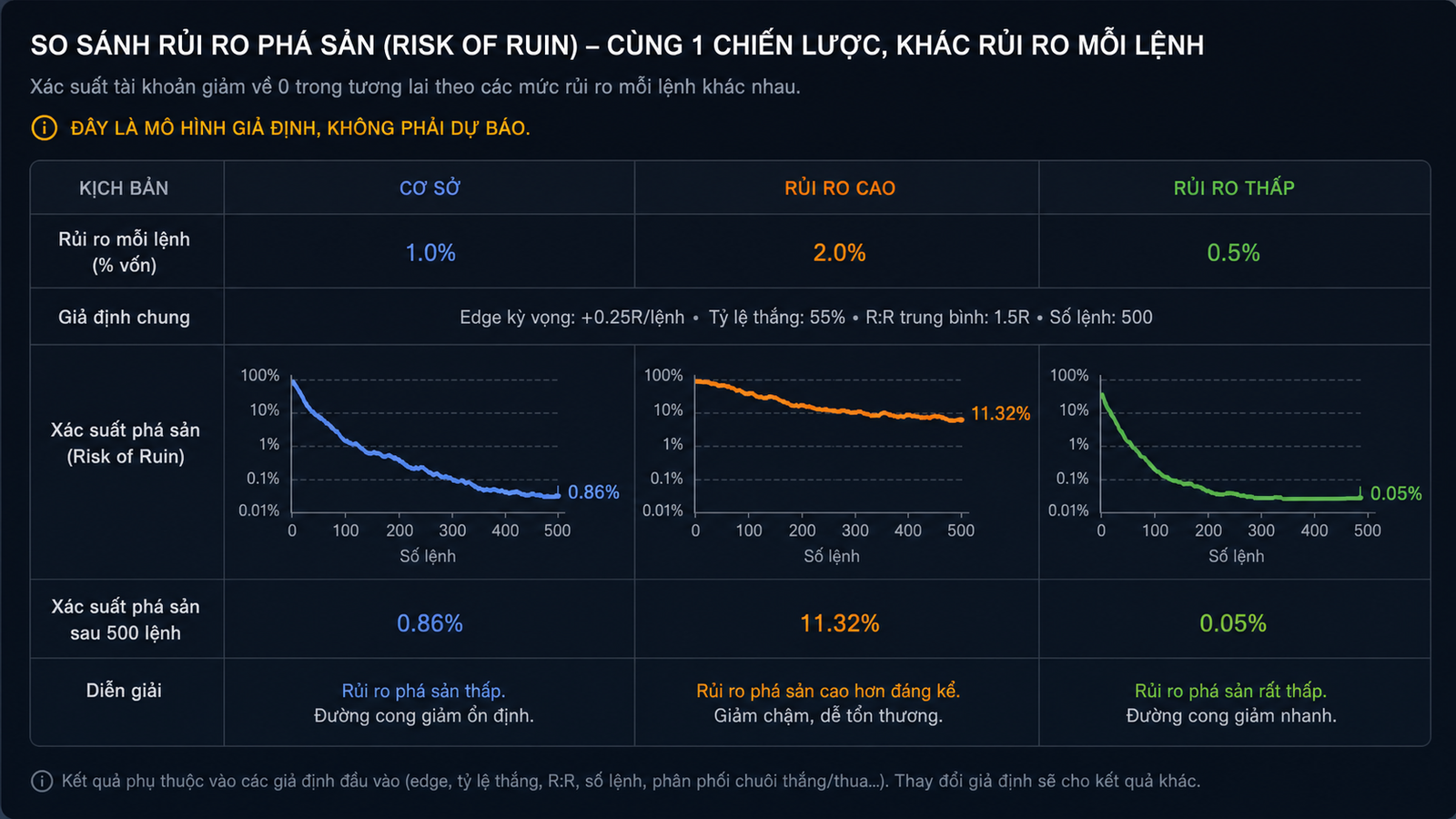
- Model a losing streak, not just one loss.
- Stop when account data or rules are unclear, or when your personal limit is reached.
Continue learning
Read the static-versus-trailing-drawdown guide in this Prop Firm Academy, the risk and performance section of this glossary and the Trading Glossary.
Balance, equity and floating P&L
Balance usually changes after trades close; equity includes floating profit and loss. An equity-based limit can be affected before a trade closes. Position size therefore needs room for spread, slippage and volatility, especially around news. Do not use the displayed “remaining balance” to add risk until you know what the platform is showing.
A hypothetical reset example
Suppose a programme resets in a foreign time zone. A trade opened late in the Vietnam session may belong to a different daily period than expected. If it moves during thin liquidity and financing is applied, daily results can change. This does not describe a specific firm; it illustrates why reset time belongs in a journal.
FAQ
Can I divide daily loss by number of trades to get a fixed lot size?
That is not a sound method. Stop distance, pip value, correlated positions, slippage and losing streaks make simple division understate risk.
Is maximum loss a level I should use fully?
No. It is a programme limit, not a personal risk budget.
Risk disclosure: This is educational information, not investment advice, a solicitation to trade or a promise of passing an evaluation. Prop-firm terms can change. Trading can result in loss of capital; verify the official rules, jurisdiction and your own risk tolerance.