


Prop-firm evaluations can apply both a daily loss limit and a maximum loss limit. The first usually measures losses during a defined trading day; the second caps losses across a longer account period. The terms vary by provider, so check the current contract for how each threshold is calculated, when it resets and what counts as a breach.
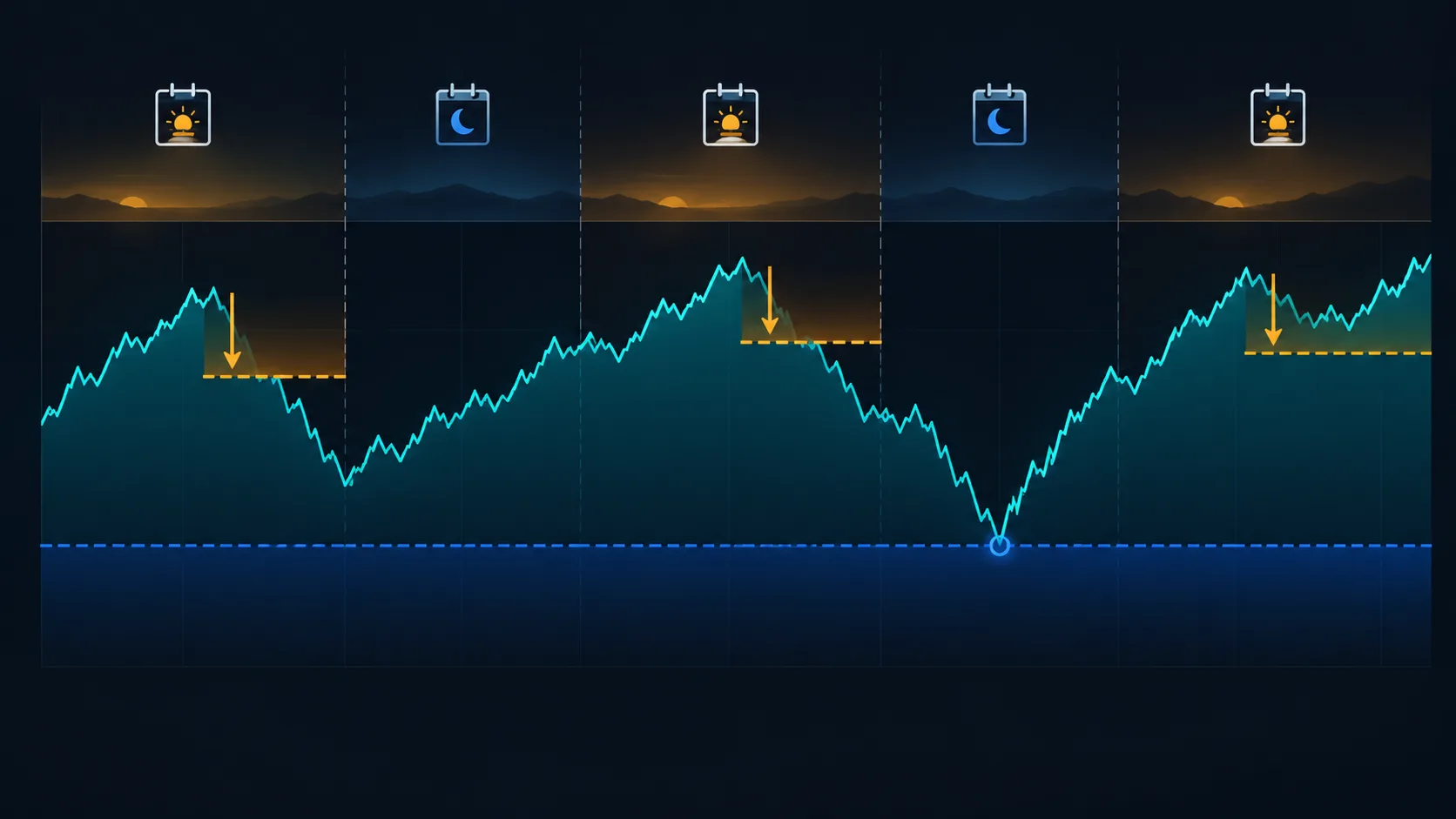
Daily loss vs. maximum loss
| Rule | What it limits | What to verify |
|---|---|---|
| Daily loss | Losses during the provider’s defined trading day | Reset time and timezone, balance or equity basis, open positions and costs |
| Maximum loss | Total permitted decline over the account’s lifecycle or phase | Static or trailing floor, reference value, payout treatment and breach trigger |
Some providers measure floating losses and fees; others use specific snapshots or formulas. A daily reset does not necessarily reset the overall maximum-loss rule. Never assume a percentage or reset convention is universal.
Worked example: when the daily rule binds first
Assume a hypothetical $100,000 account with a $5,000 daily allowance and a separate static maximum-loss floor at $90,000. If the written daily rule captures start-of-day equity at $104,000, the daily floor in this example is $99,000. A later equity value of $100,000 leaves $1,000 before that daily floor. The static overall floor would leave $10,000, so the daily rule is tighter at that moment.
This is an arithmetic example, not a description of a named provider. A contract may use a different reference point, include unrealized gains or losses, or calculate the allowance another way. Recreate the provider’s formula before relying on a buffer figure.
Position sizing against the usable buffer
Start with the distance between current measured equity and the applicable breach floor. Then reserve room for commissions, swaps, spread changes, slippage and correlated open positions. Treat risk across simultaneous trades as one combined exposure. A stop order can reduce planned loss but cannot guarantee the final fill during gaps or fast markets.
If a calculation leaves little room for execution costs, reduce exposure or stop trading for that session. A position-size calculator can help convert a chosen cash-risk amount and stop distance into trade volume; it cannot override the account’s contractual rules.
Checklist before starting an evaluation
- Save the exact programme rules and contract version that apply to the account.
- Confirm the daily reset time, timezone and daylight-saving treatment.
- Check whether balance, equity, floating P/L, commissions and swaps count.
- Identify whether the overall floor is static or trails a balance or equity high-water mark.
- Verify whether touching a threshold is a breach and how payouts or resets affect it.
- Calculate the remaining daily and total buffers together before opening new risk.

Common mistakes
- Assuming every reset occurs at the same clock time. Providers and platforms can use different server timezones and reset schedules.
- Watching closed balance only. Some rules also count floating losses, commissions or financing charges.
- Ignoring aggregate exposure. Several correlated positions can consume the same loss buffer together.
- Adding risk after profits without checking the formula. A profit may change a reference value or trailing floor, depending on the contract.
Frequently asked questions
Can profits increase my daily loss allowance?
That depends on whether the rule references starting balance, start-of-day equity, a high-water mark or another value. Read the formula and reset terms for the specific programme.
Can a stop loss guarantee that I will not breach a limit?
No. Gaps, spread changes and slippage can cause worse execution, while other open positions and costs also affect equity.
Which limit should I monitor?
Monitor both. At any moment, the rule with the smaller remaining buffer constrains the risk available to you.
Related tools and guides
Use the trading tools and risk calculators to model position size, then review our guide to prop-firm rules and due diligence. Examples here are hypothetical and are not financial advice or current terms for any provider.