


One of the most persistent challenges traders face is distinguishing between a genuine market trend and a temporary price fluctuation. Entering a trade on what appears to be a valid breakout, only to watch the price reverse and trigger a stop-loss, is a frustrating experience tied directly to ranging markets. To solve this problem, traders need a reliable method to measure the velocity and conviction behind price movements. This is where ADX trend strength becomes a critical component of technical analysis.
The average directional index (ADX) is a technical indicator that quantifies trend strength regardless of direction. By integrating an ADX trading filter into your system, you can objectively determine when a market is trending heavily and when it is trapped in a consolidation phase. Extensive backtesting of trend-following strategies across forex and crypto markets often reveals that applying a strict ADX filter can reduce exposure to false signals by an estimated 30% to 40%.
This article breaks down exactly how the indicator works, how to interpret its signals, and how to use it to protect your capital from false breakouts.
What the Average Directional Index (ADX) Measures
Developed by J. Welles Wilder, the average directional index is a lagging indicator that evaluates the strength of a price trend over a specific period. Unlike moving averages or momentum oscillators that focus on the direction of the price, the primary ADX line is strictly non-directional.
When the ADX line is rising, it simply means the current trend is gaining strength. This could manifest as a powerful uptrend or a vicious downtrend. Conversely, a falling ADX line indicates that the current trend is losing momentum and the market is likely entering a phase of consolidation. Understanding this non-directional nature is the first step to mastering the indicator.
Traders use the average directional index to answer a single, vital question: Is the market trending strongly enough to justify a trend-following trade? If the answer is no, the trader knows to either step aside or switch to a mean-reversion strategy.
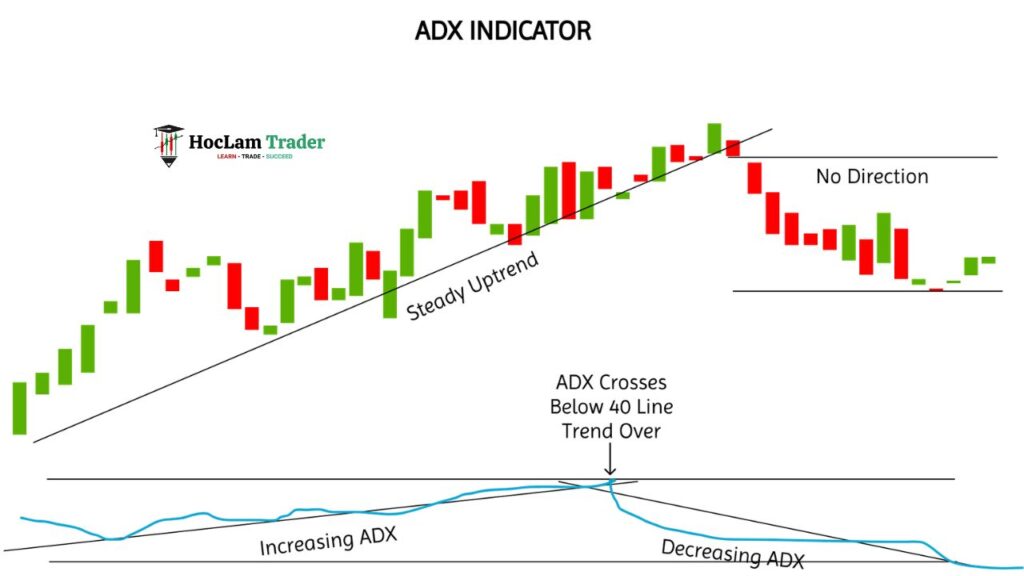
Understanding ADX Values and Trend Strength
The ADX indicator ranges from 0 to 100. Rather than looking for overbought or oversold conditions, traders look at specific thresholds on this scale to define the market environment. Interpreting the ADX scale correctly is foundational for applying any trend strength filter.
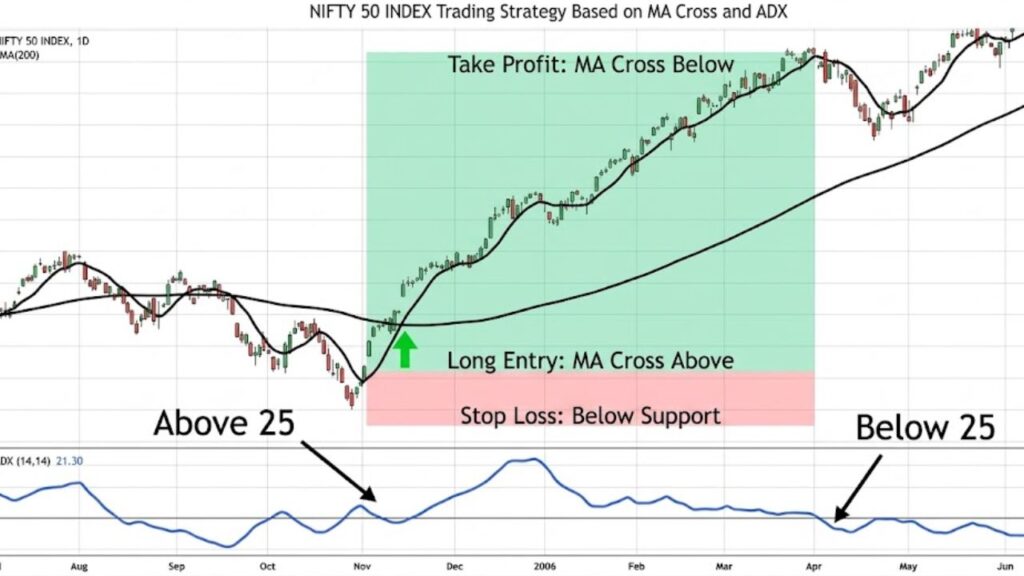
Below 20
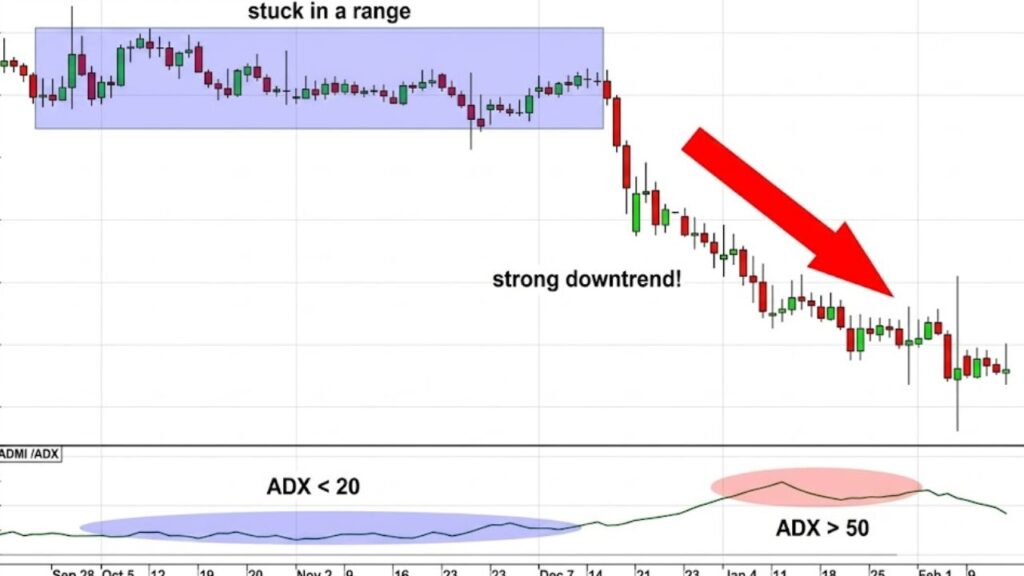
When the ADX trend line falls below 20, the market is in a weak trend or a ranging market. During this phase, buyers and sellers are in equilibrium, and price action is typically choppy. Trend-following strategies will suffer frequent losses here due to false signals.
20 to 25
The 20-25 zone is transitional. When the ADX crosses into this territory from below, a new trend is emerging from the previous consolidation. Traders should prepare their setups, but caution is still required as the trend has not yet fully established its dominance.
Above 25
An ADX reading above 25 signifies a strong trend. This is the optimal environment for trend-following strategies. When the indicator holds above this level, breakouts are more likely to succeed, and pullbacks to moving averages often present high-probability continuation entries.
Above 50
When the ADX pushes above 50, the trend is exceptionally strong. However, readings this high also suggest that the trend may be nearing exhaustion. The market has moved rapidly in one direction, and a sharp correction or a period of sideways consolidation is imminent.
To make these thresholds easier to reference during live market hours, use the following summary table to dictate your trading posture.
| ADX Value | Market State | Recommended Trader Action |
| Below 20 | Weak Trend / Ranging Market | Stand aside or use mean-reversion / range-bound strategies. |
| 20 – 25 | Emerging Trend | Monitor for valid breakouts; prepare trend-following setups. |
| Above 25 | Strong Trend | Execute trend-following strategies; buy pullbacks; trail stop-losses. |
| Above 50 | Very Strong (Exhaustion Risk) | Tighten stop-losses; avoid entering new trend-following positions. |
How ADX Identifies Ranging vs Trending Markets
The core of trend vs range market trading lies in identifying the exact transition points between these two states. Markets spend the majority of their time ranging and a minority of their time trending. The ADX provides a clear visual and mathematical distinction between the two.
Characteristics of a Ranging Market (ADX < 20):
- Price Action: Oscillates horizontally between established support and resistance levels without making sustained higher highs or lower lows.
- Moving Averages: Flat, frequently crossing over each other with no clear separation.
- ADX Behavior: The ADX line slopes downward and remains stubbornly below the 20 threshold.
- Trading Implication: High risk of whipsaws; trend traders should halt execution.
Characteristics of a Trending Market (ADX > 25):
- Price Action: Consistently breaches support or resistance, establishing clear sequences of higher highs (uptrend) or lower lows (downtrend).
- Moving Averages: Sloping upwards or downwards with a clear, widening separation between fast and slow periods.
- ADX Behavior: The ADX line hooks upward, crosses 20, and sustains levels above 25.
- Trading Implication: High probability for trend continuation; breakout strategies become highly effective.
By monitoring these distinct characteristics, traders possess an objective representation of the market’s current state, removing emotional guesswork from chart analysis.
Using ADX as a Trade Filter
Implementing an ADX trading filter is one of the most effective ways to protect capital. A trade filter is simply a ruleset that permits or denies a trade execution based on specific technical criteria.
To use ADX effectively as a filter, you must align it with the strategy you are deploying. If you are trading a trend-continuation system, your strict rule should be only to take trades when the ADX is above 20 or 25 and pointing upward. If the ADX is below 20, you must void all trend trade signals, no matter how promising the candlestick formations look.
Conversely, if you are trading a range-bound strategy—buying at support and selling at resistance—you want the ADX to remain flat and below 20. If you are holding a mean-reversion trade and the ADX suddenly spikes above 25 with expanding volume, it is a clear warning that the range is breaking, and you should manage your risk immediately.
DI+ and DI- Directional Signals
While the main ADX line measures trend strength, Wilder also introduced two supplementary lines to measure trend direction: the Positive Directional Indicator (+DI) and the Negative Directional Indicator (-DI). Together, these three lines form the complete directional movement system.
The +DI line measures the strength of upward price movement, while the -DI line measures the strength of downward price movement. By observing how these two lines interact with the main ADX line, traders can generate specific, high-probability entry signals.
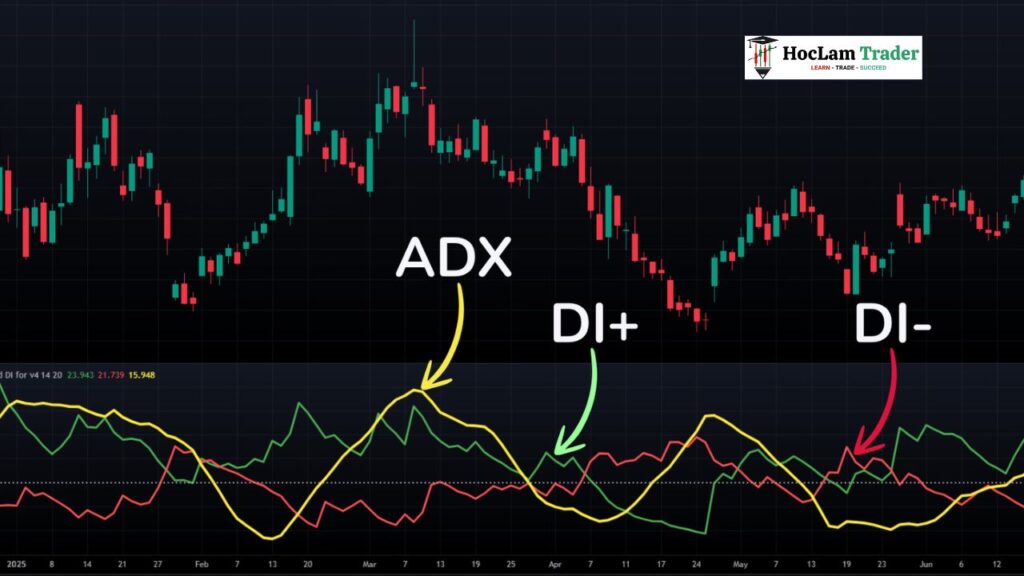
The Buy Signal
A valid buy signal occurs when the +DI line crosses above the -DI line. However, taking every crossover leads to failure in choppy conditions. To filter this, the crossover must be confirmed by the ADX line rising above 25.
For example, on a 1-Hour (H1) chart of EUR/USD, if the +DI sharply crosses the -DI, you must look at the primary ADX line. If the ADX is rising from 22 to 26 at the same time, this combination confirms that bullish momentum has overtaken bearish momentum and that the overall trend strength is robust enough to sustain the upward move.
The Sell Signal
A sell signal is generated when the -DI line crosses above the +DI line. Just as with the buy signal, this bearish crossover must be validated by the ADX rising above 25. This confirms that institutional sellers are in control and that the downward trend has significant momentum.
ADX Breakout Confirmation Strategy
Breakouts from chart patterns such as triangles, rectangles, or head and shoulders formations—are popular trading setups. Yet, false breakouts trap countless retail traders every single session. Using an ADX indicator strategy specifically for breakout confirmation dramatically reduces exposure to these traps.
Consider trading Bitcoin during a multi-week accumulation phase. Price compresses into a tight range, and eventually, a large bullish candle breaches the upper resistance. When the price approaches this major resistance level, monitor the ADX. If Bitcoin breaches resistance but the ADX remains flat at 15, the breakout lacks institutional conviction. This is a low-probability trade that is destined to revert to the range.
A high-probability breakout requires the ADX to slope upward at the same time as the price breach. Ideally, the ADX will cross from below 20 to above 25 exactly as the price clears the resistance zone. This synchronization indicates that fresh liquidity is entering the market, driving the price upward at an increasing velocity.
Avoiding Range Whipsaws With ADX
Whipsaws occur when a trader enters a position on a perceived trend, only for the price to sharply reverse, hit their stop-loss, and then often reverse again. This specific, erratic price action systematically destroys trading accounts. Avoiding these environments is exactly what the ADX was built to do.
To systematically avoid whipsaws, traders must recognize and respect the dead zone. The dead zone is defined as any period during which the ADX remains below 20. During this time, moving averages will frequently cross back and forth, and standard trendlines will be broken without any follow-through.
Practical filters to apply include:
- Identify the dead zone: Mark a horizontal line at 20 on your ADX window. When the indicator falls below this line, halt all trend trading.
- Avoid breakout systems during low ADX: Do not anticipate breakouts. Wait for the mathematical confirmation of the ADX sloping upward before committing capital.
- Wait for the ADX to rise before entering: Even if the price breaks a critical level, wait for the ADX line to slope upward, confirming expanding volatility.
- Require directional signals to persist: When using the DI+ DI- indicator crossovers, ensure the crossover persists for at least 2- 3 closed candles before entering, allowing the ADX time to catch up and confirm the underlying strength.
Best ADX Settings for Different Timeframes
The standard setting for the ADX is 14 periods. Wilder designed this for daily charts, representing roughly half a trading month. However, traders operating on different timeframes must adjust the period setting to balance sensitivity and reliability.
Swing Trading
For swing traders holding positions for days to weeks, the default 14-period setting remains highly effective. It filters out daily market noise while accurately capturing the primary directional moves that define swing trading success.
Day Trading
Day traders using 5-minute or 15-minute charts often find the 14-period setting too slow, leading them to miss early intraday trends. Lowering the ADX setting to a 7-period or 10-period parameter increases sensitivity. This allows the indicator to react more quickly to sudden intraday volatility spikes, though it requires stricter risk management due to an increased risk of false signals.
Position Trading
Position traders and macro investors looking at weekly or monthly charts should consider increasing the setting to a 20-period or 28-period ADX. This higher setting significantly smooths the indicator data, ignoring temporary multi-week pullbacks and keeping the trader focused strictly on macro-level trend strength.
Combining ADX With Other Indicators
No technical tool should be used in isolation. The ADX is exceptional at measuring trend strength, but it cannot pinpoint exact entry prices or determine micro-level overextended conditions. Combining it with complementary indicators creates a robust, institutional-grade trading methodology.
Pairing ADX with moving averages is a classic approach. For example, a trader might require the price to be above a 50-period Exponential Moving Average (EMA) to define an uptrend. They then use the ADX to measure the strength of that uptrend. If price is above the 50 EMA and the ADX is pushing above 25, the conditions are perfect for buying pullbacks to the shorter-term 20 EMA.
Momentum oscillators like the Relative Strength Index (RSI) pair flawlessly with the ADX. While the ADX confirms the macro trend is strong, the RSI can identify short-term oversold conditions within that strong uptrend, providing highly precise, low-risk entry points.
Volume indicators add the final layer of confirmation. A rising ADX, combined with visibly increasing trading volume, is the ultimate confirmation of a sustainable trend, as it indicates heavy institutional participation rather than retail speculation.
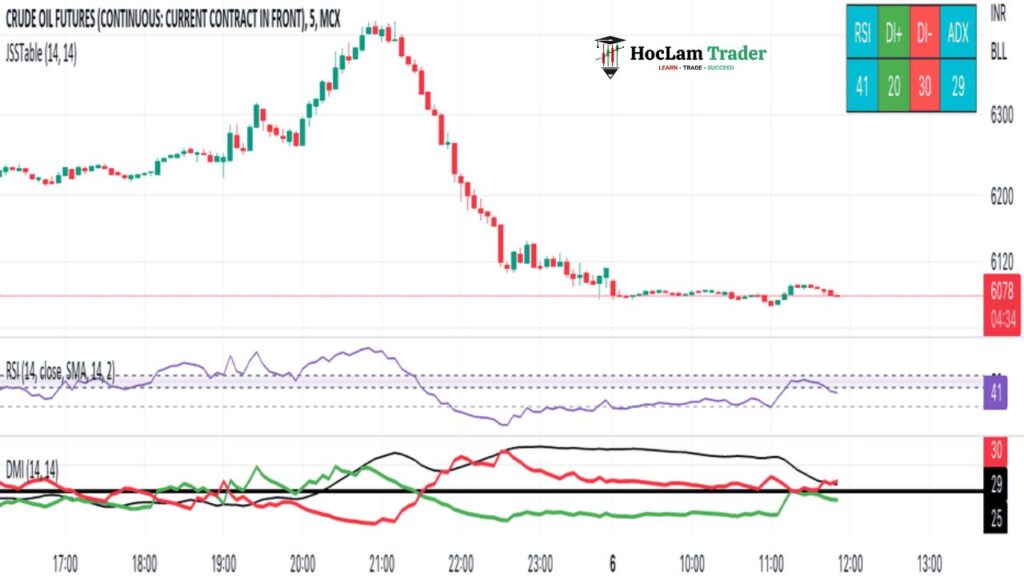
Practical ADX Trend Trading Checklist
To successfully integrate the ADX into your daily routine, follow this practical checklist before executing any trend-based trade:
- Filter the dead zone: Is the ADX below 20? If yes, cancel all trend-following orders immediately.
- Identify the current ADX value: Is it actively crossing or holding above 25?
- Check the ADX slope: Is the main ADX line pointing upward, confirming increasing momentum?
- Analyze the DI lines: Does the DI+ and DI- crossover match your intended trade direction?
- Confirm with price action: Has price broken a clear, observable level of support or resistance?
- Check for extremes: Is the ADX above 50, warning of a potential trend exhaustion or deep pullback?
Conclusion
Mastering the ADX trend strength indicator provides a distinct analytical advantage. By objectively measuring the velocity of price movement, traders can protect their capital during unpredictable, choppy market phases and deploy their risk aggressively only when market conditions are optimal. Integrating the average directional index alongside the DI+ DI- indicator transforms a guessing game into a structured, rules-based approach.
Whether you are trading forex, crypto, or global indices, applying a strict trend strength filter is essential for long-term consistency. Keep a close watch on the critical 20 and 25 thresholds, respect the dead zone, and let the trend’s mathematical strength dictate your market exposure.