


Forex trading sessions Forex session labels group the 24-hour market into major regional business periods, commonly Asian, London and New York. Exact local times shift with daylight-saving rules, and activity varies by currency pair, holiday, news calendar and liquidity provider. The method should be treated as a testable chart-reading framework rather than a forecast. Before using it, define the market condition, confirmation event, invalidation price, transaction costs and maximum risk. This guide explains the rules, a repeatable workflow, common failure modes and the most relevant supporting concepts.
Definition: What Are Trading Sessions?

Trading sessions are time windows when a major financial region is active. In forex education, traders usually group the market day into the Sydney session, Tokyo or Asian session, London session, and New York session. These names are practical labels. They do not mean that only traders in that city are active. They mean that liquidity and participation often shift as that region’s banks, institutions, and market participants come online.
The most common session map is built around four broad blocks. The Sydney session begins the weekly rotation after the weekend and often has lighter liquidity. The Tokyo or Asian session follows and can create ranges, especially in pairs connected to JPY, AUD, and NZD. The London session usually brings the deepest European participation and often creates stronger movement. The New York session adds U.S. activity and frequently overlaps with London, creating one of the most active windows of the day.
Exact times depend on your broker server time, your charting platform, and daylight saving changes. That is why session analysis should be tied to a chart setting, not memorized as a rigid clock table. A trader in Bangkok, London, or New York may see different local times, but the underlying market rotation is the same: Asia first, then Europe, then North America.
A trading session is not a signal by itself. London opening does not automatically mean buy or sell. New York overlap does not guarantee a trend. A session is a context filter. It tells you when liquidity may enter, when spreads may tighten or widen, when volatility can expand, and when certain pairs may become more active.
Think of sessions as the market’s daily schedule. A setup that forms during a quiet Asian range may need patience. The same setup near the London open may move quickly, but it can also fake out traders who chase the first candle. A setup during New York lunch may stall because participation has faded. The chart pattern matters, but the time window tells you how much energy may be behind it.
Core Principles Behind Trading Sessions
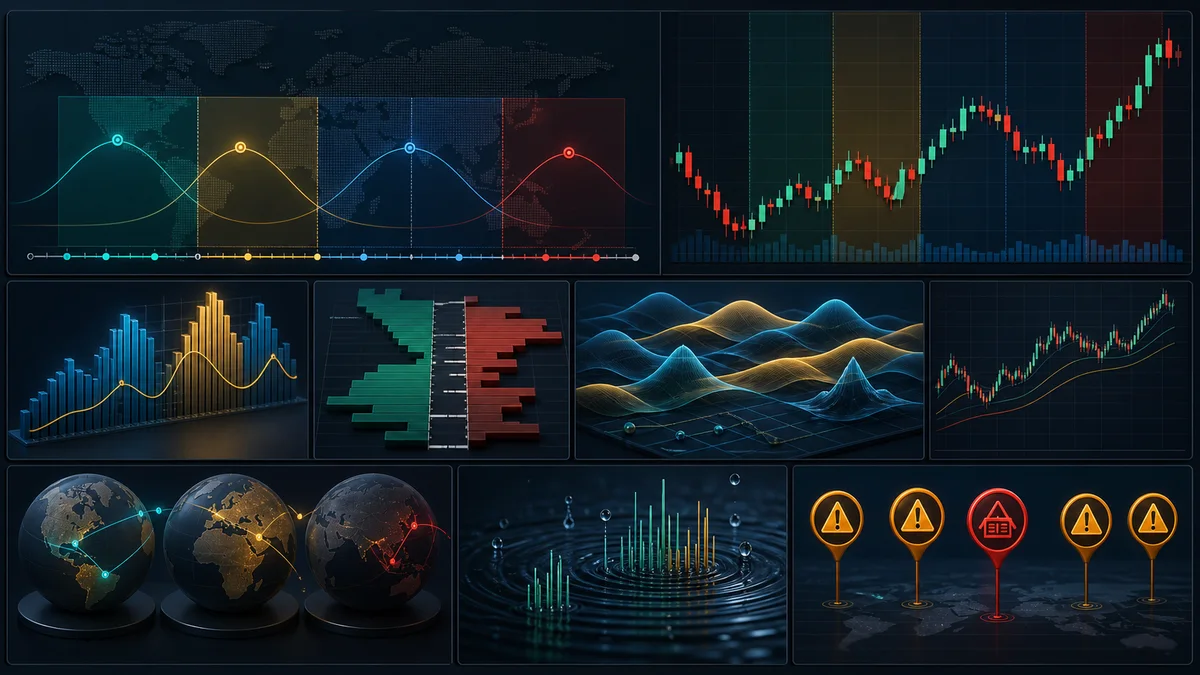
The first principle is liquidity. Liquidity describes how easily orders can be matched without a large price disruption. In practical forex trading, better liquidity often means smoother execution, tighter spreads, and more reliable price movement. Lower liquidity can create wider spreads, sharper wicks, and more erratic candles.
The second principle is volatility. Volatility is the size and speed of price movement. Some traders want expansion because their strategy needs movement. Others prefer calmer conditions because they trade ranges or mean reversion. The important point is not that high volatility is good or low volatility is bad. The point is that your strategy should match the session environment.
The third principle is overlap. A session overlap happens when two major regions are active at the same time. The London-New York overlap is especially important because European and U.S. participation meet. Major pairs such as EUR/USD and GBP/USD often become more active during this window. An overlap can produce continuation, reversal, or news-driven expansion, so traders still need structure and risk control.
The fourth principle is spread. The spread is the difference between the bid and ask price. Investor.gov explains the bid as the highest price a buyer will pay and the ask as the lowest price a seller will accept, with the difference called the spread. In forex, spreads can change across sessions. A trade that looks reasonable during liquid hours may become expensive during thin hours.
The fifth principle is pair sensitivity. Not every currency pair behaves the same in every session. JPY pairs may show more activity during Asia. EUR and GBP pairs often become more interesting during London. USD pairs can react strongly during New York, especially when U.S. data is released. This does not create a rule to trade only one pair at one time, but it helps you focus your watchlist.
The sixth principle is news timing. Economic releases can override normal session behavior. A quiet session can explode around inflation, employment, central bank, or interest-rate data. A clean range can break violently, spreads can widen, and stop orders can fill worse than expected. Session analysis should always be combined with a news calendar and a clear rule for whether you trade around high-impact events.
Key Trading Session Patterns and Models
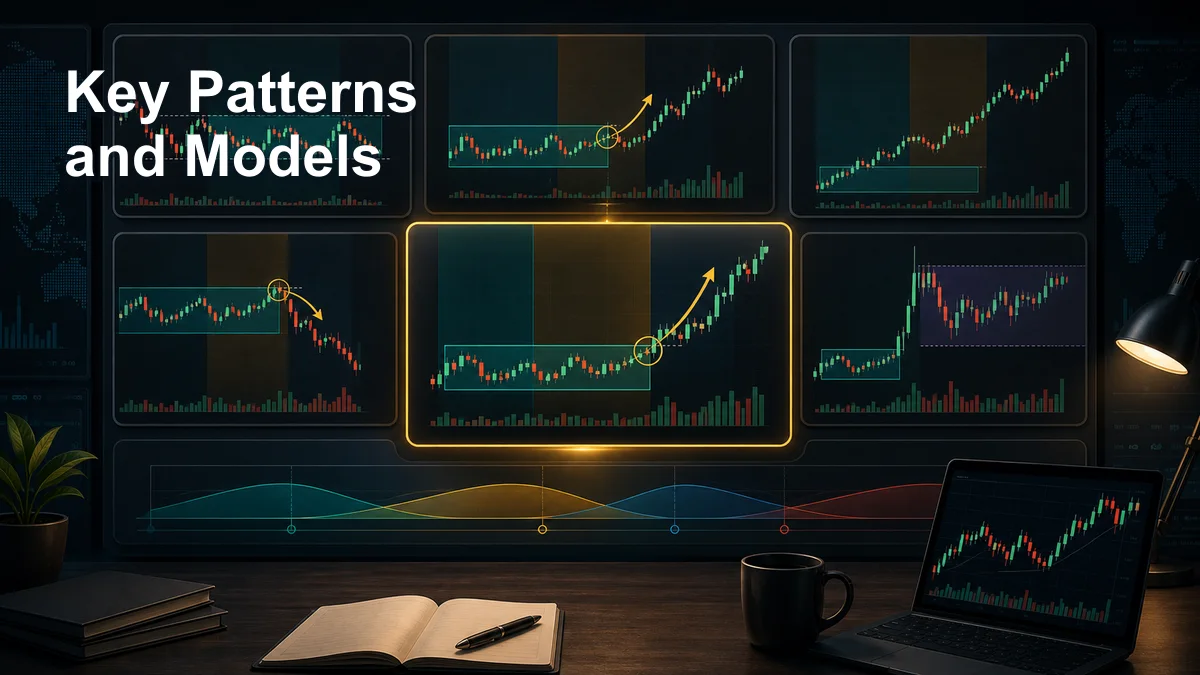
The first common model is the Asian range. During the Asian session, some major pairs form a relatively contained high and low. That range can become important later because liquidity often builds above the high and below the low. When London opens, price may break one side of the range, sweep liquidity, or use the range boundary as support or resistance.
The second model is the London breakout. In this model, price consolidates before London and then expands when European liquidity enters. Beginners often treat any breakout as a signal, but that is too simple. A better version asks whether the breakout happens from a meaningful range, whether displacement is strong, whether the move aligns with higher-timeframe structure, and whether there is room to the next liquidity pool.
The third model is the London fakeout. Price may break above the Asian high or below the Asian low, attract breakout traders, then reverse back through the range. Smart Money traders often study this behavior as a liquidity sweep. The sweep alone is not enough. Traders still need confirmation, such as a structure shift, displacement away from the swept level, or a retest into a point of interest.
The fourth model is New York overlap continuation. If London creates a clear directional move and New York enters with aligned momentum, price may continue toward the next major level. This model often works best when the first move has not already exhausted the daily range and when U.S. data does not contradict the direction.
The fifth model is New York reversal. Sometimes London drives price into a higher-timeframe level or liquidity pool, then New York rejects that area. A reversal model usually needs more evidence than a continuation model because the trader is going against the immediate move. Look for a failed push, a sweep, a change in lower-timeframe structure, and a logical target on the opposite side.
The sixth model is session handoff. Price can pause or rebalance as one region slows and another region prepares to open. These periods can be useful for planning but dangerous for impatient entries. If the market is between active windows, a trader may wait for the next session to confirm whether the idea has real participation behind it.
How to Identify Trading Sessions on a Chart
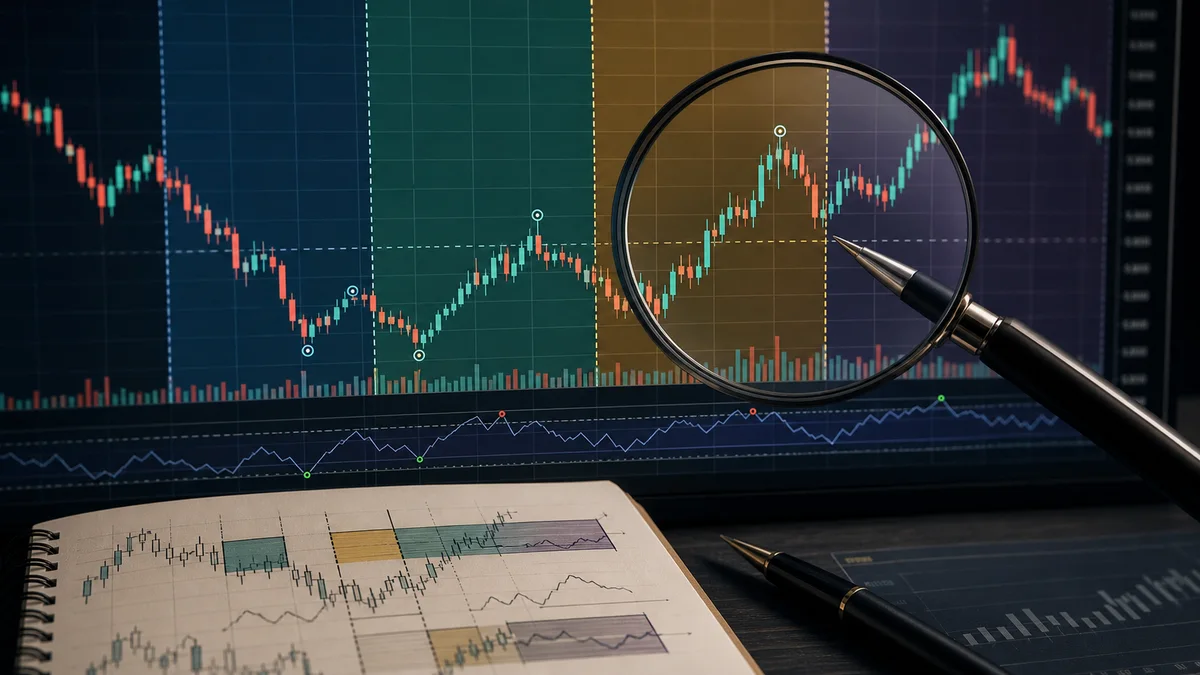
Start by setting your chart time zone. Many platforms use broker server time, while some allow local time or UTC. The exact choice matters less than consistency. If you change time zones often, your session boxes, daily opens, and candle boundaries may shift, which can confuse your backtesting and journaling.
Next, add session separators or vertical lines. Mark the approximate open of Asia, London, and New York. You do not need to clutter the chart with every minute. The goal is to see when price behavior changes. After a few weeks of screenshots, you will begin to recognize whether a pair tends to range, break, reverse, or stall during certain windows.
Then use session shading if your platform supports it. Shading the Asian session, London session, and New York session helps you see range formation and expansion at a glance. Many traders shade the Asian range and extend the high and low into London because those levels can become liquidity references.
After that, compare volatility by session. Look at candle size, wick behavior, and follow-through. If a pair barely moves during Asia but expands during London, that tells you when the market is most likely to reward a breakout model. If a pair regularly spikes around New York data and then reverses, that tells you to be careful with early entries.
Also identify session highs and lows. The high and low of a session can become important because traders place orders around obvious extremes. A break above a session high may be a continuation, a liquidity sweep, or a failed breakout. You need price action and structure to decide which interpretation fits.
Finally, connect sessions with higher-timeframe context. A London breakout into a daily resistance level is different from a London breakout into clean open space. A New York reversal after price sweeps a weekly high is different from a random five-minute rejection. The session gives timing, but market structure gives meaning.
A Practical Trading Sessions Workflow
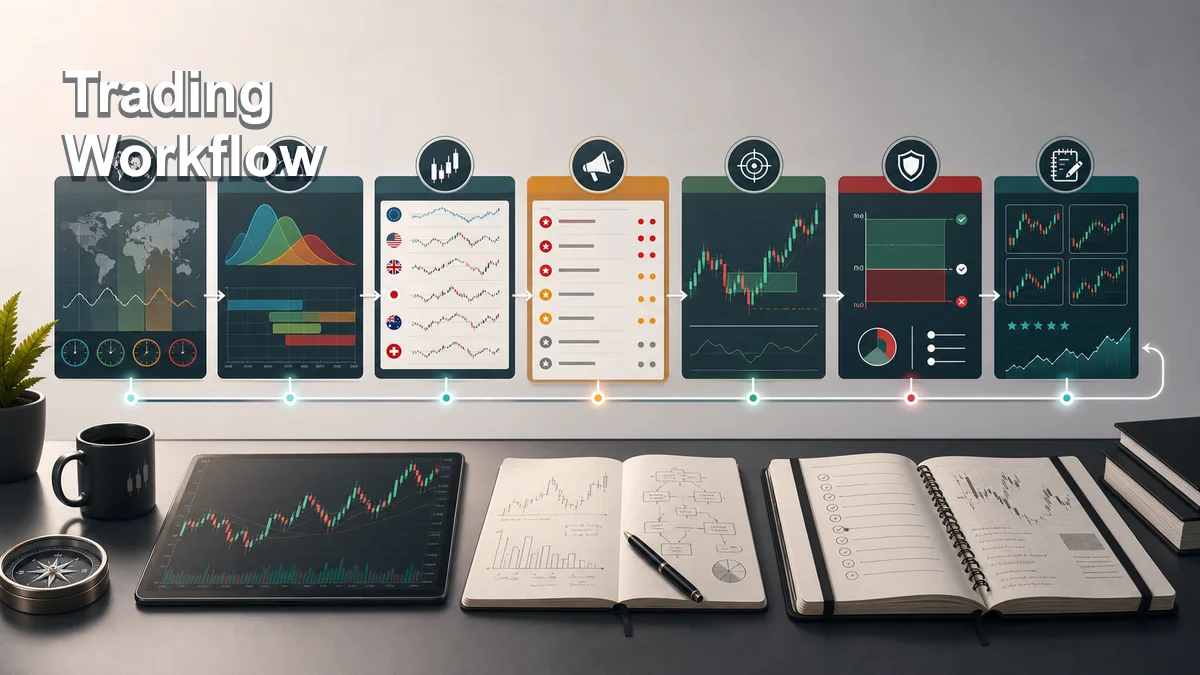
A practical workflow begins before the session opens. First, define the higher-timeframe environment. Is the market trending, ranging, reversing, or approaching a major level? Mark the previous day high and low, weekly high and low, obvious liquidity pools, and any important support or resistance zones.
Second, choose the session you actually plan to trade. Many beginners try to watch everything, then enter when they are tired. A better approach is to specialize. If you trade London, prepare before London and stop after your window. If you trade New York, study what London already did before you make a decision. A defined window helps reduce overtrading.
Third, build a session watchlist. Choose pairs that match the active region and your setup. For example, EUR/USD and GBP/USD may be more relevant around London and New York. AUD/JPY or USD/JPY may deserve attention during Asia, depending on context. The watchlist should be small enough that you can read each chart carefully.
Fourth, check the economic calendar. Do not treat high-impact news as a small detail. News can change spread, volatility, and execution. Decide in advance whether you will stand aside, reduce size, wait for the release to pass, or trade only after price stabilizes. The rule should exist before emotions enter.
Fifth, wait for session evidence. If your model is an Asian range breakout, wait for the range and breakout to form. If your model is a liquidity sweep, wait for the sweep and confirmation. If your model is continuation, wait for pullback structure rather than chasing the largest candle.
Sixth, define risk before entry. Every session setup should have invalidation. If price breaks a range, where is the breakout wrong? If price sweeps liquidity and reverses, where is the reversal wrong? If you cannot answer, the trade is not ready. Session timing does not replace stop placement or position sizing.
Seventh, review the session after it ends. Save screenshots of the pre-session plan, the active session, and the result. Over time, your journal will show which session you read best. Some traders discover they are better during ranges. Others perform better during London continuation or New York reversal. Your data should guide your focus.
Examples of Trading Sessions in Forex
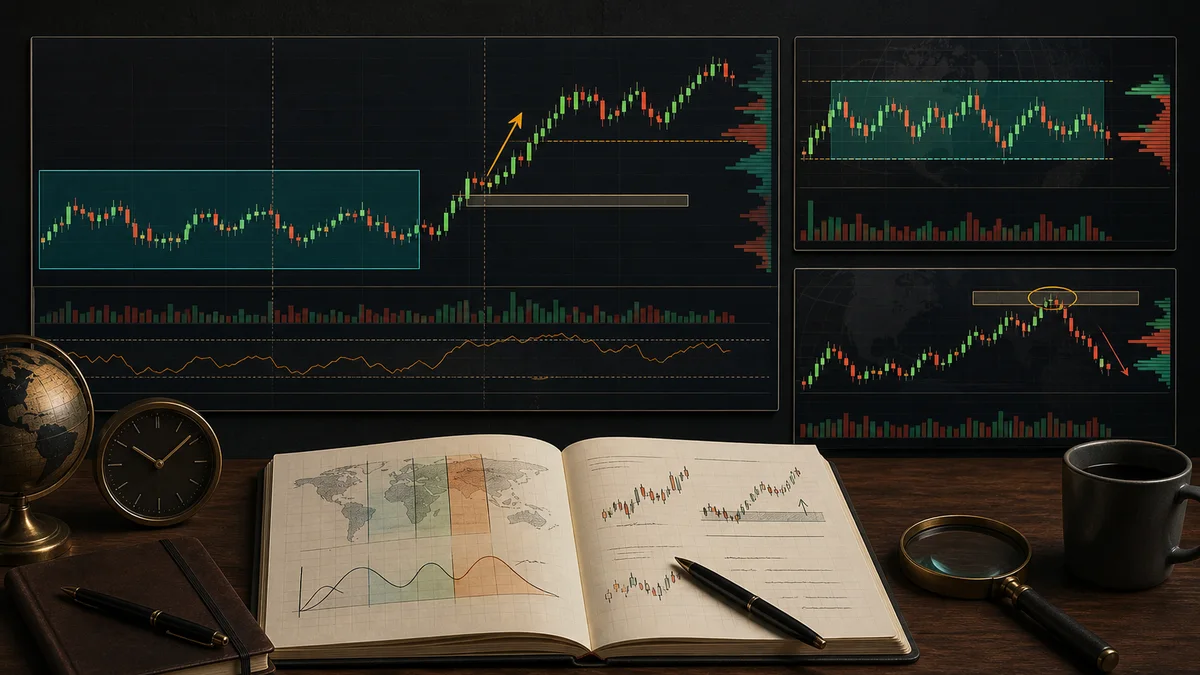
Example one: EUR/USD spends the Asian session inside a tight range. The higher timeframe is bullish, and the nearest resistance is still far above price. When London opens, price breaks above the Asian high with strong displacement. A trader who planned a breakout model may wait for a pullback into the broken range high and look for a continuation trigger. The session matters because London provides the liquidity for expansion.
Example two: GBP/USD breaks above the Asian high in the first part of London, but the breakout candle rejects sharply and closes back inside the range. Price then breaks a minor swing low. A trader studying Smart Money may interpret the first move as a buy-side liquidity sweep. The trade idea is not to short blindly. The trader waits for a cleaner lower-timeframe structure shift and a retracement into a point of interest.
Example three: USD/JPY trends during Asia after important regional news. By the time London opens, the move is extended and approaching a higher-timeframe resistance zone. Instead of chasing, the trader marks the session high and waits. If New York pushes above the high and fails, a reversal plan may become more logical than a continuation plan.
Example four: EUR/USD trends down through London and then enters the London-New York overlap. U.S. news is scheduled in thirty minutes. The trader has a bearish continuation idea, but spreads and volatility may change around the release. A disciplined workflow may say to wait until after the data. Missing one move is better than entering a setup whose risk conditions are unknown.
Example five: AUD/USD barely moves during New York afternoon. The trader sees a small pattern and wants to force an entry, but the session is thin and the pair has no clear catalyst. A session-aware trader can step aside. No-trade decisions are part of trading. The market does not owe clean movement during every hour of the day.
Related Guides and Next Learning Path

Trading Sessions should become the parent guide for future articles in the Sessions cluster. This pillar can link to specific guides such as the Asian Session Forex Trading Guide, London Session Forex Trading Guide, New York Session Forex Trading Guide, Forex Session Overlap Trading Strategy, and Best Time to Trade Forex. Those future clusters should link back here so the category has a clear internal structure.
For Smart Money traders, the next guide to study is the Smart Money Concepts complete trading guide. Session timing often matters because liquidity sweeps, displacement, and reversals commonly appear near active windows. Timing alone does not make a Smart Money setup valid, but it can explain why a level becomes active at a specific moment.
You should also study Liquidity in Trading. Many session patterns are really liquidity patterns wearing a time-based label. The Asian range high and low, London open sweep, previous day high, and New York reversal area are all places where orders may cluster.
After liquidity, review Market Structure and Multi-Timeframe Analysis. These guides help you decide whether a session move is aligned with the broader market or only noise inside a larger range. A session breakout that agrees with higher-timeframe structure is very different from a breakout directly into a major opposing level.
The simple learning path is this: understand trading sessions, mark the active session highs and lows, connect those levels with liquidity, filter the move through market structure, check news risk, define invalidation, and journal the result. When you treat sessions as context instead of signals, they become a practical timing framework for better trading decisions.
Key takeaways
- Forex session labels group the 24-hour market into major regional business periods, commonly Asian, London and New York.
- Exact local times shift with daylight-saving rules, and activity varies by currency pair, holiday, news calendar and liquidity provider.
- Convert session times to one reference timezone and test the instruments and holding periods you actually trade.
- A valid plan separates location, trigger, invalidation, position size and exit logic.
A validation workflow you can reproduce
- Define the sample: choose the market, timeframe, session and date range before reviewing outcomes.
- Write the rule: Convert session times to one reference timezone and test the instruments and holding periods you actually trade.
- Record invalidation: identify the observable price event that disproves the setup.
- Include execution costs: account for spread, commission and slippage where relevant.
- Validate separately: test the finished rule on data that was not used to create it.
When this concept is unreliable
Session analysis is unreliable when fixed clock times are copied without adjusting for daylight saving, holidays or the selected broker feed. Keep failed and skipped examples in the journal so the review is not limited to attractive winners.
Use this concept within a complete analysis
This method should remain connected to its parent framework and adjacent decision steps. Use Best Timeframes for Forex Trading, Top-Down Analysis in Trading: Step-by-Step Method, New York Session Liquidity Sweep Strategy, Price Action Trading: Structure, Setups and Risk and Trading Theories: Complete Guide to Technical Analysis Frameworks to compare definitions, establish context and avoid treating one signal as a complete trading system.
References and methodology
Practise before considering real capital
Use historical charts or a demo account to test the written rules before considering live execution. Review the Exness account and demo information. Availability, protections and trading conditions depend on jurisdiction, so review the applicable legal documents yourself.
Affiliate disclosure: Học Làm Trader may receive a commission if you open an account through this link, at no additional cost to you. This relationship does not determine the educational conclusions.
Risk warning: This article is for education and general information only. It is not investment advice, a trade signal or an invitation to trade. Trading can result in loss of capital, and past examples do not guarantee future results. Assess your own circumstances and risk tolerance.