


A consistency rule is a prop-firm condition that evaluates how concentrated an account’s profit is in one or a small number of trading days. There is no universal formula: one programme may compare the best day with total profit, while another may use a daily-profit cap or apply the rule only at payout. Read the actual formula, scope and consequence instead of importing a percentage from another firm.

What a consistency rule is trying to measure
The rule is commonly used to review whether results depend heavily on a single session. It does not perfectly measure strategy quality, and it does not prove that a trader is safe or skilled. Its practical value is prompting a review of risk per trade, execution concentration and whether a one-off equity jump is repeatable.
Three details to verify in the rules
- Formula: is the best day compared with total profit, a target, or another reference?
- Scope: does it apply to evaluation, a funded stage, or only a payout request?
- Data: how are closed P&L, floating P&L, commissions and reset time handled?
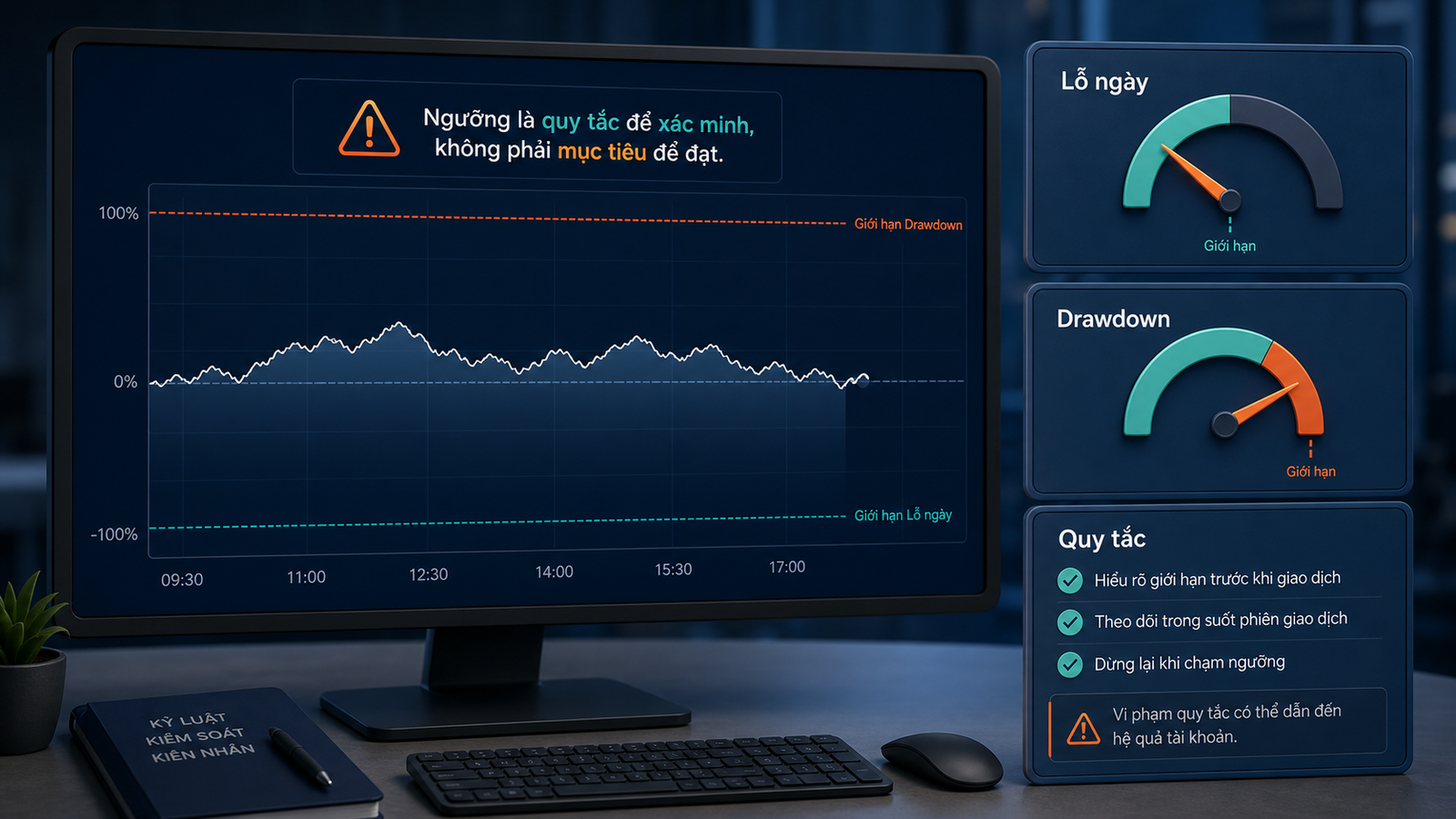
Track it with a journal
Keep fields for trade date, setup, entry risk, closed P&L, end-of-day floating P&L and news notes. Then compare the data with the programme’s official formula. If one day accounts for most profit, do not add weak trades simply to make results look smoother; first assess whether extra trading increases daily-loss exposure or lowers setup quality.
A hypothetical example, not a universal rule
If a programme divides the best day’s profit by total profit, one strong day followed by several small days may produce a high ratio. The result changes if the firm uses floating P&L, another reset point or another stage. The example tells you what to ask; it is not a number to apply elsewhere.
Common mistakes
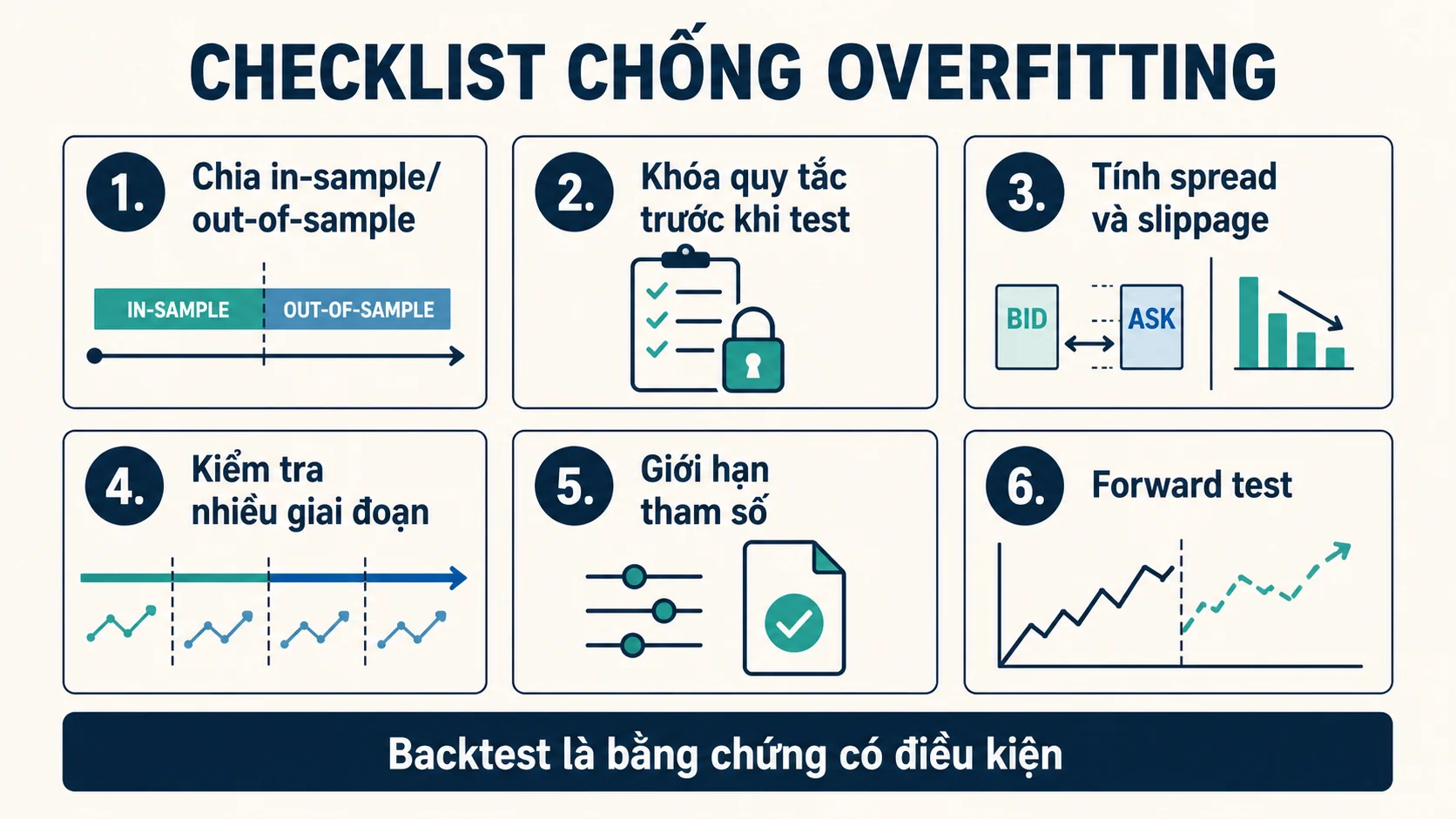
- Artificially splitting trades to change a statistic while increasing real costs or exposure.
- Confusing consistency limits with daily loss or maximum loss.
- Ignoring the provider’s reset time and calculating with local time only.
- Choosing a programme from payout marketing without saving the verified terms.
Continue learning
See what a prop firm is, funded versus simulated accounts, the Trading Glossary and the trading tools hub.
FAQ
Is a consistency rule the same as a profit target?
No. A profit target is a programme objective; a consistency rule is a separate condition about how profit is distributed or assessed.
Can I use one consistency ratio for every prop firm?
No. Use only the current formula and rules of the programme you are considering.
Risk disclosure: This is educational information, not investment advice, a solicitation to trade or a promise of passing an evaluation. Prop-firm terms can change by programme, region and time. Trading can result in loss; verify official sources and your own risk limits.
How to read a consistency rule without overfitting to a headline number
Start with the exact product, account type and rule version. Some programmes describe consistency through the best-day share of positive-days profit; another product may use a different formula or no such rule at all. The observable fields are the formula, whether it uses closed or floating P/L, the trading-day boundary, the reset timezone, and whether the condition is an evaluation requirement or a continuing account condition. Keep a dated copy of each source.
| Input to record | Why it changes the result | Safe interpretation |
|---|---|---|
| Best day and positive-day total | A single large day can change the ratio | Measure concentration; do not chase a target |
| Closed vs floating P/L | Open trades may move a limit during the day | Follow the product’s exact definition |
| Timezone and reset | The same trade can fall in different trading days | Record server/official timezone |
| Evaluation vs funded account | Restrictions may differ after passing | Check both sets of terms |
Chart-style example and failure case
| Day | Closed P/L | Review note |
|---|---|---|
| Mon | +400 | Largest positive day so far |
| Tue | −100 | Check daily-loss treatment |
| Wed | +350 | Second positive day |
| Thu | +50 | Do not increase size to smooth the ratio |
| Fri | −250 | Review equity, costs and remaining buffer |
The table shows what can be measured, not what a firm will accept. A common failure is to trade oversized after a win, then add low-quality trades only to make the profit distribution look more “consistent”. Another failure is using an old screenshot when the official calculation has changed. If the rule, reset time or loss buffer is unclear, the correct decision is no trade and no purchase until clarification.
Use the related daily-loss guide, position-sizing formula, drawdown guide, risk–reward guide and glossary. Checked 16 September 2026. Primary reference: FTMO Trading Objectives; provider rules remain subject to change.
Failure, invalidation and no-trade
Failure case: A consistency-rule conclusion fails when the provider changes the rule version, the day/equity basis is ambiguous or the sample is too small. Invalidate the review when the controlling rule cannot be verified. Do not trade or purchase a challenge when the cap, calculation window or breach consequence is unclear.