


Quick answer: Compare CISD and Turtle Soup after a liquidity sweep, with observable confirmation, invalidation and hypothetical examples.
CISD is commonly used for a change in how price delivers candles in the new direction, while Turtle Soup describes a failed break of a prominent prior high or low. Both require a sweep, a response and invalidation; a wick alone is not confirmation.
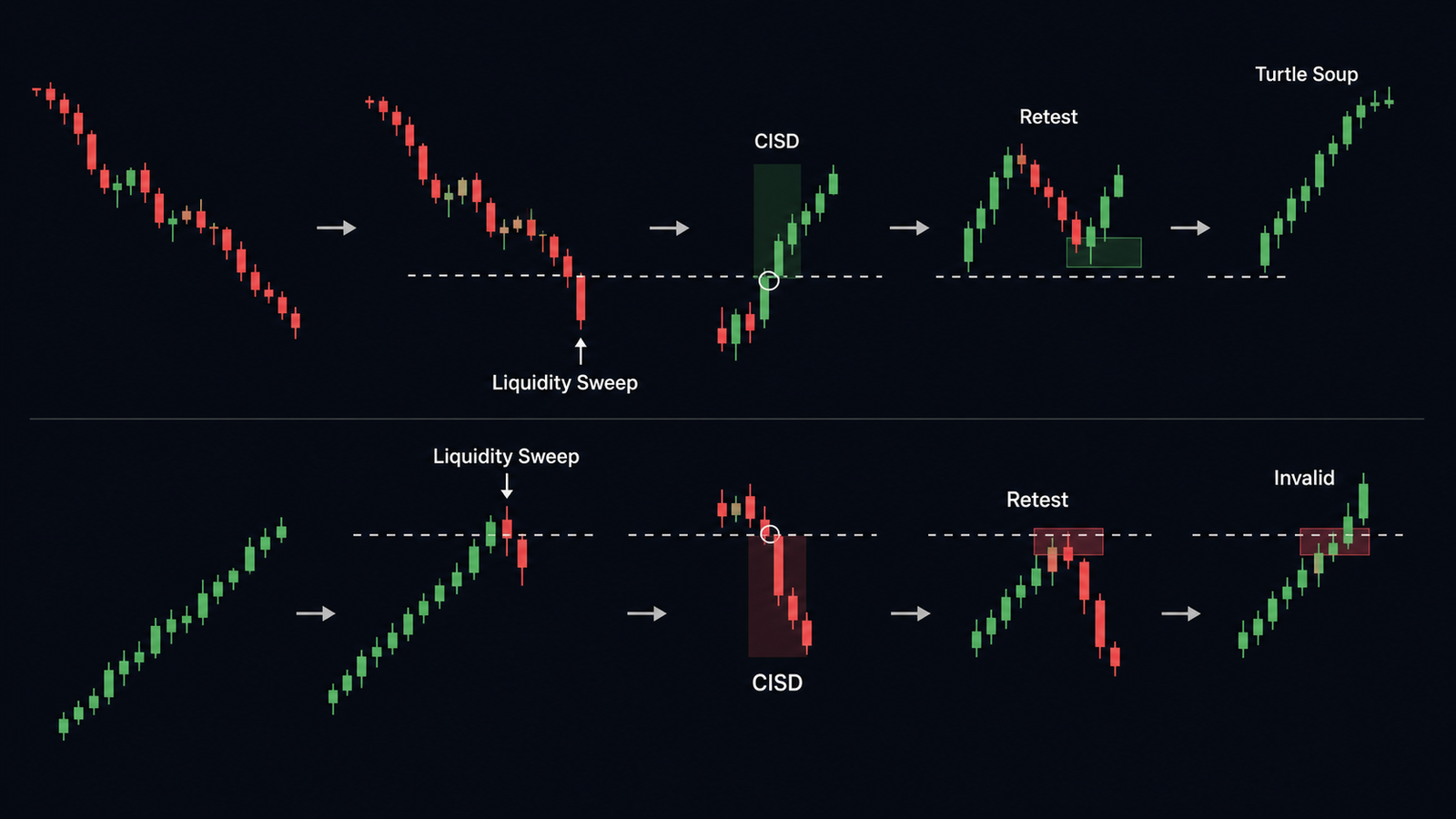
How are CISD and Turtle Soup different?
CISD focuses on the sequence of closes and the handover of momentum after a push. Turtle Soup focuses on the failed break of an obvious extreme. A chart can meet both descriptions, but the labels do not replace observable candles.
Confirmation rules
- Define the prior extreme or range before the sweep.
- Require a return and opposite close, preferably with displacement.
- Wait for a retest if that is part of your tested plan.
- Place invalidation beyond the swept extreme and calculate risk before entry.
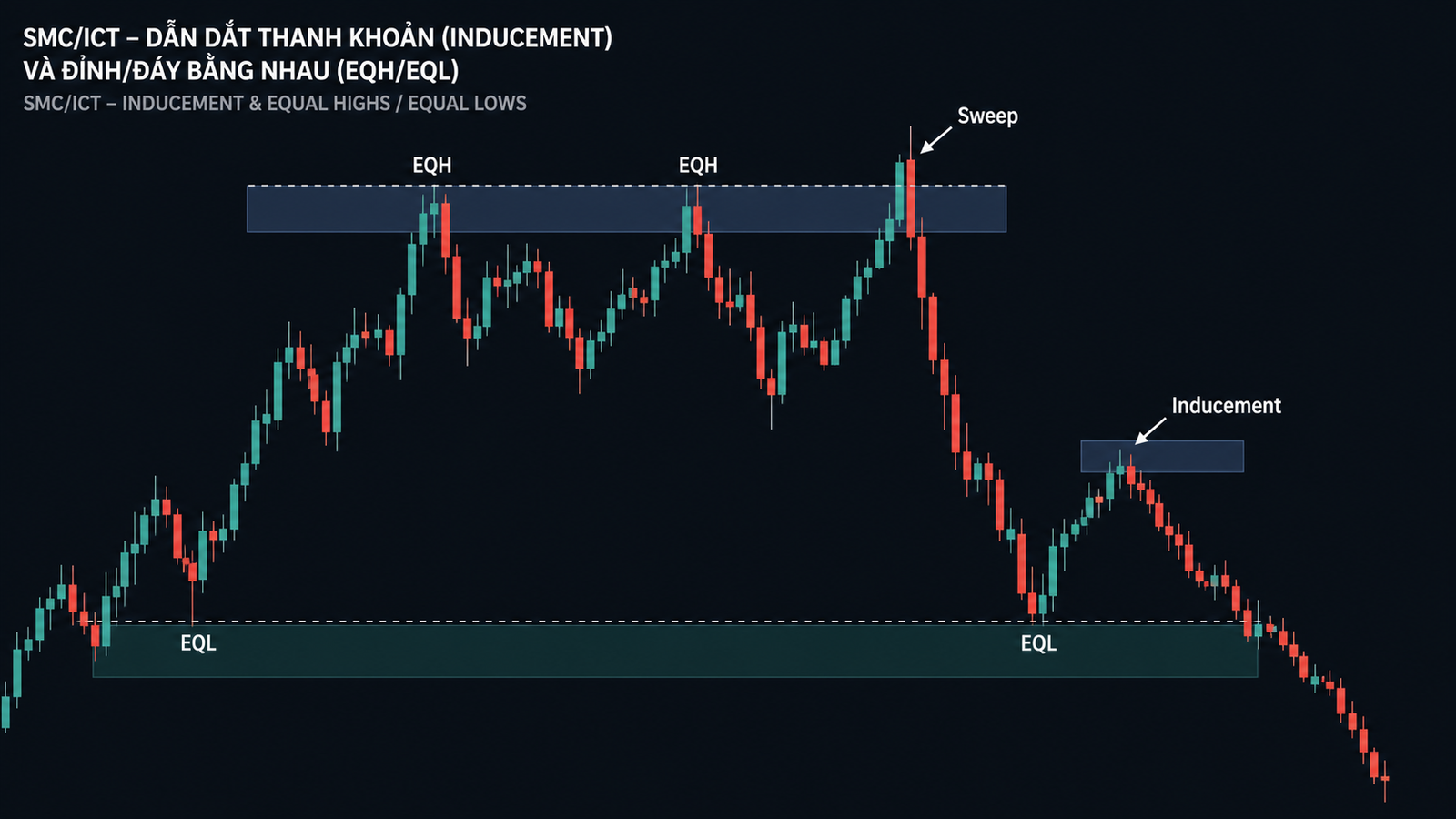
Failure conditions
Acceptance beyond the extreme, no meaningful change in closing direction or a sweep in the middle of a range weakens the reversal hypothesis. News and spread expansion can make a historical sweep non-repeatable.
Hypothetical example
Price breaks the prior day’s low, closes back inside the range and prints a decisive bullish candle. A trader may log a Turtle Soup/CISD candidate only after defining invalidation. If price closes below the low and accepts there, the candidate is rejected.
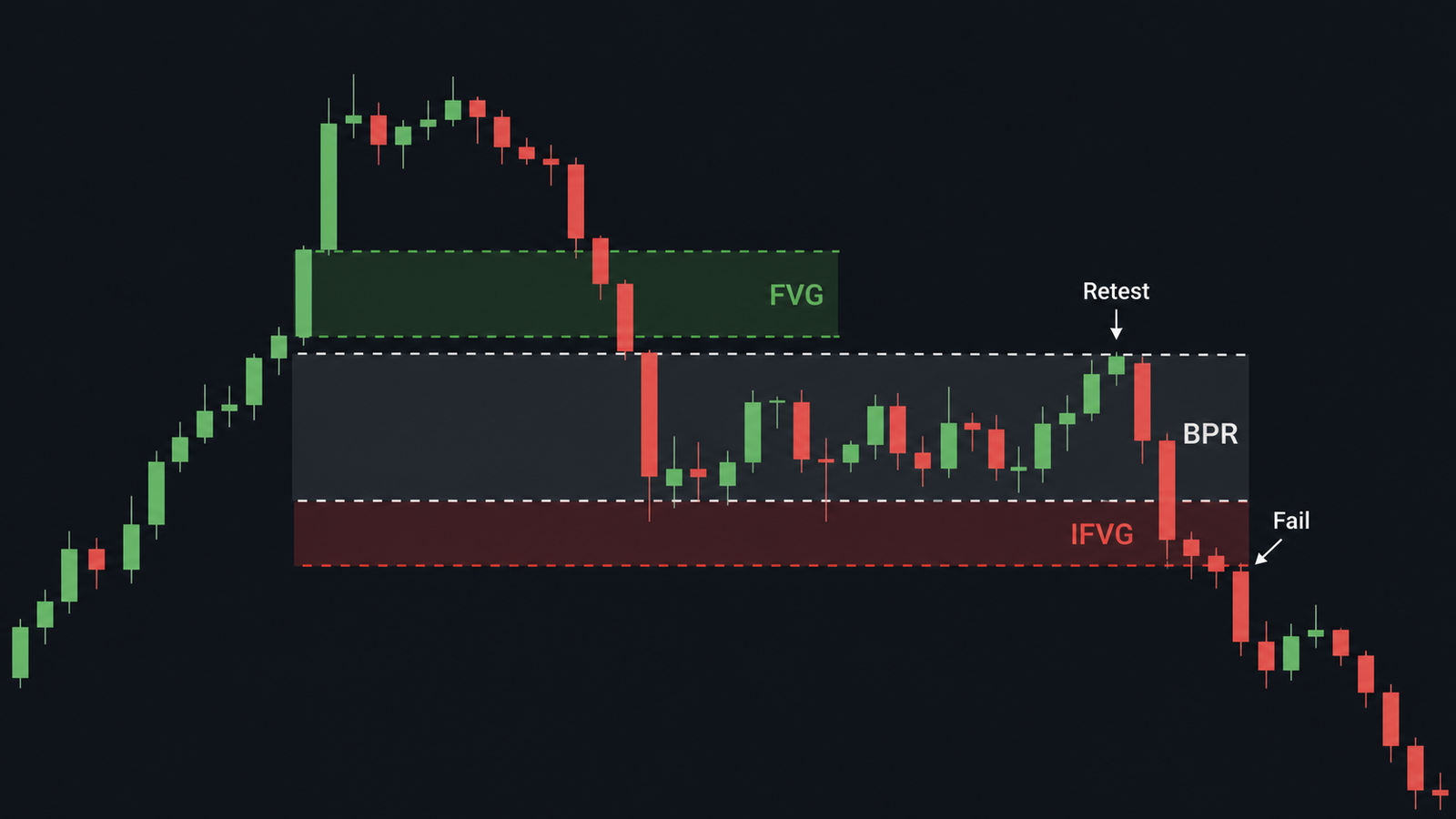
Checklist
- Which extreme was swept?
- Where is the confirming close?
- Was there displacement or only a weak bounce?
- Were invalidation and risk written before entry?
Compare the idea with the guides to liquidity sweeps and ICT structure.
Sources
- MetaTrader 5 Help: Symbol Specification – verify instrument specifications.
- CFTC: Eight Things You Should Know Before Trading Forex – leverage and foreign-exchange risk context.
Risk notice: SMC/ICT terms are discretionary analytical frameworks, not official market rules or investment advice. Trading involves the risk of loss. Examples are hypothetical, not current signals. Test any rule, control position risk and make your own decisions.
Updated: 2026-10-04. Examples are hypothetical, not current trade signals.