


Prop-firm risk warning signs are not accusations that a firm is fraudulent. They are reasons to pause and investigate: unclear terms, rule changes without a trace, an entity that is hard to verify, support unable to explain risk formulas, or opaque payment conditions. The aim is better decision risk management, not labelling a business.
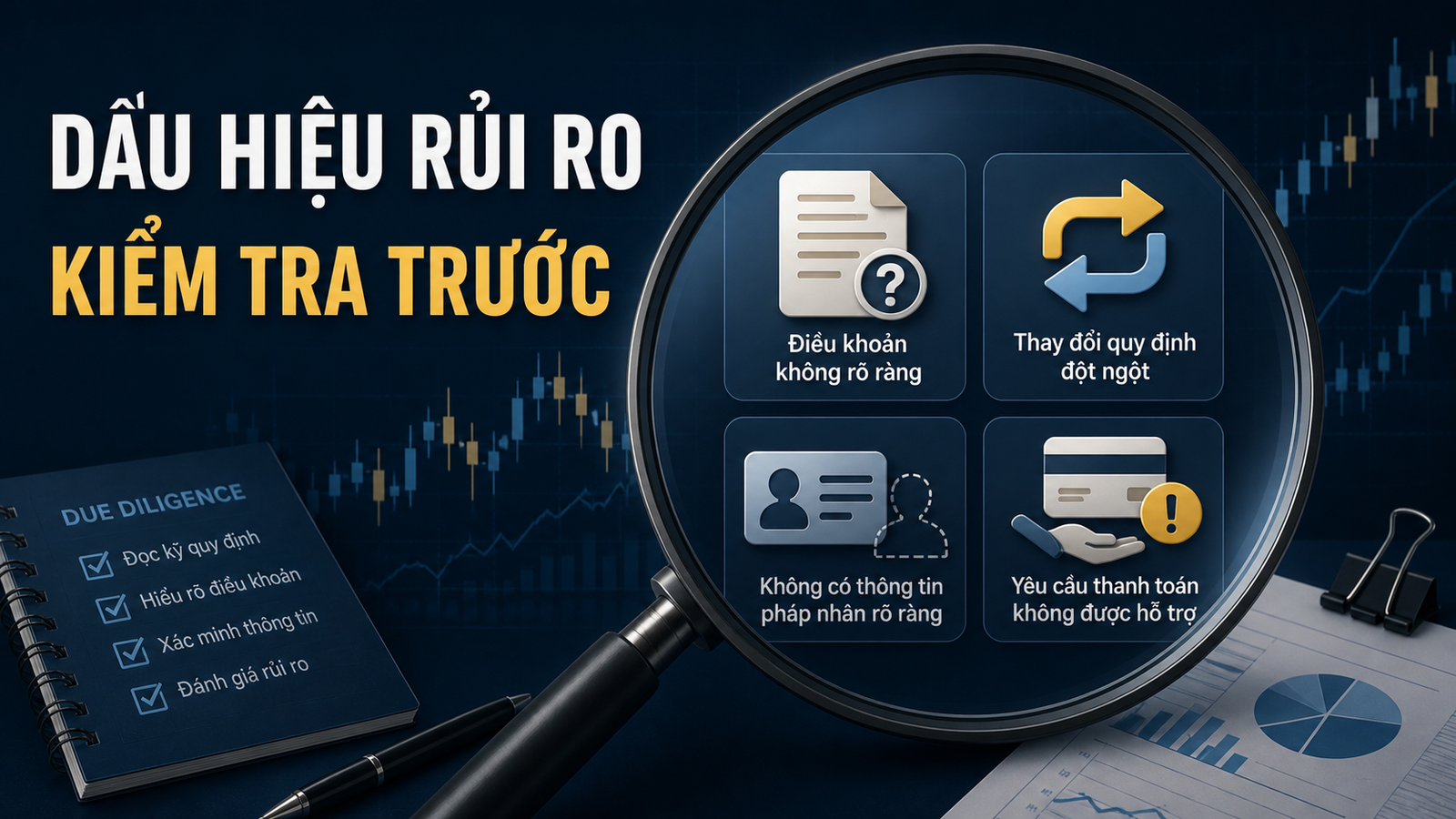
1. Terms cannot be used to calculate risk
If you cannot establish whether daily/maximum loss uses balance or equity, floating P&L, commissions, swap and what reset time applies, you cannot calculate a safe position size. A sales page can be simple; the core terms and FAQ must be usable.
2. Rule changes lack a clear record
Rules can change for operational or market reasons. The warning sign is no effective date, no affected-account scope, or conflicts between dashboard, FAQ and terms. Save the PDF/screenshot and URL at the time you pay.
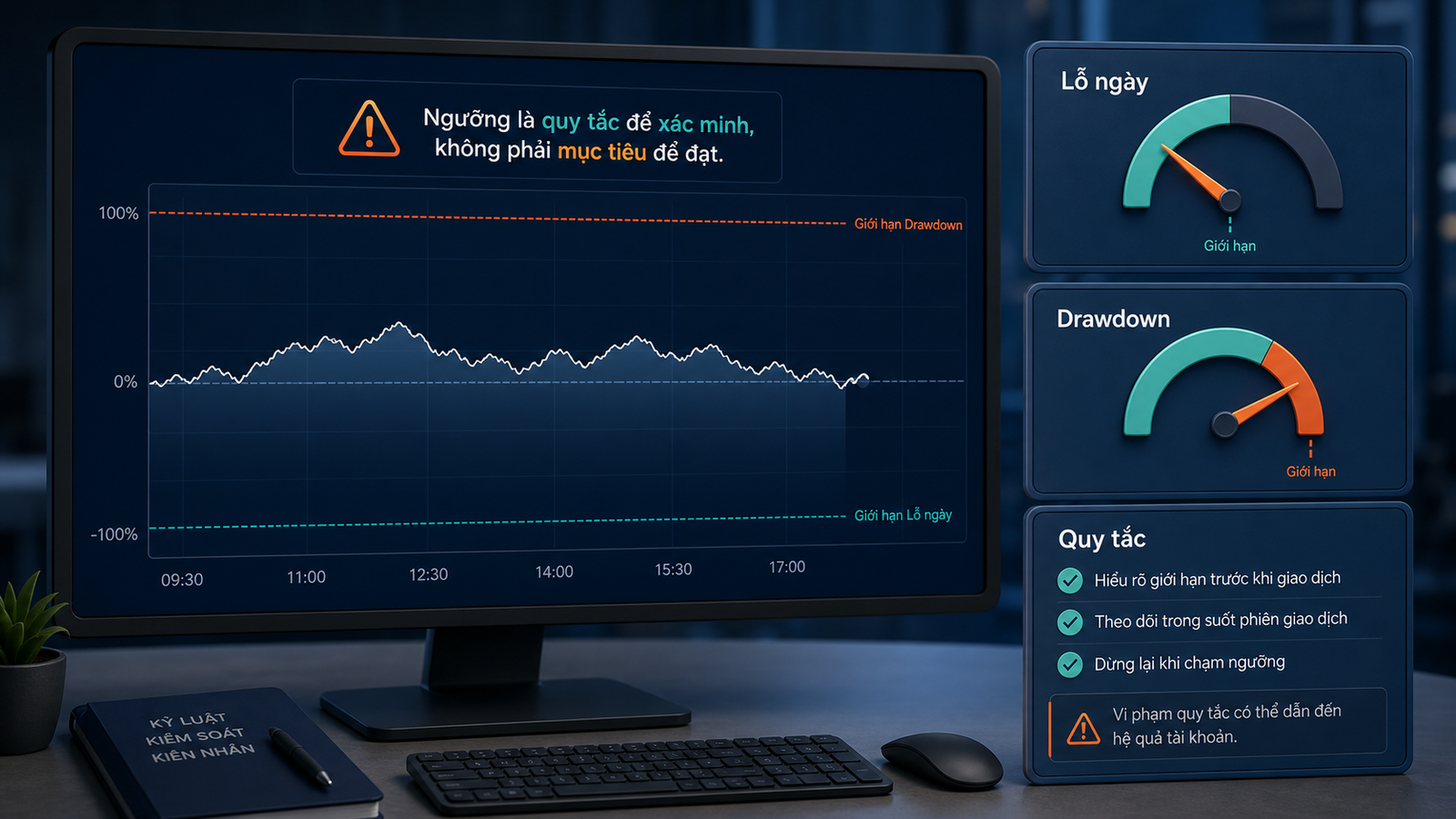
3. Entity, jurisdiction or payment information is hard to verify
Look for the legal entity, address, jurisdiction availability, payment terms, KYC/AML, contact route and dispute process on official pages. Do not infer these from logos, influencers, brief reviews or community groups. If material information conflicts, defer payment until clarified in writing.
4. Marketing replaces formulas
A high payout, fast-pass claim or dashboard screenshot does not tell you whether you can obey the rules. A firm worth researching should explain its model, costs, prohibited practices, reward conditions and simulated/live nature. Avoid decisions based on a testimonial alone.
What to do after seeing a warning sign
- Pause the purchase and read current terms/FAQ directly.
- Ask support questions that can be answered in writing.
- Compare the answers with your journal and personal limits.
- Do not pay through a route without records or terms you understand.
- If material points remain unclear, use demo or skip the programme.
Continue learning
Read the FTMO review, FundedNext review, FundingPips review and the comparison framework.
FAQ
Is one warning sign enough to call a prop firm a scam?
No. One signal calls for further verification. Serious claims should only be made from reliable, verifiable evidence.
Risk disclosure: This is educational information, not investment advice, a solicitation to trade or a promise of passing an evaluation. Prop-firm fees and rules can change by product, region and time. Read the current official terms before paying.
Due-diligence example, failure and no-trade
Direct answer: A prop-firm risk warning is a checklist for identifying unresolved terms, operational restrictions and loss-limit exposure. It is not a legal conclusion that a provider is fraudulent.
| Observation | Risk question | Safe action |
|---|---|---|
| Rule page and FAQ differ | Which product/version controls? | Ask provider and keep evidence |
| Loss limit uses unclear equity basis | Does floating P/L count? | Do not pay until clarified |
| Marketing promises dominate | Where are legal entity and complaint route? | Verify independently |
Failure cases include relying on social proof, applying a CFD rule to Futures, ignoring news/copy/EA/device restrictions, or calling an unresolved issue a scam without evidence. No purchase or trade is appropriate when product, legal entity, loss formula, prohibited-practice list or refund terms cannot be verified. Compare with position sizing, loss limits, drawdown, risk–reward and glossary. Checked 16 September 2026. Primary references include the current FTMO Trading Objectives and FundedNext rules library.
Failure, invalidation and no-trade
Failure case: A warning becomes actionable only when the current rule, legal entity and calculation method are independently verified; social proof alone is not evidence. Invalidate the warning or reassurance when terms conflict or the source is stale. Do not trade or purchase a challenge while product, loss limit or prohibited-practice terms remain unresolved.