


R multiple expresses a trade outcome in units of predefined risk. If the distance from entry to invalidation equals 1R, a +2R result means the gross gain is twice that initial risk, while −1R means the planned risk was lost. The unit makes trades easier to compare across account sizes, but it does not predict the next outcome or prove a strategy has an edge.
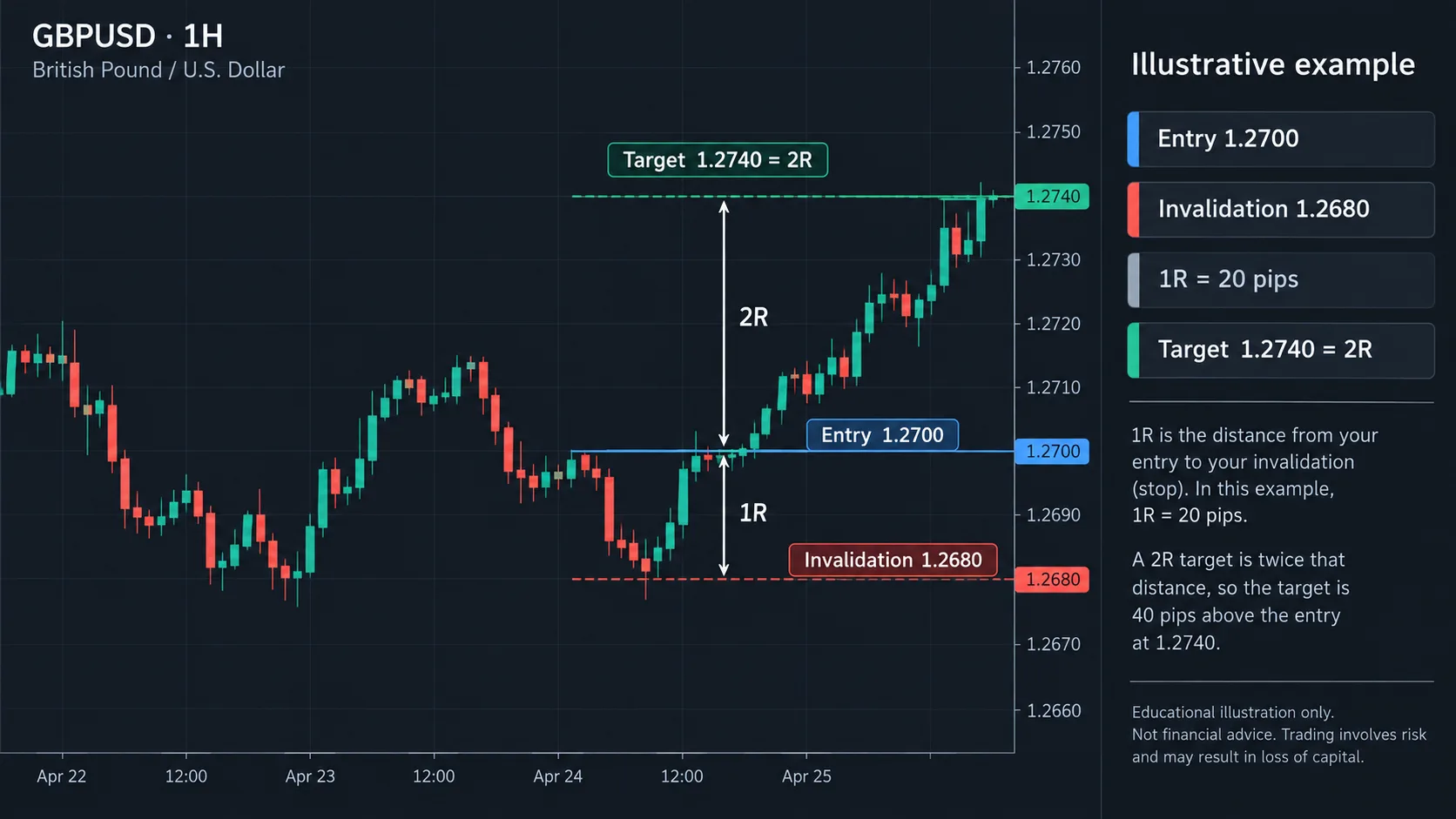
The chart below is an illustrative example, not a live trade.
What Is R Multiple in Trading?
R is a measurement convention, not a universal currency amount. A trader defines 1R from cash risk or from the price distance between entry and invalidation, then keeps that definition consistent in the journal. If the stop is widened without reducing size, the actual R at risk has increased.
How to Calculate 1R
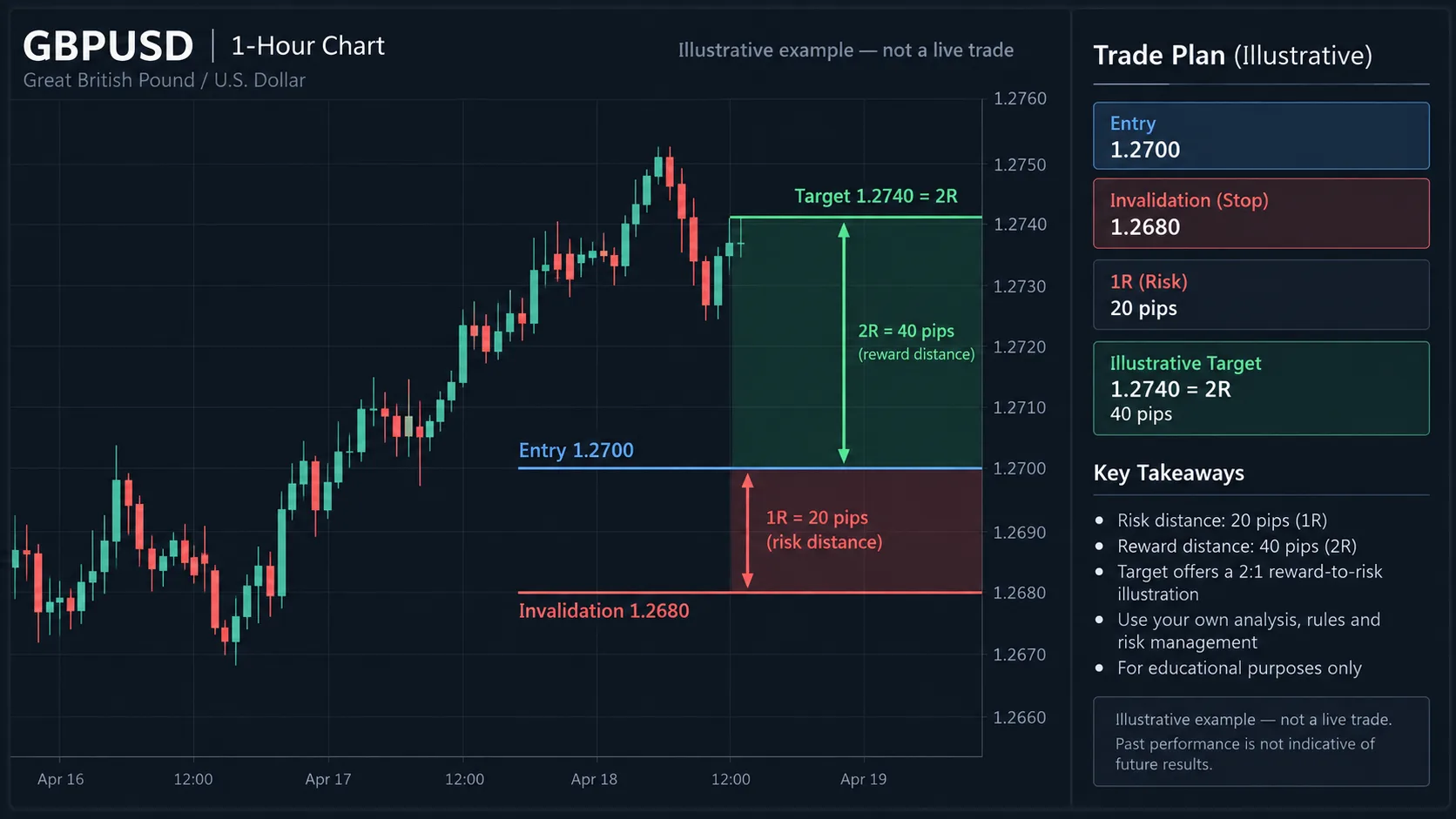
For a simplified long-position example:
1R = |Entry − Invalidation| × point value × position size
If entry is 1.2700 and invalidation is 1.2680, the price distance is 20 pips. A target at 1.2740 is 40 pips from entry, so its price distance is 2R. Converting that distance into money requires the instrument’s contract specification and account-currency conversion.
R Is Not Win Rate
R describes the size of an outcome; it does not state the probability of that outcome. A system can have many −1R trades and still need a separate expectancy calculation to evaluate the long-run average. A short run of +2R trades is also not evidence of a stable edge without a defined sample and cost assumptions.
R, Stop-Loss and Position Size
First define where the analysis is invalidated. Then calculate position size so the loss at that level matches the chosen cash risk. Moving a stop farther away changes R unless size is reduced. Tightening the stop only to create a larger advertised R:R can make the trade more sensitive to ordinary market noise.
Continue with position sizing for Forex and CFD trades and risk–reward ratio explanation to place R inside a broader risk workflow.
Record Planned R and Realized R
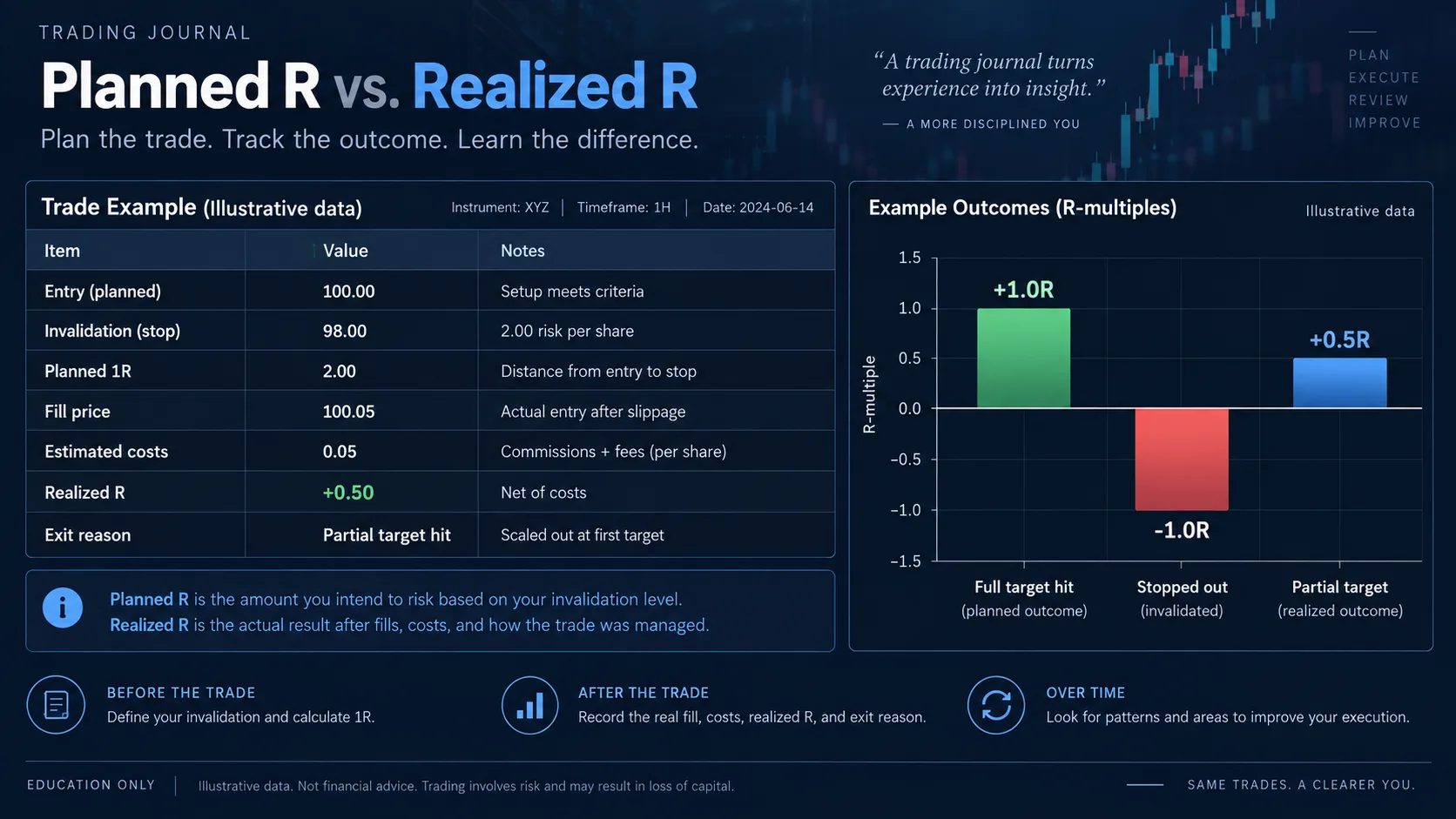
- Entry, invalidation and actual fill price.
- Cash risk and the resulting 1R after sizing.
- Gross and net outcome in R.
- Spread, commission, swap and slippage.
- Reason for exit and whether the original thesis remained valid.
Planned R and realized R can differ when a position is partially filled, exits early or incurs costs. Keeping both fields prevents a journal from overstating results.
R Across Different Markets
Forex, metals, futures and crypto use different tick sizes, contract values, funding or swap rules. The R framework can still organize the log, but point value and costs must be verified for each product. Never copy a pip or tick value from one instrument to another without checking its specification.
Common Failure Cases
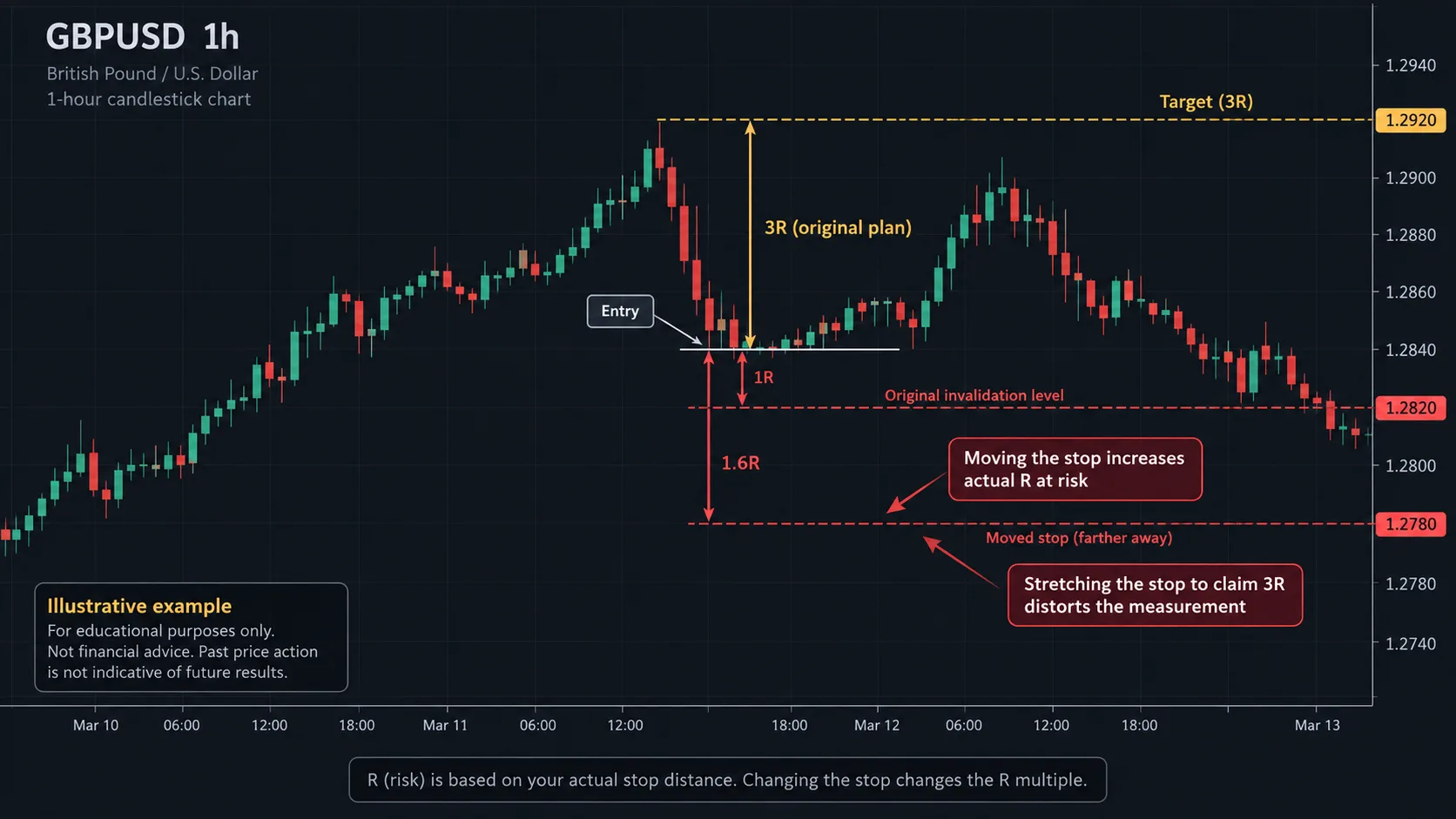
- Choosing a target first and moving the stop to manufacture a high R multiple.
- Ignoring spread and slippage during news or thin liquidity.
- Changing the definition of 1R from trade to trade.
- Calling a trade risk-free after moving the stop to breakeven while costs remain.
- Using R results to imply a win rate or profit guarantee without tested data.
Key Takeaways
- 1R is defined by the initial invalidation risk.
- +2R is a measurement, not a promise.
- Stop, size, point value and costs must be consistent.
- Planned R and realized R are different fields when execution changes.
- Evaluate R together with expectancy, drawdown and sample size.
References
Risk warning: R multiple is a risk unit, not a return guarantee. This article is educational, not investment advice; validate product specifications, costs and your own risk capacity.