


Quick answer: Learn how an Inverse Fair Value Gap differs from a Balanced Price Range, with objective mapping, retest rules and invalidation.
An IFVG is commonly used for a fair-value gap that has been broken and is now read in the opposite role; a BPR is the overlap created by opposing imbalances. Both are observation zones, not automatic entry signals.
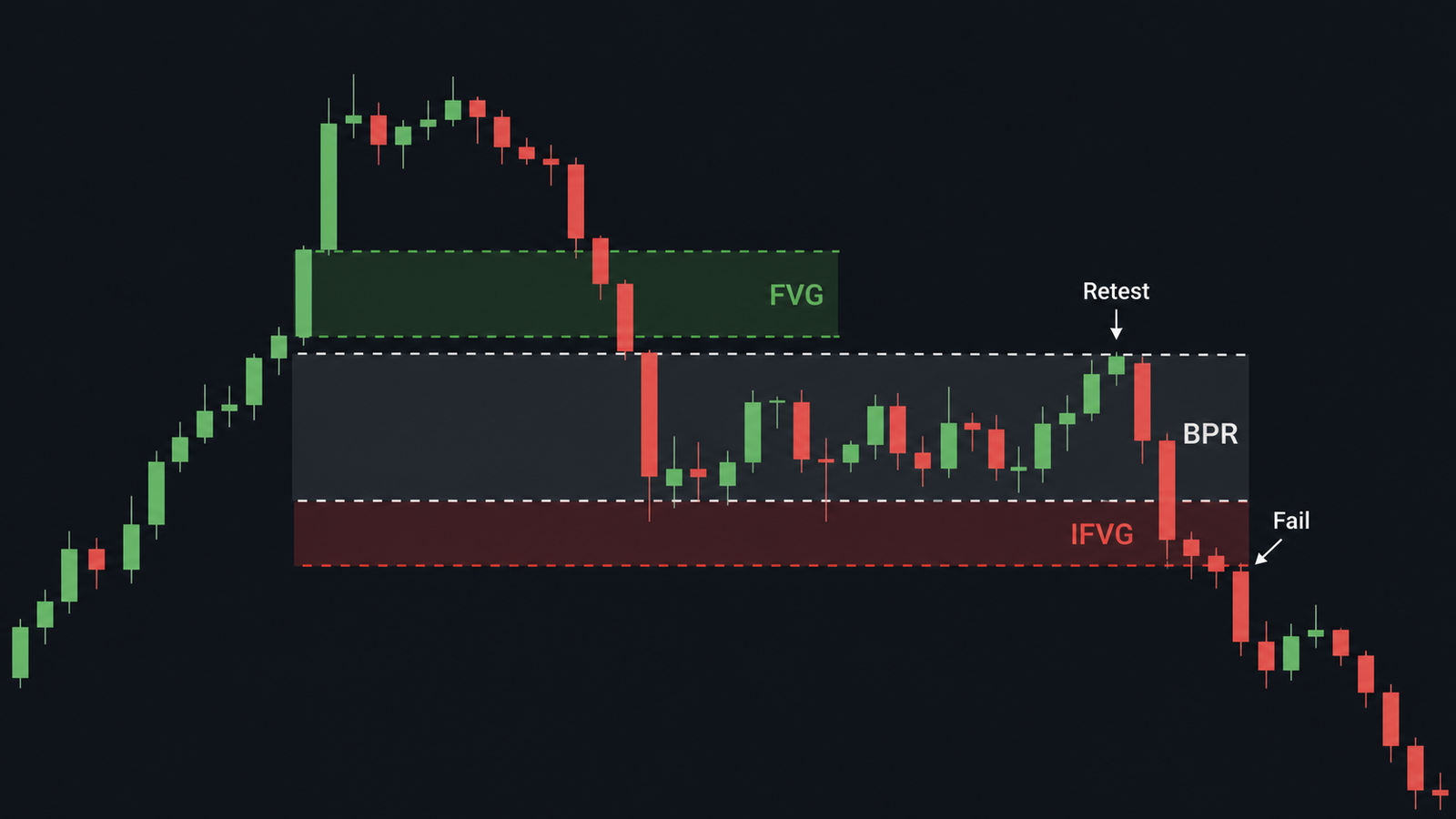
Mapping an IFVG
Record the original gap, the candle that breaks it and the closing location. A wick through a level is not the same as acceptance beyond it. Without this sequence, the label can be attached to any convenient rectangle after the fact.
What makes a BPR different?
BPR focuses on the overlap between a bullish and a bearish imbalance. IFVG focuses on the role reversal of one gap after a break. They may be close on a chart, but the construction and invalidation questions are different.
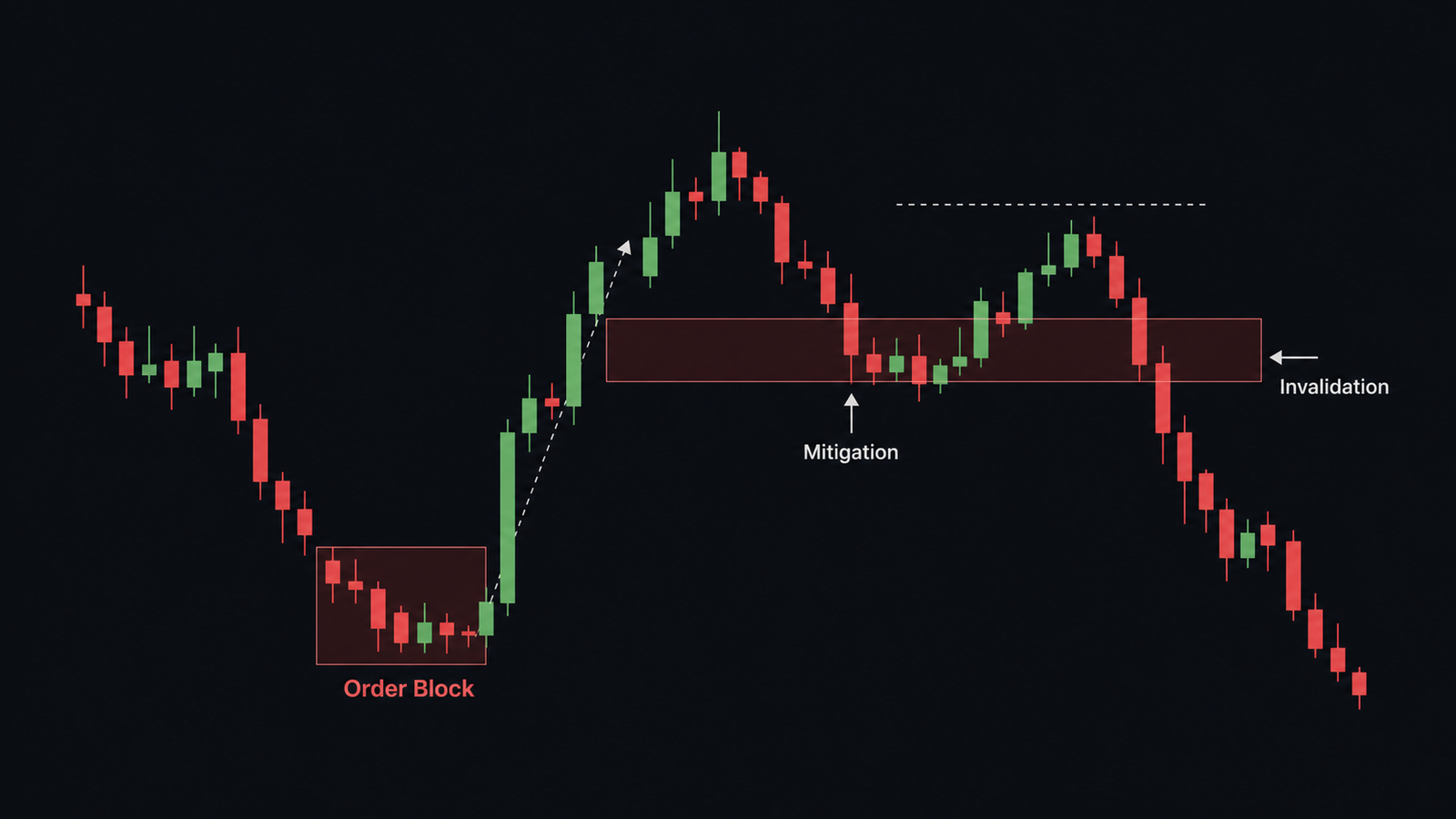
Testable confirmation rules
- Mark both gap boundaries from actual candles.
- Require a close that confirms the break; do not rely on a wick alone.
- Wait for a retest and a response that agrees with the higher-timeframe structure.
- Write invalidation before considering an entry.
Failure cases
Acceptance on the other side, repeated full fills or a changed higher-timeframe narrative weakens the zone. News volatility, spread expansion and slippage can also make a historical retest unrepeatable.
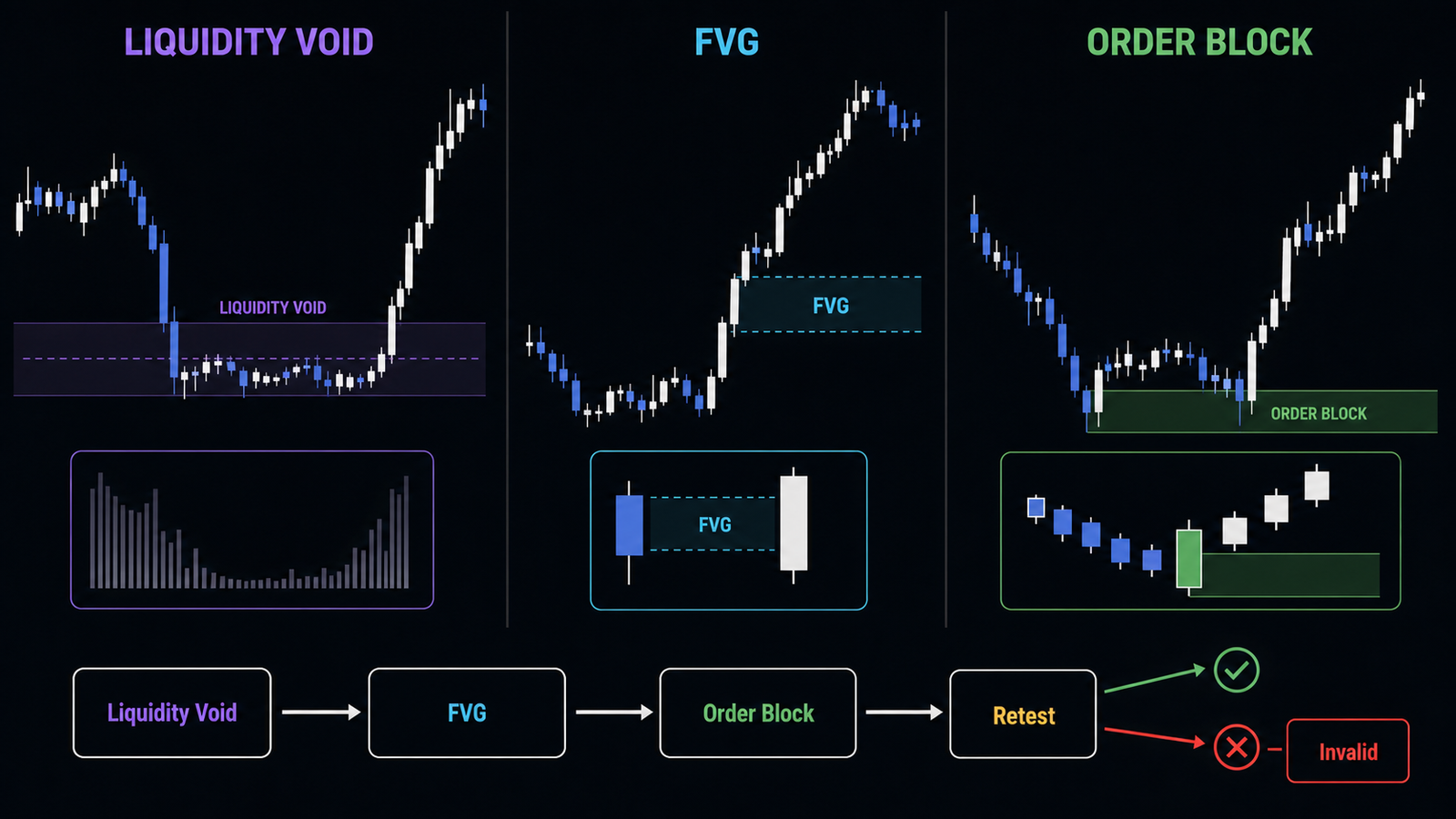
Hypothetical example
Assume a bullish gap is broken by a bearish close below it. Price returns to the lower boundary and continues lower; that is a possible bearish IFVG scenario to journal. If price closes back inside and holds above the zone, the scenario is invalid. It is not a live signal.
Use the site’s FVG guide and ICT foundation to keep imbalance analysis connected to structure.
Sources
- MetaTrader 5 Help: Symbol Specification – verify instrument specifications.
- CFTC: Eight Things You Should Know Before Trading Forex – leverage and foreign-exchange risk context.
Risk notice: SMC/ICT terms are discretionary analytical frameworks, not official market rules or investment advice. Trading involves the risk of loss. Examples are hypothetical, not current signals. Test any rule, control position risk and make your own decisions.
Updated: 2026-10-01. Examples are hypothetical, not current trade signals.
Worked example, limits and no-trade conditions
Direct answer: IFVG and BPR are practitioner labels for imbalance behaviour; the label is only a hypothesis until the price response, context and invalidation are recorded.
| Observation | Possible model | Invalidation |
|---|---|---|
| FVG is revisited after a displacement | Possible mitigation or IFVG | Close-through with acceptance |
| Two imbalances overlap | Possible BPR area | Reaction fails and structure breaks |
Do not claim that every gap fills, that an IFVG predicts reversal or that a BPR is a universal entry zone. Failure cases include selecting the gap after the move, ignoring session/news, treating a thin-feed candle as market-wide evidence and changing the definition between samples. No trade is valid when the gap is too old or wide, the higher-timeframe context conflicts, spread consumes the risk budget or invalidation is not clear.
Use the public FVG guide, market structure, support/resistance, risk management and tick-volume limits. Sources and examples checked 16/09/2026.