


Quick answer: A practical SMC/ICT guide to inducement, equal highs and equal lows, with confirmation rules, failure cases and a testable workflow.
In SMC/ICT terminology, inducement is a tempting price move that may draw early entries before a more visible liquidity pool is tested; equal highs and equal lows are common reference points. The label describes a hypothesis, not proof of institutional intent.
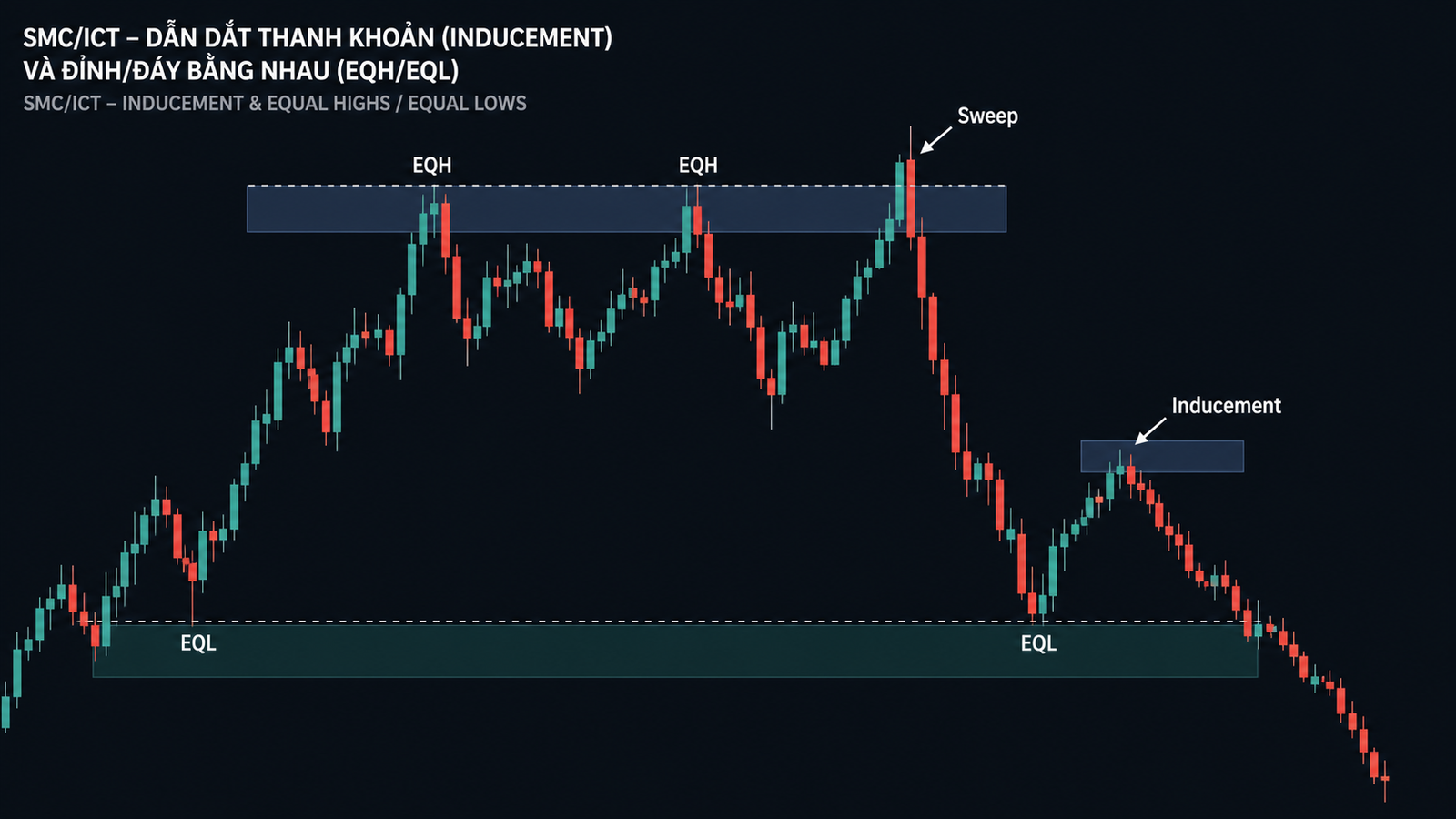
What are equal highs and equal lows?
Equal highs (EQH) are two or more swing highs near the same price. Equal lows (EQL) are the equivalent swing lows. They are useful reference levels because many traders can see them, but “visible” does not mean that a sweep must occur.
A confirmation workflow
- Mark the swing points on a higher-timeframe chart and define a reasonable tolerance.
- Wait for price to reach the level; do not call every small wick inducement.
- Check the close, displacement and a possible structure shift. The ICT structure guide gives a consistent vocabulary.
- Plan the invalidation before considering an entry after the retest.
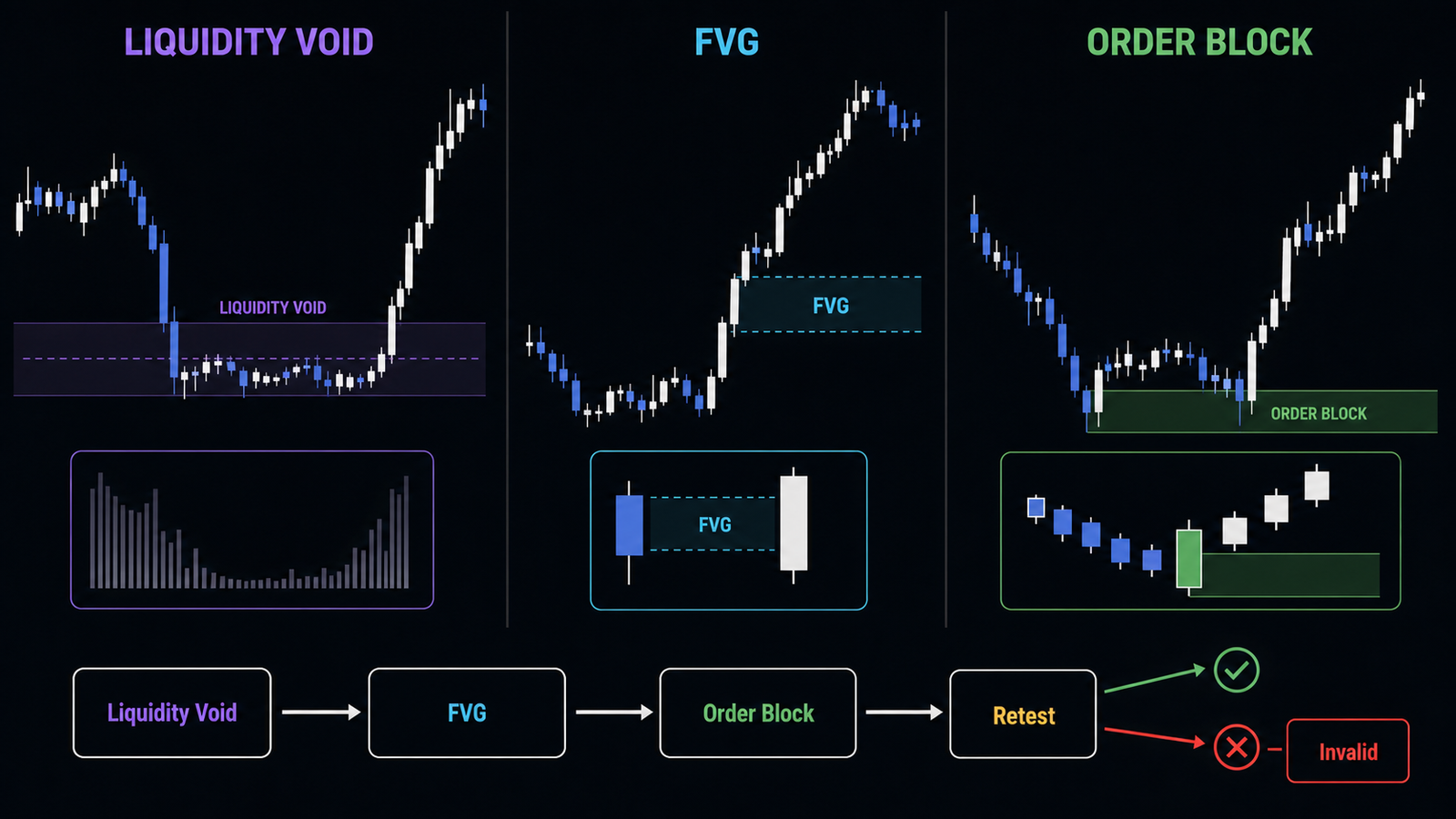
Failure conditions
A sustained close beyond EQH or EQL can be continuation rather than a sweep. A level made from unrelated swings, a choppy middle-of-range location or a very wide tolerance weakens the hypothesis. If there is no clear reaction, the chart does not confirm inducement.
Hypothetical example
Assume price forms two similar highs, briefly trades above them and then closes back below with a decisive bearish candle. A trader may record a short-after-retest scenario, with invalidation above the sweep high. If price accepts above the highs, that scenario is invalid. This is not a live signal.
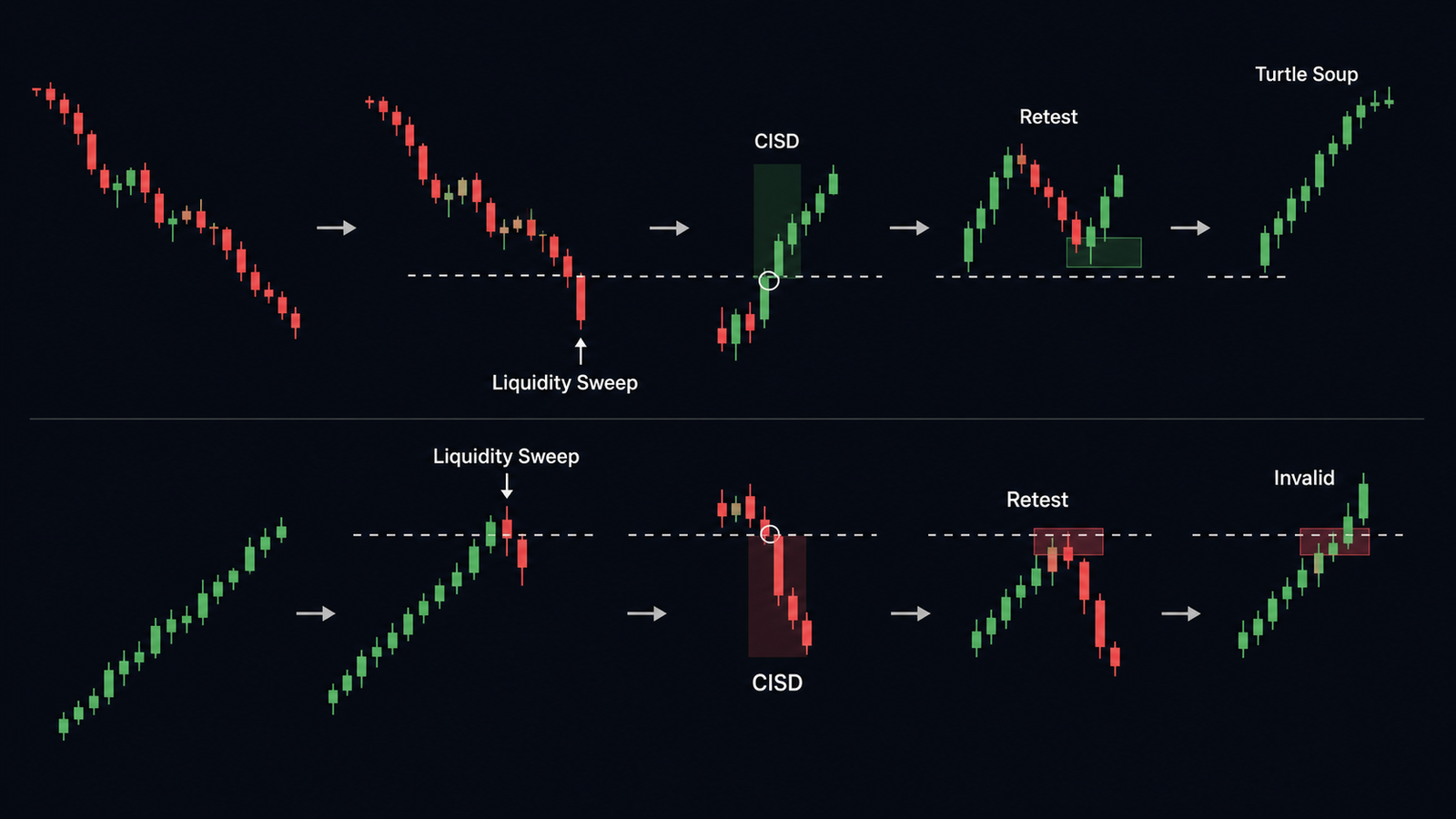
Journal checklist
- Which swings created the EQH/EQL?
- Was the sweep confirmed by a close or only a wick?
- Did displacement or a structure shift follow?
- Where is invalidation and how was position size calculated?
For context, read the guides to liquidity and Smart Money Concepts and their limits.
Sources
- MetaTrader 5 Help: Symbol Specification – verify instrument specifications.
- CFTC: Eight Things You Should Know Before Trading Forex – leverage and foreign-exchange risk context.
Risk notice: SMC/ICT terms are discretionary analytical frameworks, not official market rules or investment advice. Trading involves the risk of loss. Examples are hypothetical, not current signals. Test any rule, control position risk and make your own decisions.
Updated: 2026-09-29. Examples are hypothetical, not current trade signals.
Worked example, limits and no-trade conditions
Direct answer: Inducement is a discretionary SMC/ICT interpretation of a move that may attract participation before a later liquidity event; it is not proof of intent or a standalone entry trigger.
| Observation | Possible interpretation | Failure |
|---|---|---|
| Minor high/low is swept | Possible liquidity test | Price accepts beyond the level |
| Structure does not follow | Model remains unconfirmed | No trade without a defined trigger |
Failure cases include calling every pullback inducement, inferring institutional intent, ignoring the chosen feed and moving invalidation after the sweep. No trade is valid when the reference swing is ambiguous, spread/news distorts the move or the setup cannot be tested with a fixed rule. Link to SMC, market structure, FVG, S/R and risk management. Checked 16/09/2026.