


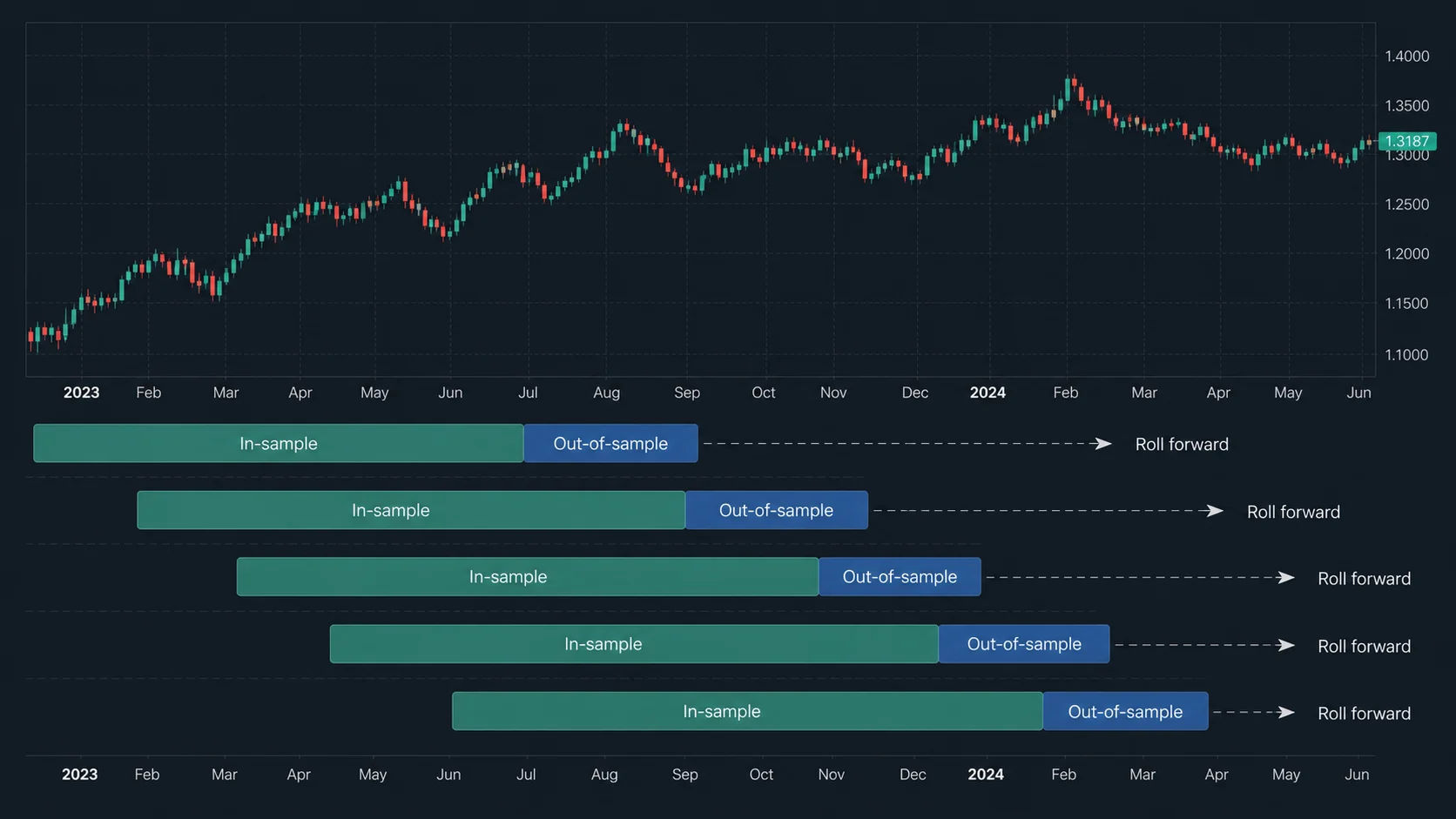
Walk-forward analysis is a time-ordered validation process that repeatedly develops or selects a trading rule on an in-sample window, then evaluates it on the next untouched out-of-sample window. The window is then moved forward and the process repeats. This provides several historical tests that better reflect the order in which information would have arrived, but it cannot prove that a strategy will work in the future.
Key takeaways
- In-sample data is used to define or select the rule; out-of-sample data is kept separate for evaluation.
- Rolling walk-forward validation repeats this separation through time.
- It helps expose parameter instability and regime dependence, but does not remove overfitting risk.
- Each window must respect what was knowable at that date.
- Costs, fills, unavailable data and the number of variants tested must be documented.
How walk-forward analysis works
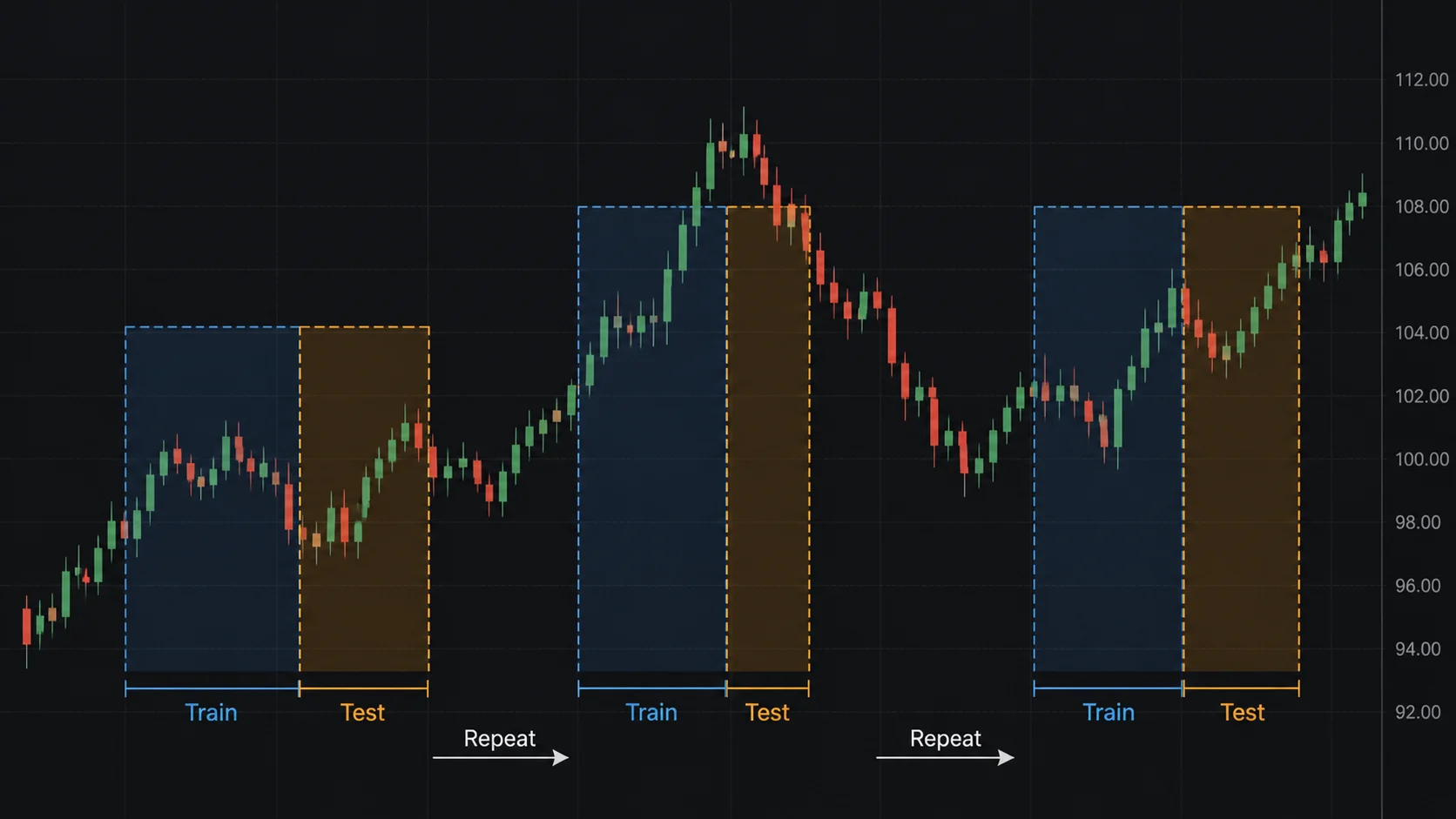
Choose an early historical window for research or optimization. Freeze the selected rule, then apply it to the next chronological period without revising it. Move both windows forward and repeat. The combined sequence of out-of-sample results is the central output—not the best in-sample curve.
This method differs from a random train/test split because market data has time order. Future observations must not be allowed to inform earlier decisions. The site’s backtest overfitting guide explains why this distinction matters.
In-sample, out-of-sample and roll forward
| Stage | Purpose | Failure to avoid |
|---|---|---|
| In-sample | Specify or select the process | Endless parameter searching |
| Out-of-sample | Evaluate the frozen process on later data | Changing rules after seeing results |
| Roll forward | Repeat through different historical periods | Treating all windows as independent evidence |
Static versus rolling validation
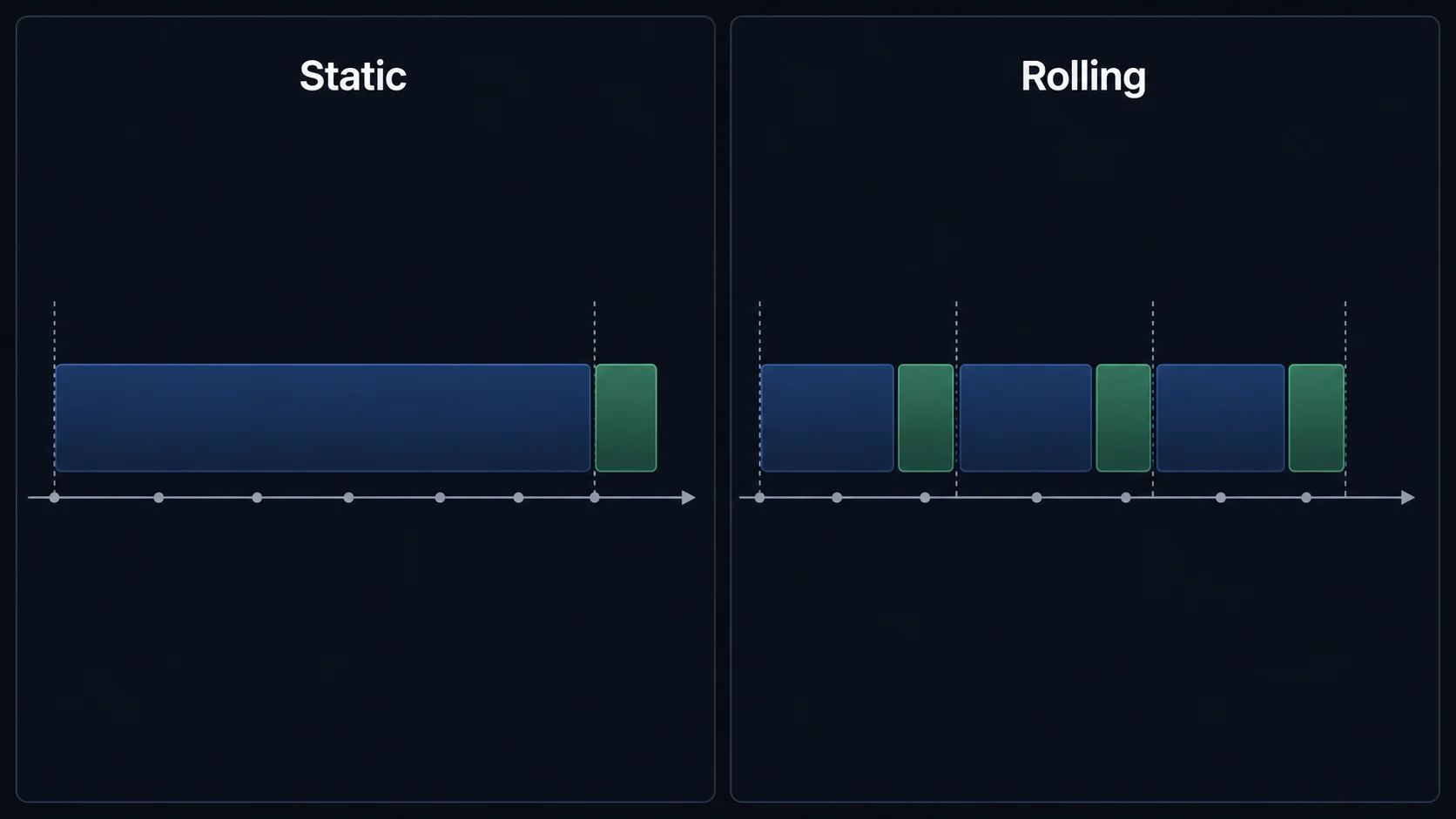
A static split uses one training period and one later test period. It is simple but may be dominated by one market regime. A rolling or expanding approach creates several consecutive out-of-sample windows. Rolling windows keep a fixed lookback length; expanding windows retain all earlier data. Neither choice is universally correct—the horizon should match the data frequency, strategy holding period and realistic opportunity to update rules.
Set realistic rules before running the test
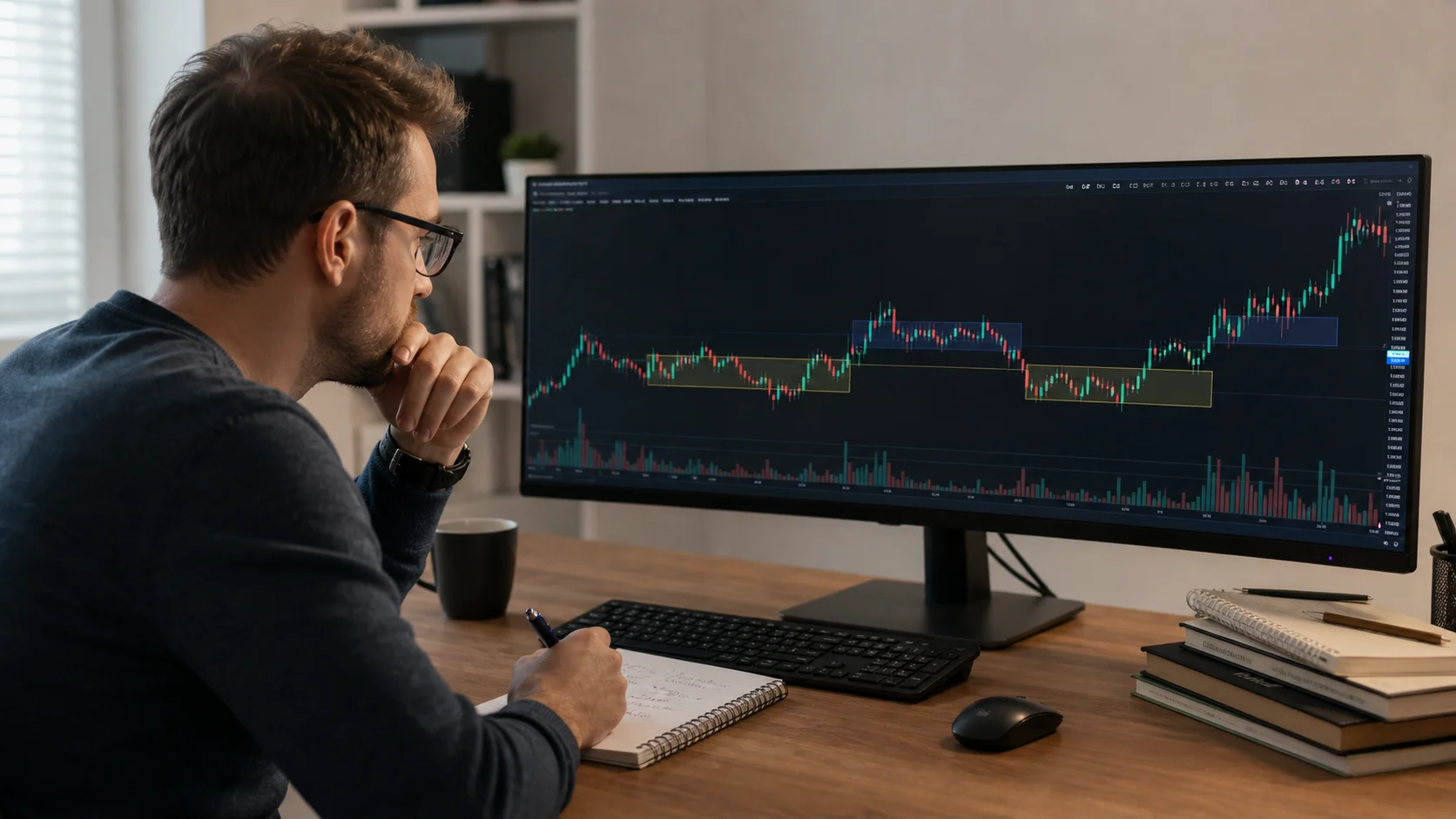
- Write the entry, exit, sizing and parameter-selection rules before evaluating later windows.
- Use historical data that would have been available at the time, including any revisions policy.
- Model spread, commission, slippage and non-fills conservatively.
- Record every tested variant, not only the final one.
- Review out-of-sample consistency, drawdown and failure conditions rather than a single headline metric.
Timeframe choice and rule hierarchy should be defined before validation. See the site’s multi-timeframe analysis framework and top-down analysis workflow for the contextual side of that decision.
Limitations
Repeatedly selecting the best settings across windows can itself introduce selection bias. A changing market may make earlier windows less relevant, while a small number of trades leaves wide uncertainty. Walk-forward analysis is a tool for reducing self-deception, not an edge generator. A separate forward test or paper-trading phase can provide an additional check but also has limited sample size.
FAQ
How long should in-sample and out-of-sample windows be?
There is no fixed length. Choose durations that give enough observations, match the trading horizon and can be justified before looking at results.
Does walk-forward analysis prevent overfitting?
No. It can reveal instability, but excessive research choices, poor data and unrealistic costs can still produce misleading results.
Sources and further reading
- Bailey et al. — The Probability of Backtest Overfitting
- PMC — walk-forward validation in financial time-series research
- TradingView Help Center — Strategy Tester
Risk disclosure: This article is educational information, not investment advice or a solicitation to trade. Testing methods and broker terminology do not eliminate trading risk. Historical samples and simulations do not guarantee future results. Verify data and product terms, assess risk and make your own decisions.