


New York liquidity sweep A New York liquidity sweep setup watches whether price trades beyond a predefined session high or low and then either rejects or accepts beyond it. Trading beyond a level is not automatically a reversal, and exact session times depend on daylight-saving changes and the chart timezone. The method should be treated as a testable chart-reading framework rather than a forecast. Before using it, define the market condition, confirmation event, invalidation price, transaction costs and maximum risk. This guide explains the rules, a repeatable workflow, common failure modes and the most relevant supporting concepts.
Setup Overview
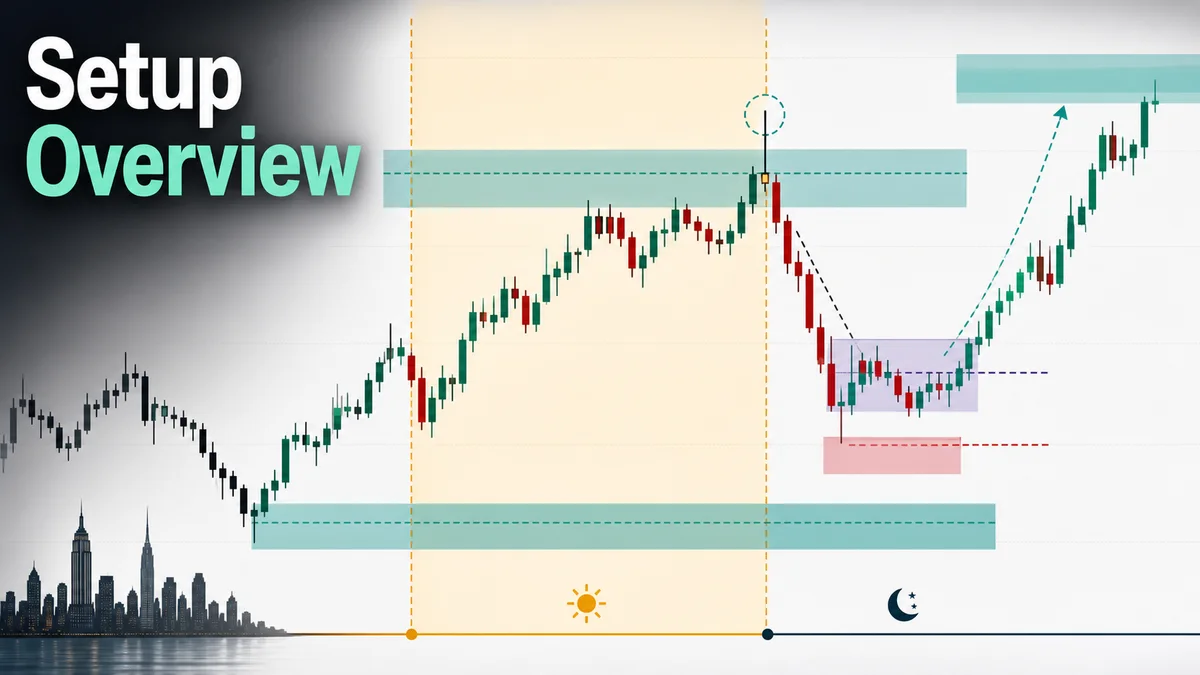
A New York session liquidity sweep setup begins with an obvious level. That level may be the Asian session high, Asian session low, London high, London low, previous day high, previous day low, or a clean intraday swing point. The level matters because many traders can see it. Visibility can attract stop losses, breakout entries, and pending orders.
The sweep happens when price moves beyond that level and then fails to hold beyond it. A bullish version often sweeps sell-side liquidity below a low, reclaims the level, and shifts structure upward. A bearish version often sweeps buy-side liquidity above a high, rejects back below the level, and shifts structure downward.
The session filter matters because New York can bring new order flow, U.S. data reactions, London overlap participation, and stronger intraday volatility. Time alone is not a trade signal, but it helps explain why an obvious high or low may become active during this part of the day.
A complete setup includes five parts: the liquidity pool, the sweep, the rejection or reclaim, the displacement or market structure shift, and the entry model. If one of these pieces is missing, the idea may still be interesting, but it is not yet a complete strategy.
Market Conditions
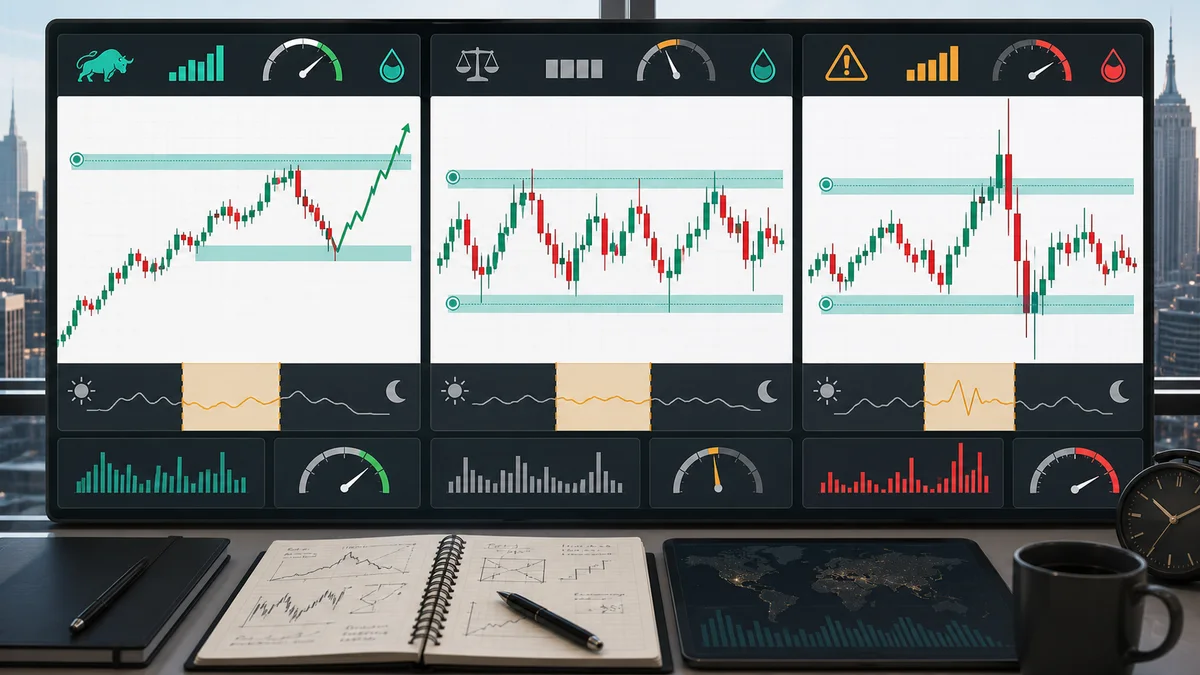
The best market condition for a New York sweep is one where price is approaching a meaningful level with enough room to move afterward. A sweep below a low is stronger when it happens in a higher-timeframe discount area, near support, or after price has already reached sell-side liquidity. A sweep above a high is stronger when it happens in a premium area, near resistance, or after price has already reached buy-side liquidity.
Range conditions can work well because ranges create clear highs and lows. The mistake is assuming every range break is a trap. Sometimes New York breaks a range and continues. That is why the reaction after the sweep matters more than the sweep itself.
Trending conditions need extra care. In a strong bullish trend, a sweep above buy-side liquidity may continue instead of reversing. In a strong bearish trend, a sweep below sell-side liquidity may continue instead of reversing. Countertrend sweeps need stronger confirmation and more realistic targets.
News conditions are also important. New York often includes major U.S. economic releases. A data spike can sweep both sides of a range before the real direction becomes clear, and spreads may widen around the release. Many traders wait until the first reaction settles before looking for a cleaner sweep, displacement, and retracement.
Entry Rules
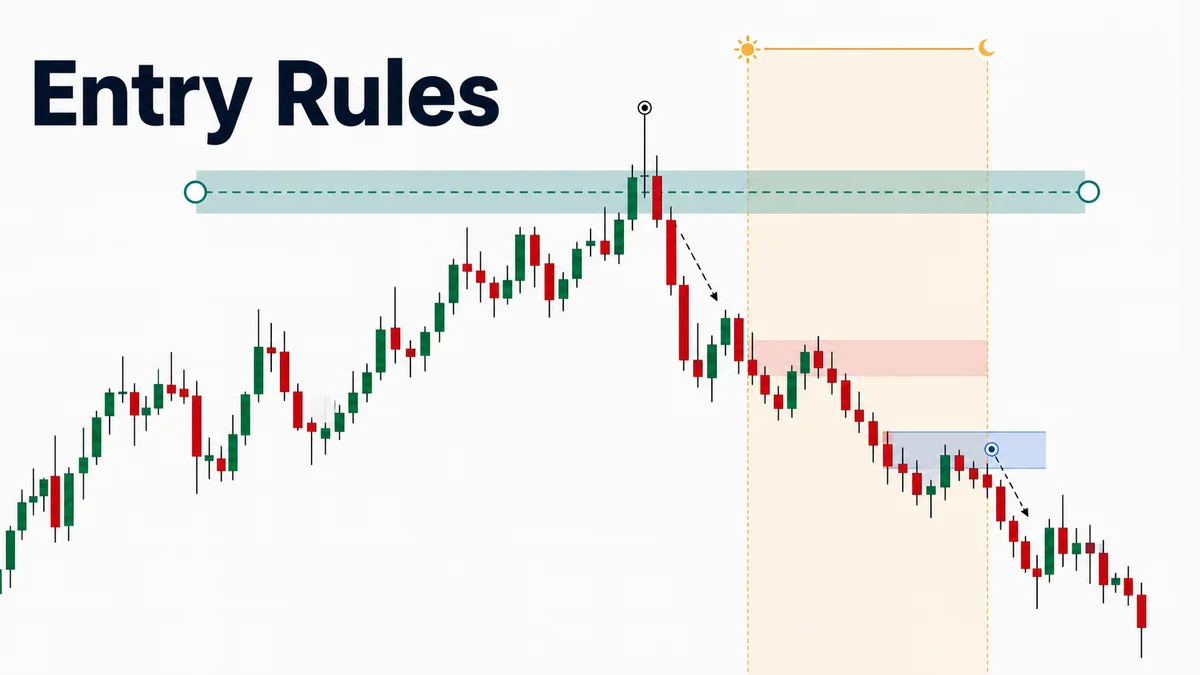
The first entry rule is simple: do not enter on the wick alone. A wick through liquidity only proves that price traded beyond the level. It does not prove that the move failed. Price can sweep, pause, and continue in the same direction.
The second rule is to wait for rejection or reclaim. For a bullish setup, price should sweep below sell-side liquidity and then reclaim the level or close back above the range. For a bearish setup, price should sweep above buy-side liquidity and then close back below the level or fail to accept above it.
The third rule is structure confirmation. After the sweep, wait for a meaningful short-term high or low to break in the expected direction. This may be a market structure shift, a displacement candle, or a move that leaves a clean fair value gap. The goal is to see that behavior has changed after liquidity was taken.
The fourth rule is to enter on a planned retracement, not an emotional chase. Common entry areas include a fair value gap, an order block, a breaker area, or a retest of the reclaimed level. The entry area should be connected to the displacement leg that confirmed the idea.
Stop Loss
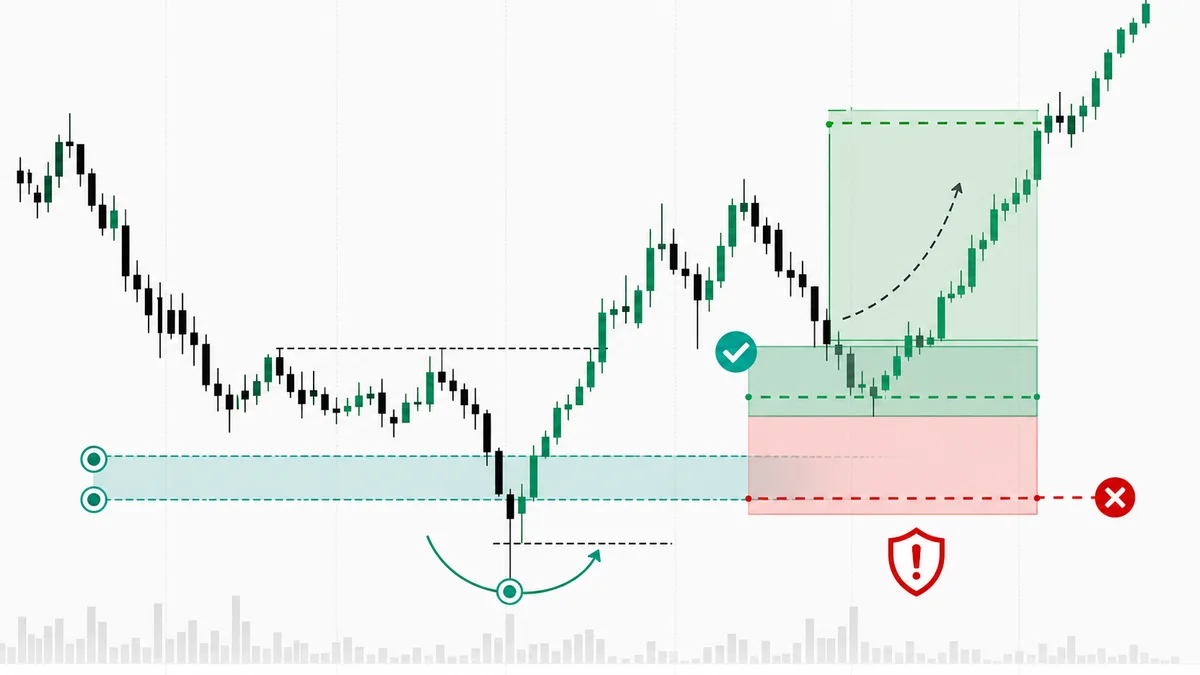
The stop loss should answer one question: where is this liquidity sweep idea wrong? In a bullish sweep, the cleanest invalidation is often below the sweep low or below the structure that caused the bullish shift. In a bearish sweep, invalidation is often above the sweep high or above the structure that caused the bearish shift.
A tight stop may look attractive because it improves the reward-to-risk ratio on paper, but it can fail if it sits inside normal New York volatility. A stop that is too wide can also be a problem because it may make the trade too expensive for the target available. The right stop is not the smallest stop. It is the stop that matches the logic of the setup.
Position size should be calculated after the stop is defined. Do not choose a large size first and then squeeze the stop to fit your comfort level. The setup defines invalidation. Your risk model defines the size.
Take Profit
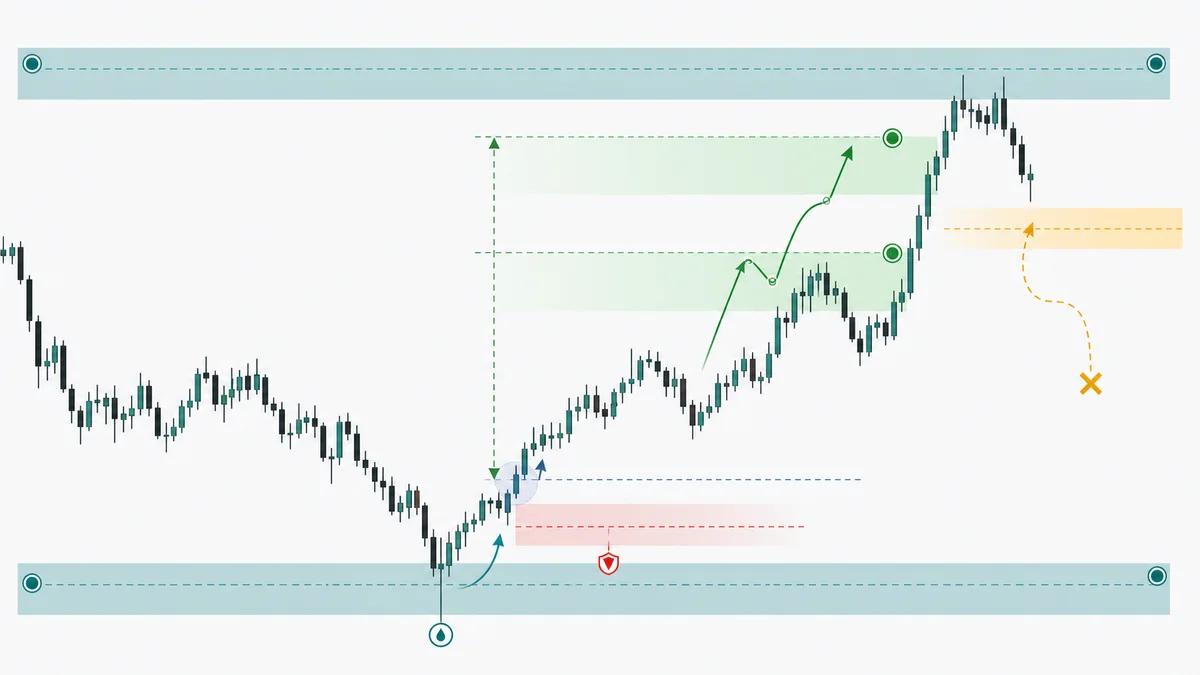
A useful take profit plan usually points toward opposing liquidity. After a bullish sweep of sell-side liquidity, the next buy-side liquidity above the range can become a logical target. After a bearish sweep of buy-side liquidity, the next sell-side liquidity below the range can become a logical target.
Targets should also respect obstacles. If a bullish setup forms directly under a higher-timeframe resistance zone, the first target may need to be closer. If a bearish setup forms directly above higher-timeframe support, the downside target may be limited. A clean entry is not enough if there is no realistic space for price to travel.
Some traders use partial profits at the first opposing level and hold a smaller portion for a larger liquidity target. Others take the full position at a fixed target. The method matters less than consistency. Your journal should show whether your target style fits the behavior of the pairs, indices, or futures contracts you trade.
Confirmation Checklist
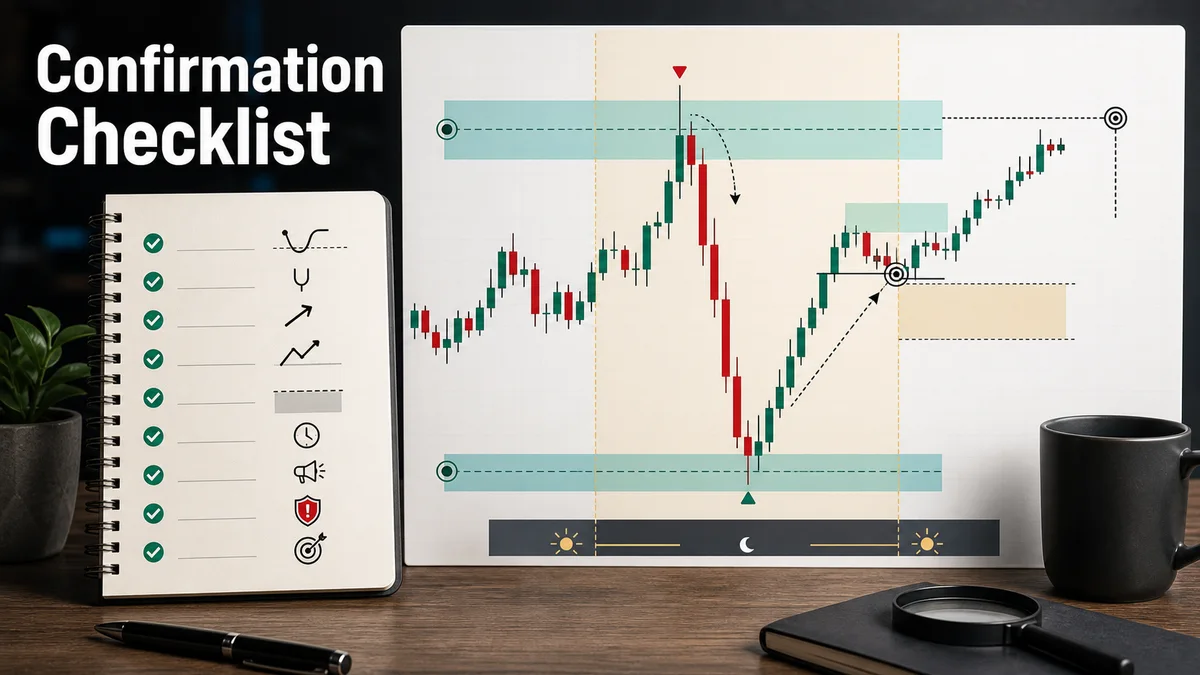
Before treating a New York sweep as a trade idea, run a short confirmation checklist. First, is the liquidity pool obvious? If the level is hard to see, the sweep may be too subjective. Second, did the sweep happen during a meaningful part of the New York session or during the London-New York overlap? Third, did price reject or reclaim the swept level instead of accepting beyond it?
Fourth, did price create displacement or a clear structure shift after the sweep? Fifth, is the entry area connected to that displacement? Sixth, is the stop placed at logical invalidation? Seventh, is there enough target space before the next major obstacle? Eighth, are spread, news risk, and volatility acceptable?
If the checklist feels forced, the trade is probably not ready. A good strategy should reduce pressure, not create more of it. The strongest sweeps are usually clear enough that the checklist confirms what the chart is already showing.
Example Trade
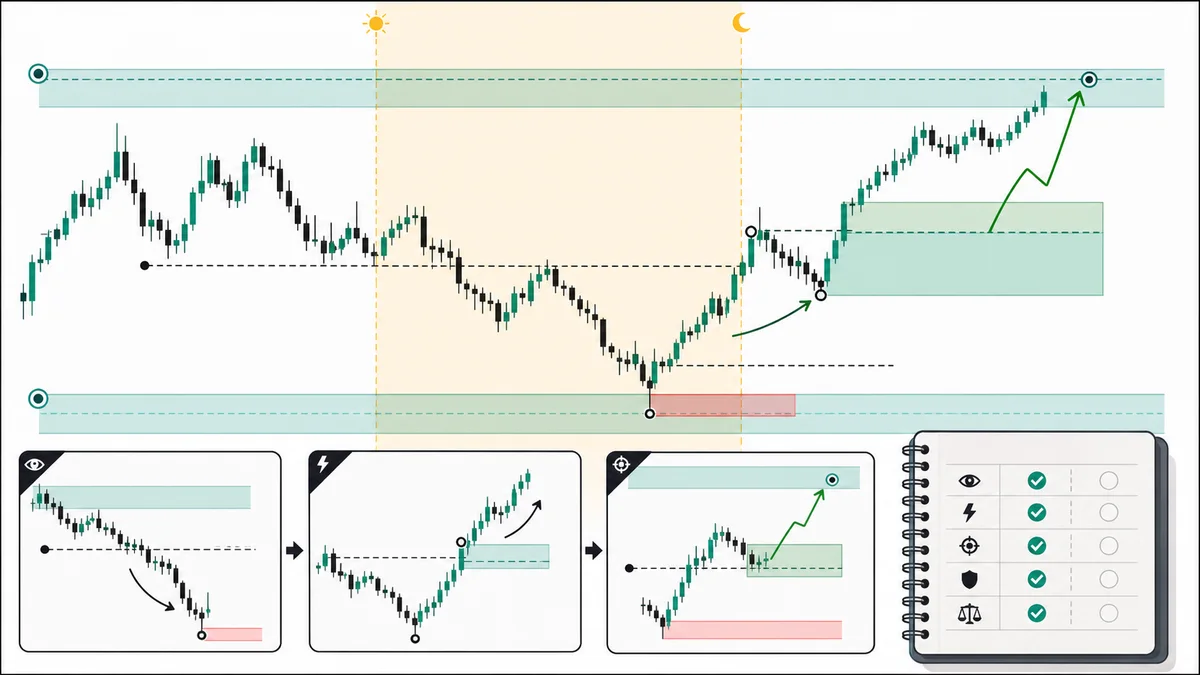
Imagine EUR/USD forms a quiet Asian range. During London, price trades near the range low but does not break it with conviction. The previous day low is also sitting just below the Asian low, which creates a visible sell-side liquidity pool.
When New York begins, price pushes below both lows and triggers the liquidity. Instead of continuing lower, it quickly reclaims the Asian low. A few candles later, price breaks a short-term high with strong bullish displacement and leaves a small imbalance. Now the trader has more than a wick. The trader has a sweep, reclaim, displacement, and structure shift.
The entry plan is to wait for a retracement into the imbalance or into the last down candle before displacement. The stop goes below the sweep low because a clean break below that low would weaken the bullish idea. The first target is the middle of the range. The second target is buy-side liquidity near the Asian high or London high.
This example is not a promise that the trade will win. It shows the logic: liquidity first, confirmation second, entry third, invalidation fourth, target fifth. That order keeps the trader from chasing the sweep candle.
Mistakes
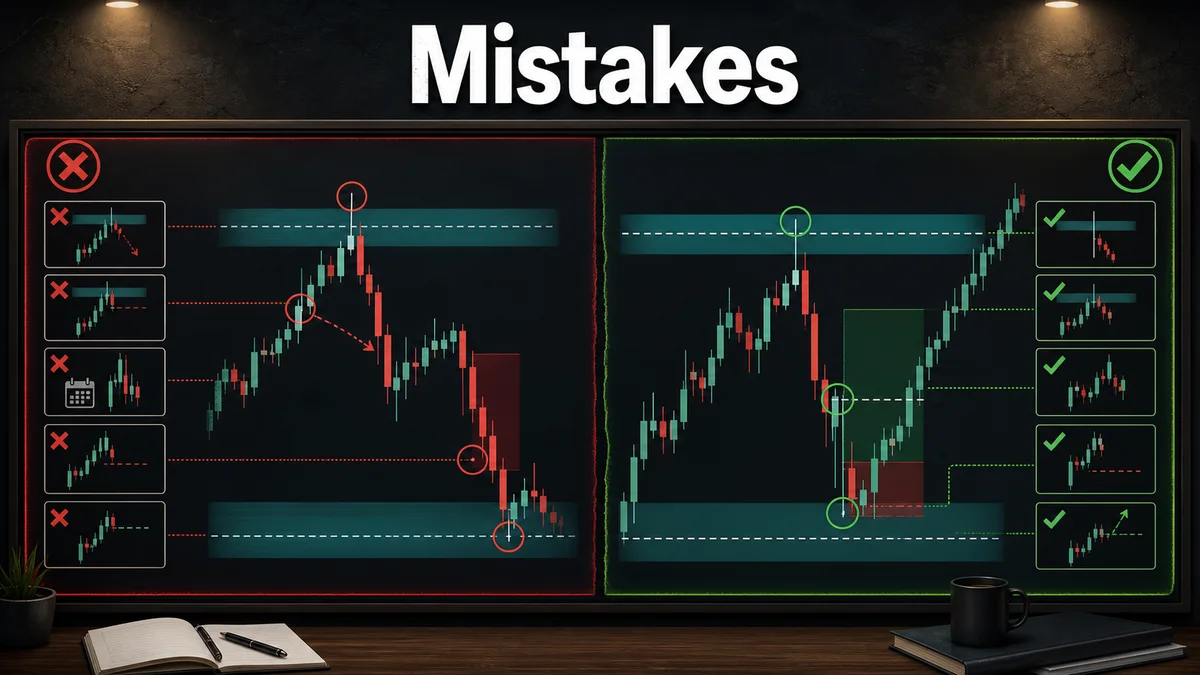
The first mistake is entering as soon as liquidity is swept. A sweep is only an event. It becomes a setup only when price rejects, reclaims, displaces, and offers a logical entry area. Without confirmation, the trader is guessing.
The second mistake is ignoring higher-timeframe context. A bullish sweep into major resistance may have limited room. A bearish sweep into major support may be late. The New York session can create movement, but context decides whether that movement has quality.
The third mistake is trading directly into news volatility. Major releases can create violent two-way movement. A trader who cannot handle spread expansion, slippage, and fast invalidation should wait for cleaner post-news structure.
The fourth mistake is using the same target for every setup. Some sweeps only justify a short scalp into the next liquidity pool. Others have room for a larger session move. Target planning should match the chart, not the trader’s hope.
The fifth mistake is not journaling the model. Save screenshots of the liquidity pool, the sweep, the confirmation, the entry, the stop, the target, and the outcome. Over time, your journal will show whether you are trading a real New York session liquidity sweep strategy or simply reacting to exciting candles.
The clean way to use this model is to stay patient: mark the obvious liquidity, wait for New York to interact with it, demand confirmation, define invalidation, target opposing liquidity, and review every result. That is how a popular Smart Money idea becomes a practical trading process instead of another chart label.
Key takeaways
- A New York liquidity sweep setup watches whether price trades beyond a predefined session high or low and then either rejects or accepts beyond it.
- Trading beyond a level is not automatically a reversal, and exact session times depend on daylight-saving changes and the chart timezone.
- Mark the level before New York opens and require a price-based reclaim or structure condition before planning an entry.
- A valid plan separates location, trigger, invalidation, position size and exit logic.
A validation workflow you can reproduce
- Define the sample: choose the market, timeframe, session and date range before reviewing outcomes.
- Write the rule: Mark the level before New York opens and require a price-based reclaim or structure condition before planning an entry.
- Record invalidation: identify the observable price event that disproves the setup.
- Include execution costs: account for spread, commission and slippage where relevant.
- Validate separately: test the finished rule on data that was not used to create it.
When this concept is unreliable
The setup is unreliable when every break of an Asian or London extreme is treated as a sweep despite sustained acceptance outside the range. Keep failed and skipped examples in the journal so the review is not limited to attractive winners.
Use this concept within a complete analysis
This method should remain connected to its parent framework and adjacent decision steps. Use Multi-Timeframe Analysis: Complete Guide, Asian Session Trading Strategy, Top-Down Analysis in Trading: Step-by-Step Method, Best Timeframes for Forex Trading, Trading Sessions: Complete Guide for Forex Traders and Price Action Trading: Structure, Setups and Risk to compare definitions, establish context and avoid treating one signal as a complete trading system.
References and methodology
Practise before considering real capital
Use historical charts or a demo account to test the written rules before considering live execution. Review the Exness account and demo information. Availability, protections and trading conditions depend on jurisdiction, so review the applicable legal documents yourself.
Affiliate disclosure: Học Làm Trader may receive a commission if you open an account through this link, at no additional cost to you. This relationship does not determine the educational conclusions.
Risk warning: This article is for education and general information only. It is not investment advice, a trade signal or an invitation to trade. Trading can result in loss of capital, and past examples do not guarantee future results. Assess your own circumstances and risk tolerance.