


Asian session trading strategy An Asian session strategy uses a predefined regional trading window to study range formation, breakout or interaction with later London and New York activity. The session is not uniformly quiet, and behavior varies by currency pair, news, holidays, daylight-saving conventions and broker feed. The method should be treated as a testable chart-reading framework rather than a forecast. Before using it, define the market condition, confirmation event, invalidation price, transaction costs and maximum risk. This guide explains the rules, a repeatable workflow, common failure modes and the most relevant supporting concepts.
Setup Overview
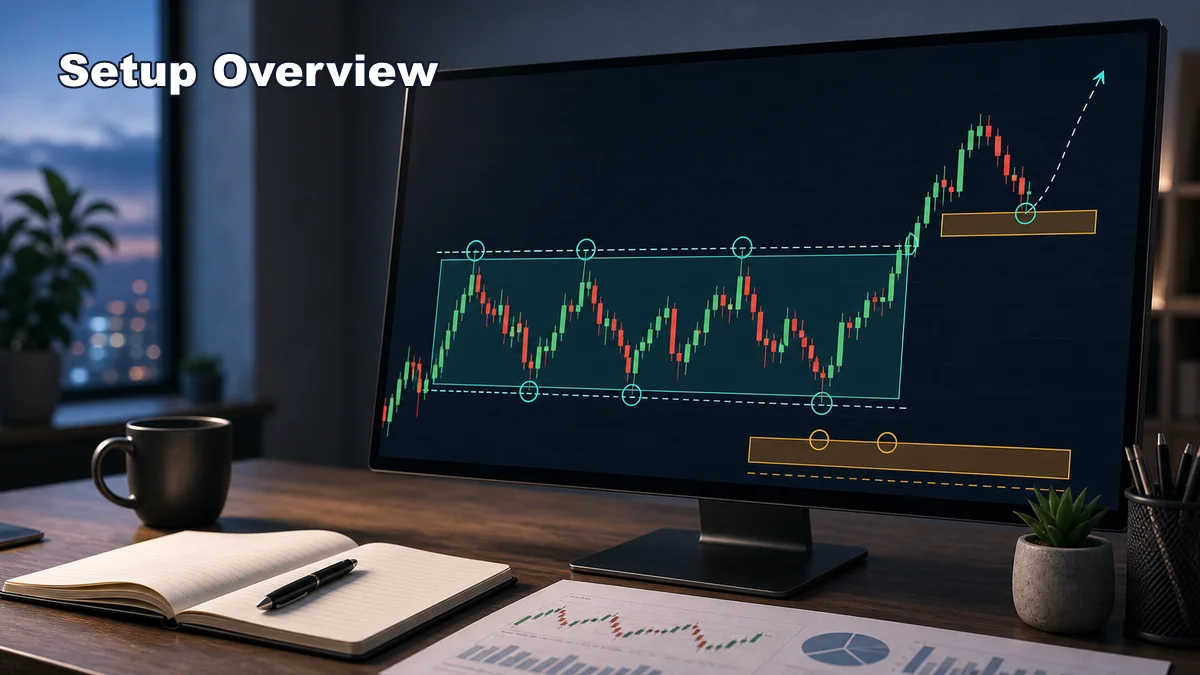
The simplest setup begins by marking the Asian session high and low. These two levels define the range. Inside the range, price may move slowly, overlap heavily, and produce many weak signals. Outside the range, price may create a clearer opportunity if it breaks, sweeps, or retests the session boundary with confirmation.
There are two common approaches. The first is breakout continuation: price leaves the Asian range, holds outside it, and continues toward the next liquidity area. The second is sweep reversal: price briefly moves beyond the range high or low, rejects, and returns back inside or through the opposite side. Both approaches require confirmation because a first break can easily fail.
A practical setup should include the range, the expected direction, the entry trigger, the invalidation point, and the target before any trade is taken. If those pieces are not clear, the trader is probably reacting to movement instead of following a strategy.
Keep the setup simple at first. Mark only one Asian high, one Asian low, and one higher-timeframe level that may affect the trade. If the chart needs five boxes and ten arrows to explain the idea, it is probably not the best learning example. The best session setups are often easy to describe in one sentence.
Market Conditions
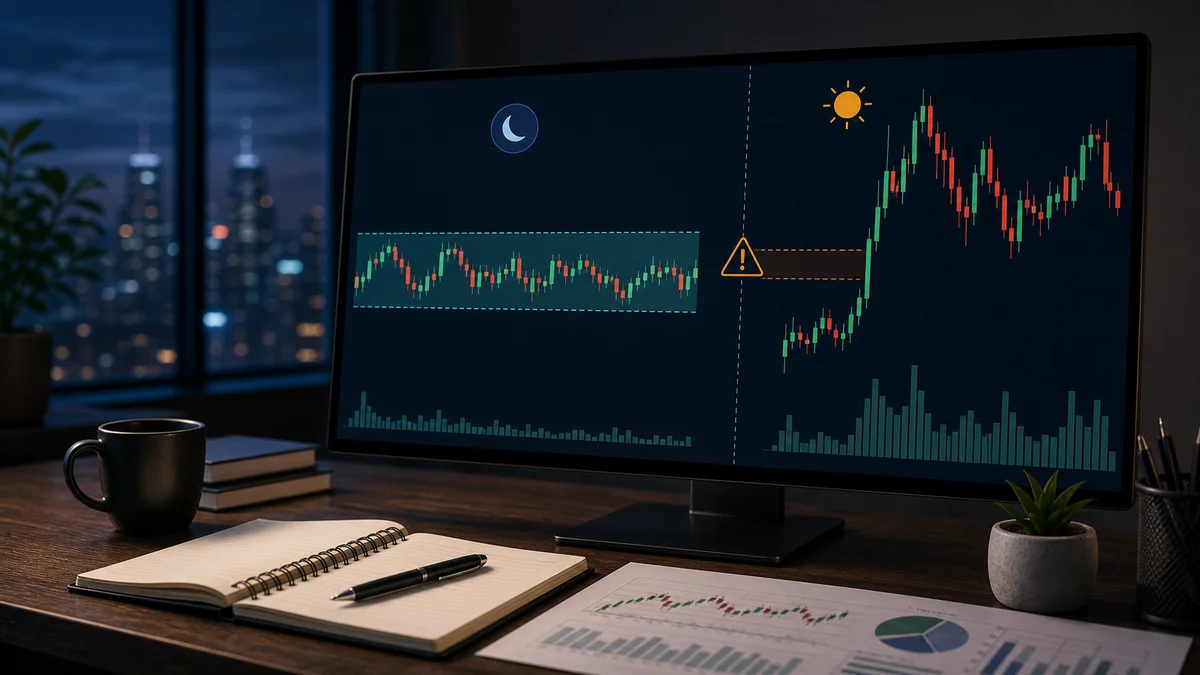
The Asian session is usually more useful when price forms a clean, visible range. If the range is too wide, the later breakout may already be stretched. If the range is too messy, the high and low may not provide meaningful liquidity. The best ranges are compact enough to define risk but clear enough that other traders are likely watching the same boundaries.
Market selection matters. Major forex pairs involving JPY, AUD, and NZD may move more naturally during Asian hours than pairs waiting for London liquidity. Gold, indices, and crypto can behave differently depending on the day. Do not assume every market respects the same session rhythm.
News and spreads also matter. A setup that looks clean during normal conditions may become poor during a surprise announcement, bank holiday, rollover window, or very low-volume period. Before trading, check whether spreads are normal and whether a major event could distort the range.
The session window can also vary by broker, daylight saving changes, and the market being traded. Instead of treating the exact clock time as magic, focus on behavior: a quieter consolidation period before a more active liquidity window. The strategy becomes more reliable when the range is clear and the later session actually brings participation.
Entry Rules
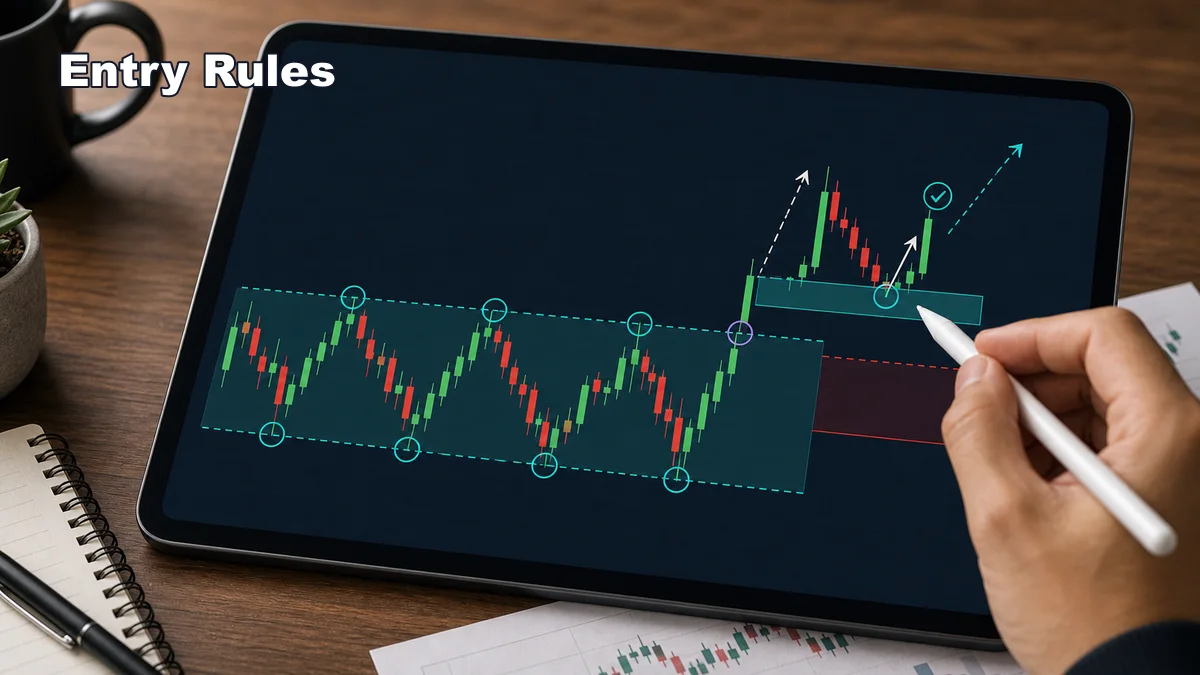
A clean entry should come after the market gives evidence. For a breakout entry, wait for price to break the Asian range, close outside it, and preferably retest the broken boundary. The retest helps show whether old resistance is acting as support, or old support is acting as resistance.
For a sweep reversal entry, wait for price to move beyond the range high or low, reject, and show a shift in short-term structure. A sweep above the Asian high is not automatically a short. A sweep below the Asian low is not automatically a long. The reaction after the sweep is the important part.
- Breakout rule: enter only after price accepts outside the range or retests the boundary with a clear reaction.
- Sweep rule: enter only after price rejects the sweep and shifts structure back in the opposite direction.
- No-chase rule: skip entries when price is already far from the range and the stop would be too wide.
Some traders use a lower timeframe for the final trigger, but the lower timeframe should support the session idea rather than create a completely different story. For example, if the plan is a bullish sweep below the Asian low, the lower timeframe should show rejection, a small structure shift, or a retest that supports the long idea.
Stop Loss
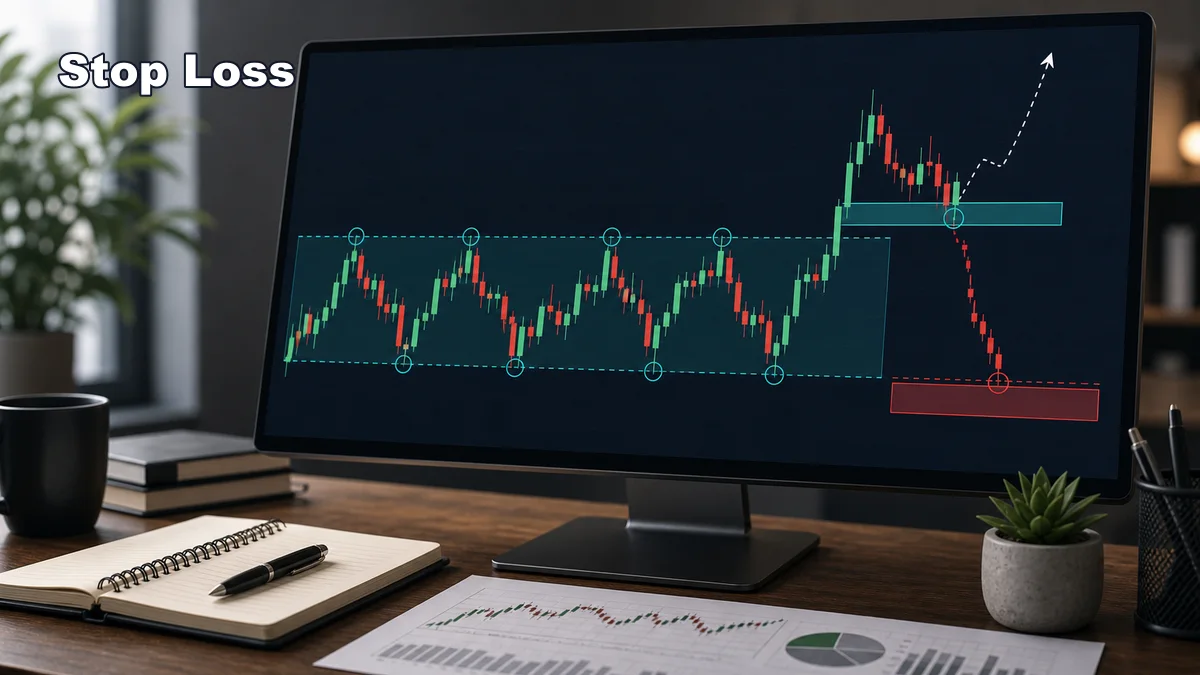
The stop loss should sit where the trade idea is wrong. For a breakout-retest long, invalidation may be below the retest low or back inside the Asian range if price accepts there. For a breakout-retest short, invalidation may be above the retest high or back inside the range.
For a sweep reversal, the stop often belongs beyond the sweep extreme. If price sweeps the Asian high, rejects, and shifts lower, a short idea may be invalidated if price trades back above the sweep high with strength. If price sweeps the Asian low and shifts higher, a long idea may be invalidated below the sweep low.
Avoid placing the stop inside the range just because it makes the risk smaller. A tight stop in the middle of noisy session structure may be easy to hit. Position size should adjust to the logical stop, not the other way around.
Before entry, calculate whether the stop size still allows reasonable position sizing. If the logical invalidation is too far away, the answer is not to move the stop closer. The answer may be to reduce size, wait for a better retest, or skip the trade.
Take Profit
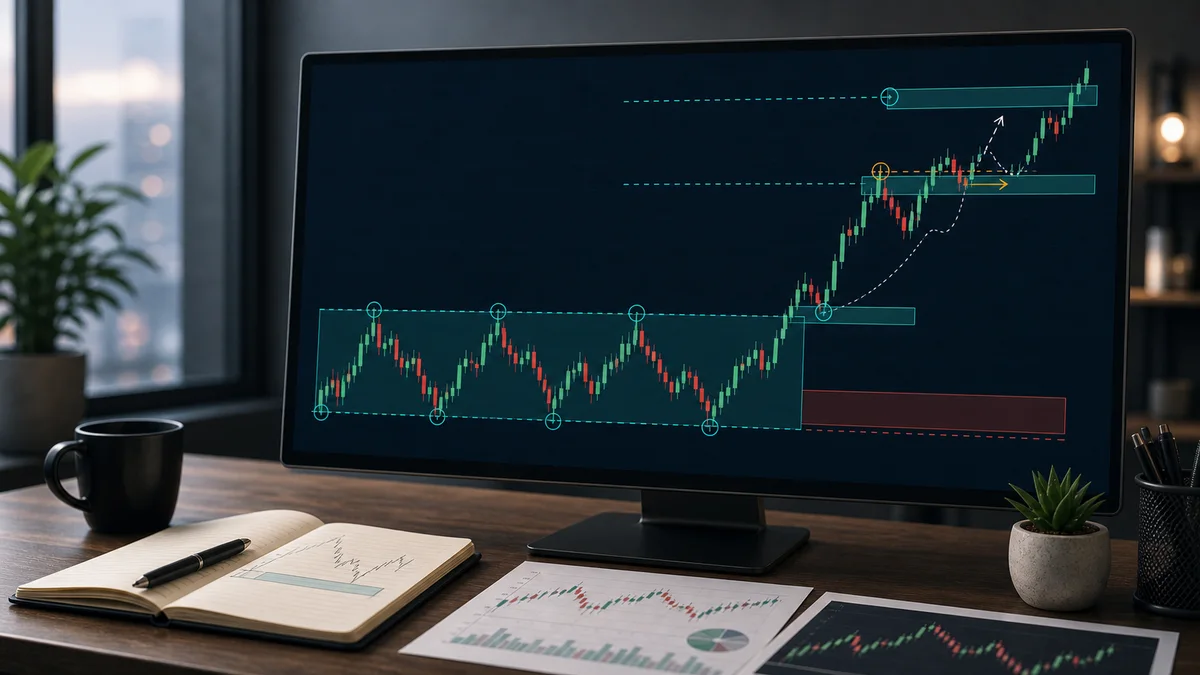
Take profit should be planned before entry. Common targets include the next previous high or low, an opposing liquidity pool, a measured range expansion, or a higher-timeframe support or resistance level. The target should make sense relative to the stop size and current volatility.
Some traders take partial profit at the first logical level and leave a smaller position for a larger move into London or New York. This can reduce pressure, but it should still be part of a tested plan. Random partial exits can damage results just as much as random entries.
If price breaks the Asian range but immediately runs into a major higher-timeframe level, the setup may not have enough room. A good strategy is not only about finding entries. It is also about skipping trades where the reward does not justify the risk.
Targets should also reflect the type of day. A quiet range expansion may justify a smaller target. A clean sweep followed by strong displacement into London may justify holding for the next liquidity pool. The target should adapt to structure, not hope.
Confirmation Checklist
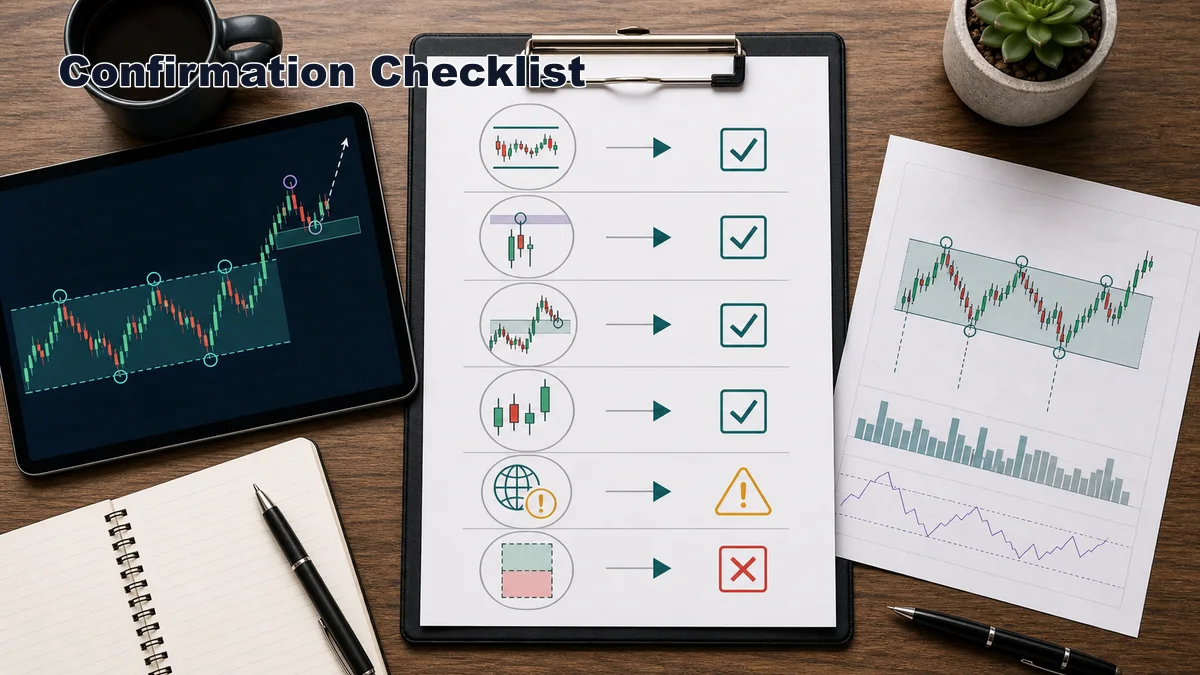
- Range clarity: the Asian high and low are easy to see.
- Market condition: spreads and volatility are reasonable.
- Liquidity event: price breaks, sweeps, or retests a meaningful session boundary.
- Confirmation: price closes outside the range, retests, or shifts short-term structure.
- Risk plan: stop loss is placed at invalidation, not at a random small distance.
- Target room: the next liquidity area or support/resistance level gives enough space.
- News filter: no major event is about to distort the setup.
If several checklist items are missing, the best decision may be to wait. Asian session trading rewards patience because many range breaks are weak until active liquidity enters the market.
A written checklist is useful because it reduces emotional interpretation. If the setup does not meet the checklist before entry, do not rewrite the rules after price starts moving. That habit protects the trader from turning every candle outside the range into a trade.
Example Trade
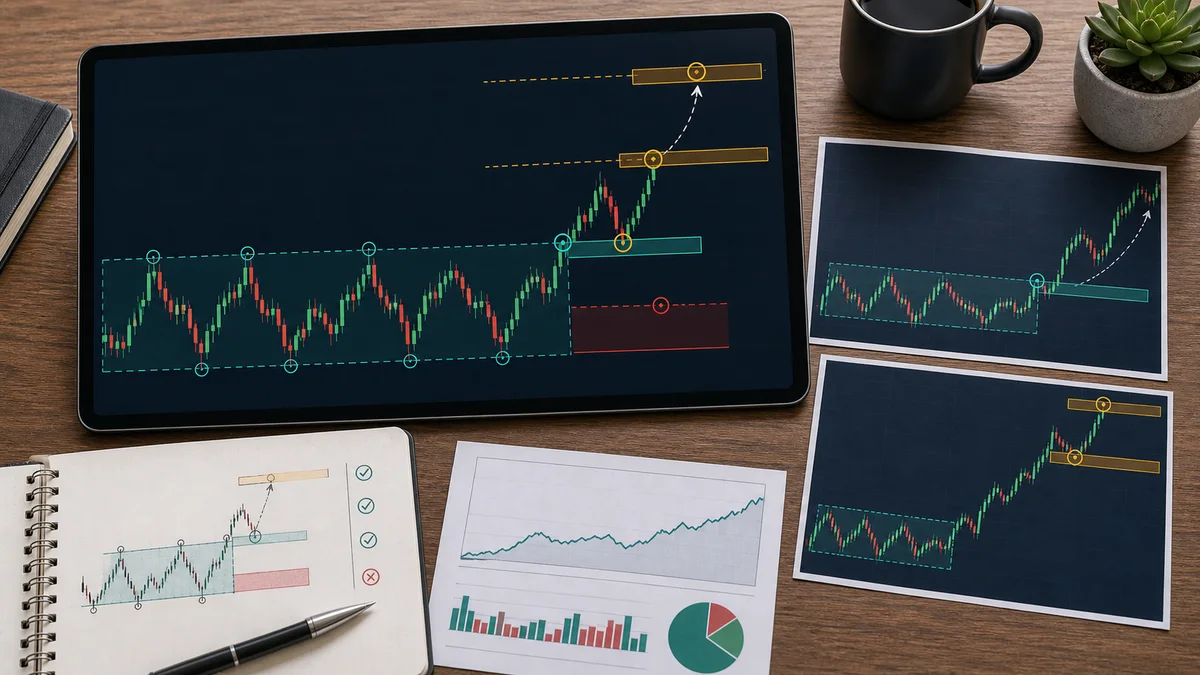
Imagine EUR/USD forms a tight Asian range. The high and low are clear, and no major news is scheduled before London. Price first dips below the Asian low, quickly rejects, and moves back into the range. That sweep suggests sell-side liquidity may have been taken, but it is not an entry by itself.
Next, price breaks above a short-term structure point inside the range and pushes toward the Asian high. A trader waits for a small pullback that holds above the reclaimed area. The long idea is based on the sweep below the range, the bullish shift, and the expectation that price may reach the Asian high or buy-side liquidity above it.
The stop sits below the sweep low because a strong move back below that low would invalidate the bullish idea. The first target is the Asian high. A second target may be the next higher-timeframe liquidity area if price expands with strength. After the trade, the trader saves screenshots and records whether the checklist was followed.
If the trade fails, the review is still valuable. The trader should ask whether the range was clean, whether the entry came after confirmation, whether spreads were normal, and whether the stop was placed at a logical invalidation point. A failed trade that followed the plan is different from a failed trade caused by chasing.
Mistakes
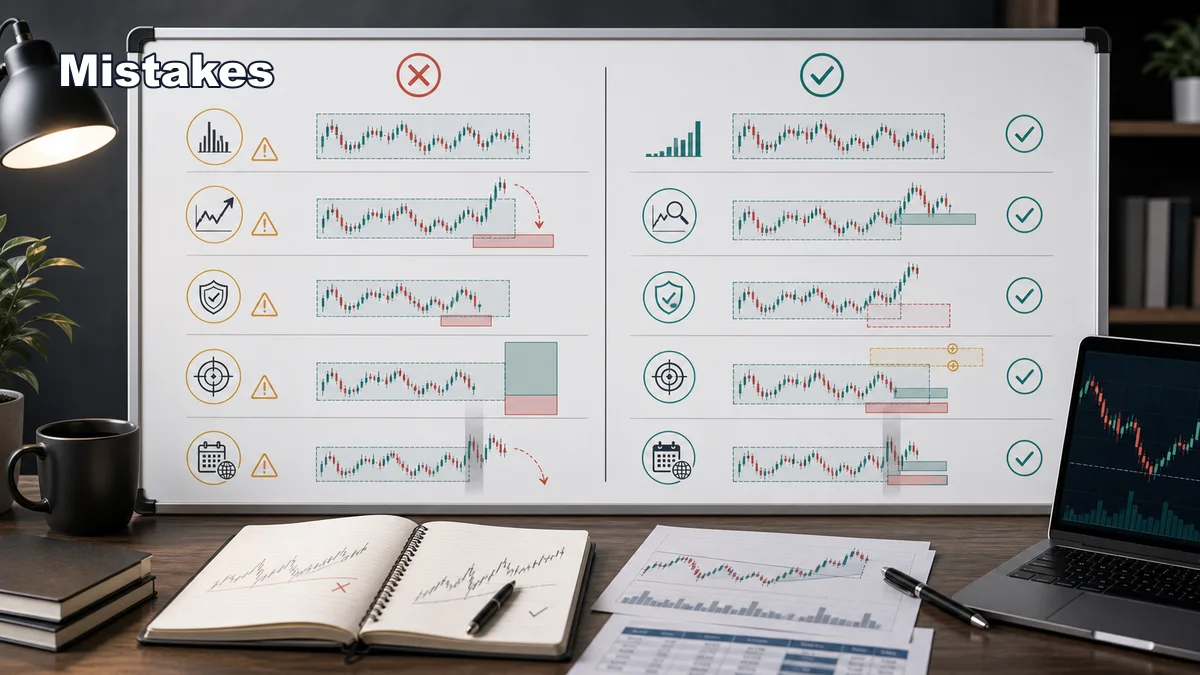
- Trading every range: not every Asian range is clean enough to use.
- Chasing the first breakout: many early breaks fail before active session liquidity arrives.
- Ignoring spreads: quiet conditions can make execution worse than the chart suggests.
- Putting stops inside noise: tight stops inside the range often get hit before the real move.
- Targeting too far: a small session range does not automatically create a large trend day.
- Forgetting the higher timeframe: a breakout directly into major resistance may have poor room.
The Asian session trading strategy works best as a structured filter, not as a signal generator. Mark the range, wait for behavior, confirm the idea, define risk, and review every trade. When used with the broader Smart Money framework, session structure can become a practical way to organize liquidity and timing without overcomplicating the chart.
For beginners, the best practice is to collect screenshots before trading live. Save examples of clean ranges, failed breakouts, successful retests, and days where no trade was available. After twenty or thirty examples, the Asian session will feel less like a fixed formula and more like a market condition that needs filtering.
Key takeaways
- An Asian session strategy uses a predefined regional trading window to study range formation, breakout or interaction with later London and New York activity.
- The session is not uniformly quiet, and behavior varies by currency pair, news, holidays, daylight-saving conventions and broker feed.
- Define the timezone and session box before the day begins, then separate a rejected break from accepted expansion.
- A valid plan separates location, trigger, invalidation, position size and exit logic.
A validation workflow you can reproduce
- Define the sample: choose the market, timeframe, session and date range before reviewing outcomes.
- Write the rule: Define the timezone and session box before the day begins, then separate a rejected break from accepted expansion.
- Record invalidation: identify the observable price event that disproves the setup.
- Include execution costs: account for spread, commission and slippage where relevant.
- Validate separately: test the finished rule on data that was not used to create it.
When this concept is unreliable
The setup is unreliable when session boundaries change between examples or every later move is explained as a deliberate sweep. Keep failed and skipped examples in the journal so the review is not limited to attractive winners.
Use this concept within a complete analysis
This method should remain connected to its parent framework and adjacent decision steps. Use Multi-Timeframe Analysis: Complete Guide, Trading Sessions: Complete Guide for Forex Traders, New York Session Liquidity Sweep Strategy, Top-Down Analysis in Trading: Step-by-Step Method, Best Timeframes for Forex Trading and Price Action Trading: Structure, Setups and Risk to compare definitions, establish context and avoid treating one signal as a complete trading system.
References and methodology
Practise before considering real capital
Use historical charts or a demo account to test the written rules before considering live execution. Review the Exness account and demo information. Availability, protections and trading conditions depend on jurisdiction, so review the applicable legal documents yourself.
Affiliate disclosure: Học Làm Trader may receive a commission if you open an account through this link, at no additional cost to you. This relationship does not determine the educational conclusions.
Risk warning: This article is for education and general information only. It is not investment advice, a trade signal or an invitation to trade. Trading can result in loss of capital, and past examples do not guarantee future results. Assess your own circumstances and risk tolerance.