


Quick answer: Compare mitigation blocks and order blocks without treating either label as a guaranteed entry; includes validation, invalidation and examples.
An order block is usually described as a candle or zone before displacement, while a mitigation block describes a later return to manage or rebalance that zone after an initial move. Definitions vary between educators, so the useful question is whether the price action provides a repeatable test and a clear invalidation.
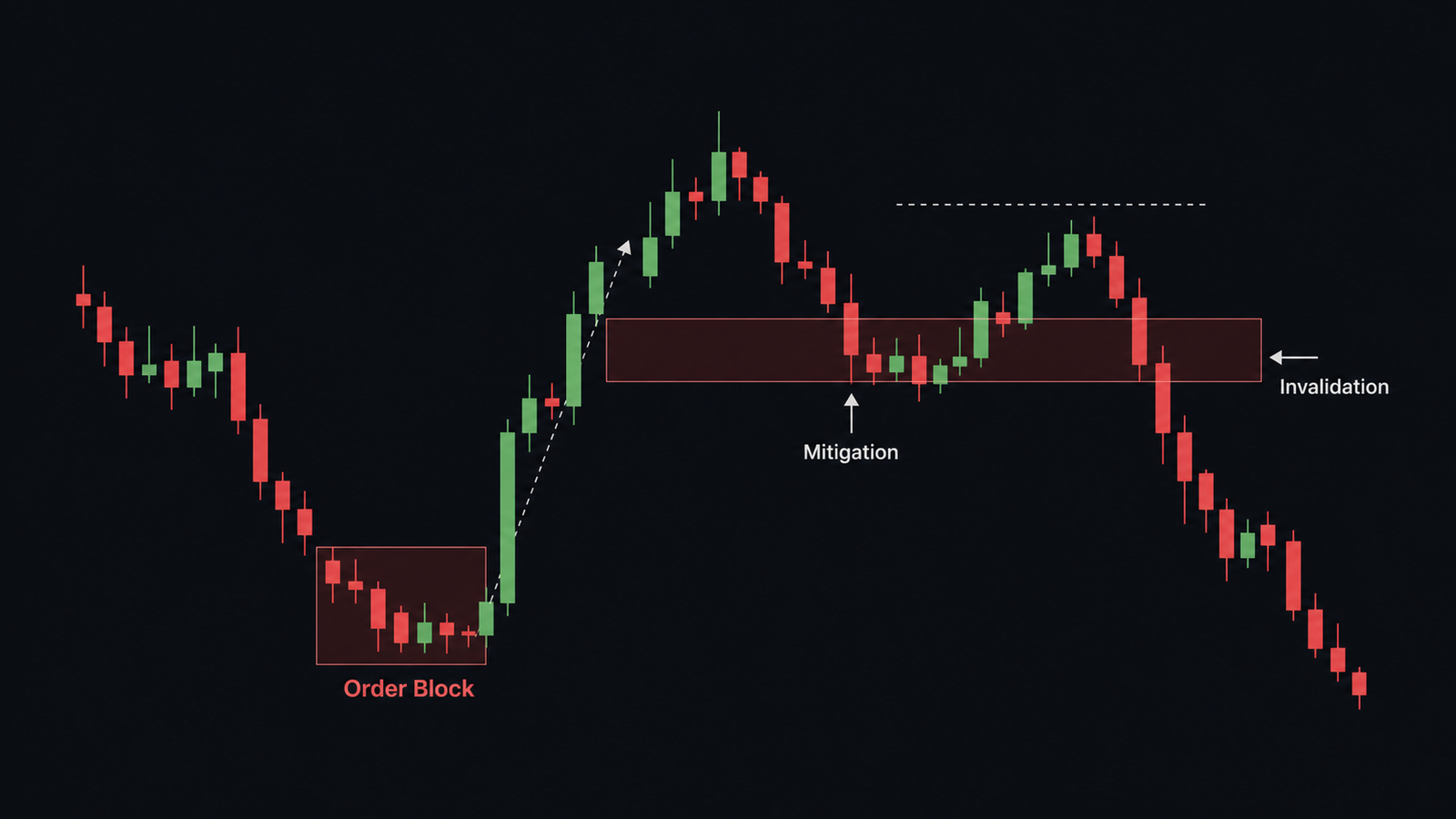
What changes when price mitigates a block?
A first revisit can react, pass through or consume part of the zone. Calling it “mitigation” does not predict the outcome. Record the original impulse, the level that must hold and the evidence that the return is accepted or rejected.
Validation rules
- Start with a meaningful displacement, not a single large candle in random noise.
- Define the proximal and distal boundaries before price returns.
- Look for a reaction, close and lower-timeframe trigger only after the higher-timeframe context agrees.
- Invalidate the idea when price closes and accepts beyond the distal boundary or when the original narrative is no longer present.
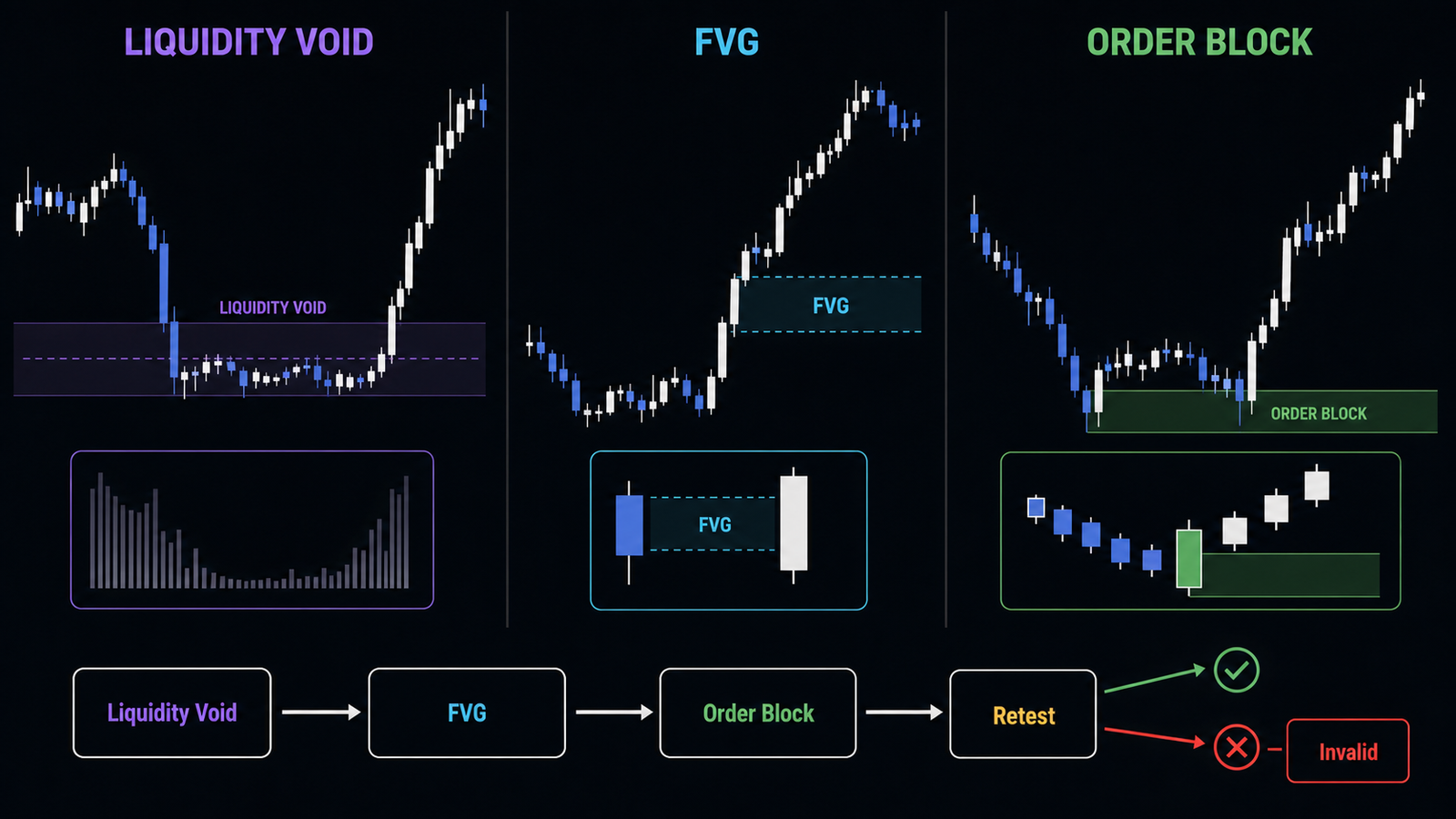
Mitigation block versus order block
| Question | Order block | Mitigation block |
|---|---|---|
| Primary context | Zone preceding displacement | Return to an existing zone after the move |
| What is tested? | Origin and reaction | Whether the return is absorbed, rejected or accepted |
| Main failure | No real displacement or immediate acceptance through the zone | Zone already consumed or no reaction on return |
Hypothetical example and failure
A bullish impulse leaves a bearish candle zone. Price returns, wicks into the zone and closes above it; a trader can log a conditional long scenario. If the next candles close below the distal boundary, the block is invalidated. The example is educational, not a current trade call.
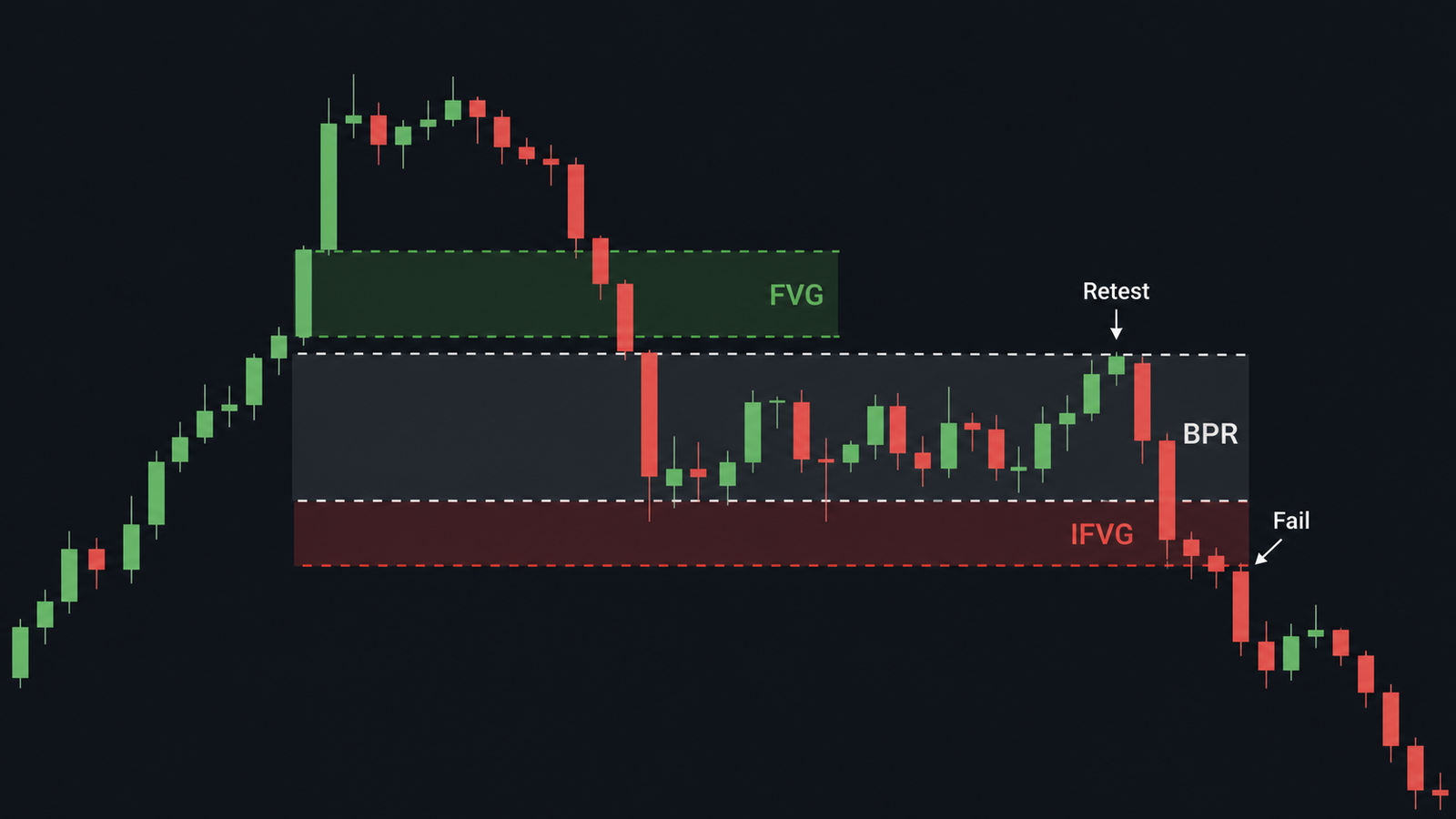
Common mistakes
- Copying a block from every impulsive candle.
- Moving the zone after entry to avoid accepting a loss.
- Ignoring spread, volatility and the larger trend.
- Using “institutional orders” as an untestable explanation.
Compare the framework with the site’s order block guide, FVG guide and SMC overview.
Sources
- MetaTrader 5 Help: Symbol Specification – verify instrument specifications.
- CFTC: Eight Things You Should Know Before Trading Forex – leverage and foreign-exchange risk context.
Risk notice: SMC/ICT terms are discretionary analytical frameworks, not official market rules or investment advice. Trading involves the risk of loss. Examples are hypothetical, not current signals. Test any rule, control position risk and make your own decisions.
Updated: 2026-09-30. Examples are hypothetical, not current trade signals.
Worked example, limits and no-trade conditions
Direct answer: A mitigation block is an interpretive retest idea; it is not automatically an Order Block and it does not create a trade without location, reaction and invalidation.
| Observation | Possible model | Invalidation |
|---|---|---|
| Old impulse zone is revisited | Possible mitigation | Close-through and acceptance beyond the zone |
| Price reacts once | Evidence to monitor | No follow-through or immediate failure |
Do not infer that a visible zone identifies a bank order, guarantees a reaction or works across every timeframe. Failure cases include moving the zone after the reaction, ignoring higher-timeframe context, using one wick as confirmation and measuring a CFD/Forex feed as if it were centralized order-flow data. No trade is appropriate when the zone is too wide for the risk budget, spread is abnormal or the invalidation event is undefined.
Connect to FVG, SMC limits, support and resistance, risk management and tick-volume limits. Sources and examples checked 16/09/2026.