


Quick answer: Compare liquidity voids, fair value gaps and order blocks by formation, retest confirmation and invalidation instead of labels.
A liquidity void describes thin trading during a fast move, an FVG describes a candle-to-candle imbalance, and an order block is a contextual zone before displacement. They answer different questions and should not be treated as interchangeable entry signals.
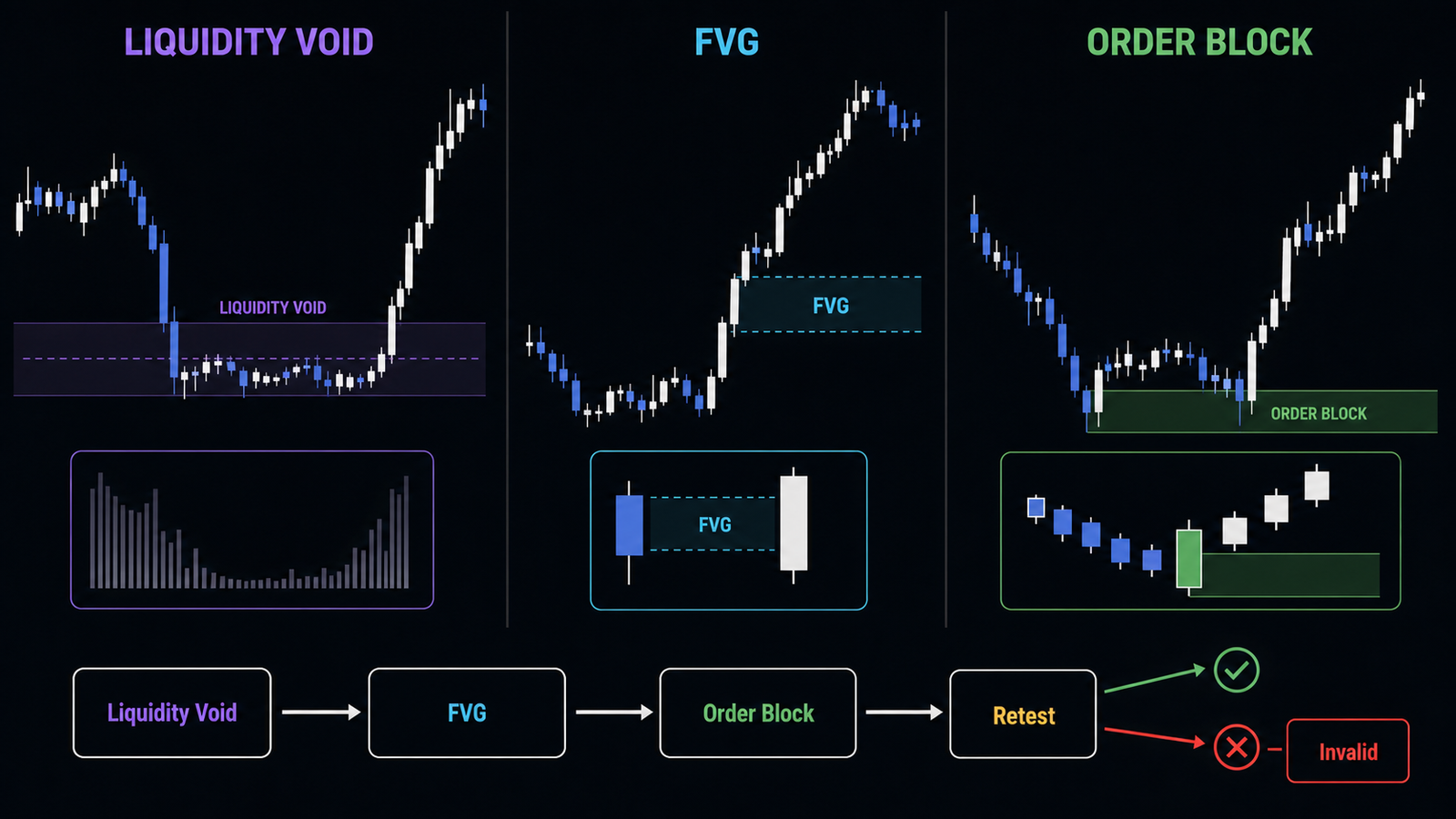
Quick comparison
| Term | Focus | Test |
|---|---|---|
| Liquidity Void | Thin participation across a fast segment | Does price rebalance the thin segment? |
| FVG | Gap between consecutive candles | Which candles created and broke the gap? |
| Order Block | Contextual zone before displacement | Was displacement meaningful and is the zone still valid? |
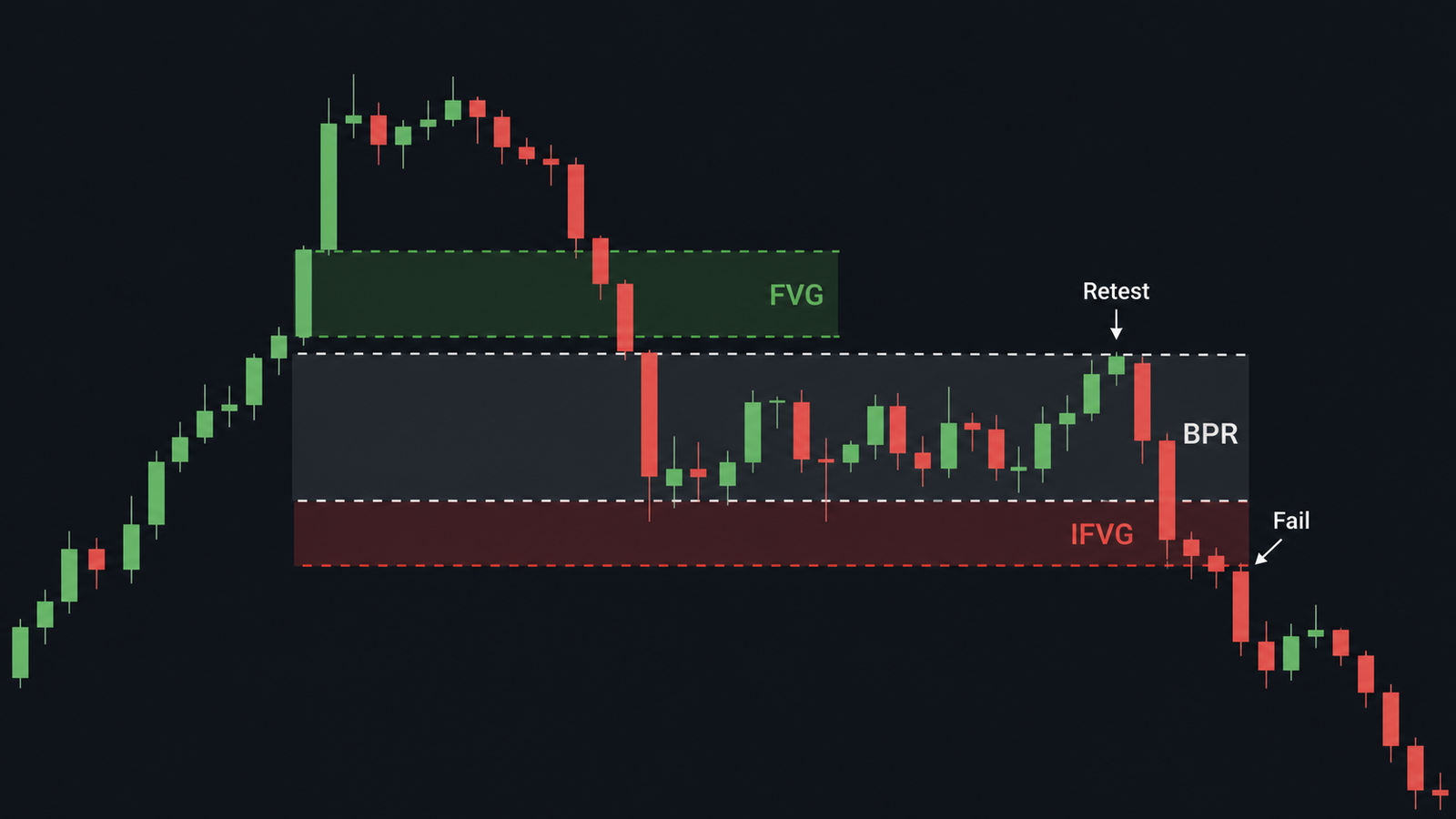
Shared validation framework
- Map the zone before seeing the outcome.
- Place it in higher-timeframe structure and liquidity context.
- Wait for a response or acceptance on a retest; a touch alone is not confirmation.
- Define invalidation and execution costs in advance.
Failure conditions
A mid-range zone, repeated full fills, no meaningful displacement or acceptance through the opposite boundary weakens the idea. Calling every large candle “institutional flow” without observable criteria makes the analysis unfalsifiable.
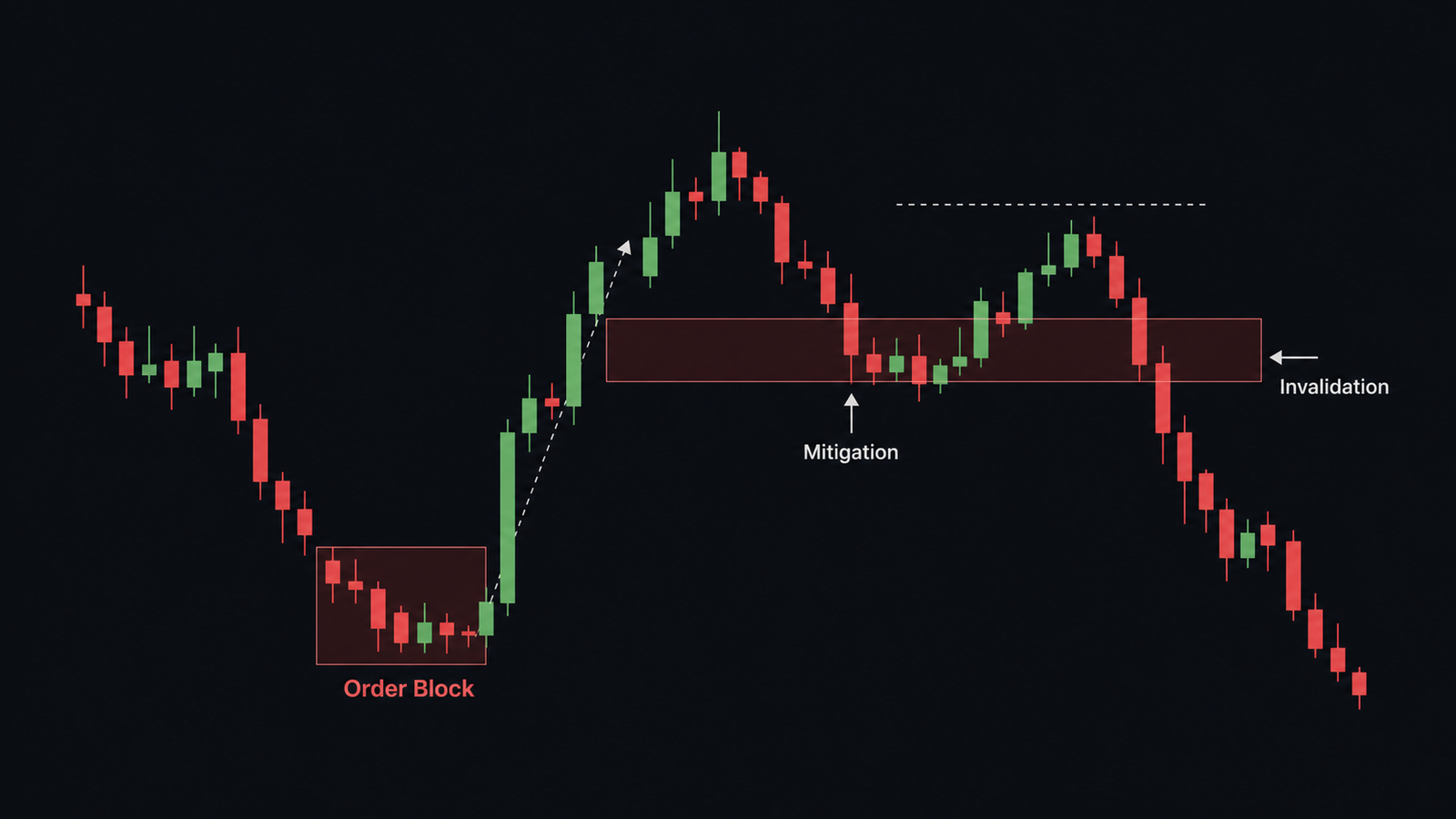
Hypothetical example
A fast rally creates an FVG and a thin segment. Price reacts at the FVG edge but trades through the void; the journal should distinguish a local FVG reaction from a failed void hypothesis. This is an educational example, not a current signal.
See the guides to liquidity, order blocks and fair value gaps.
Sources
- MetaTrader 5 Help: Symbol Specification – verify instrument specifications.
- CFTC: Eight Things You Should Know Before Trading Forex – leverage and foreign-exchange risk context.
Risk notice: SMC/ICT terms are discretionary analytical frameworks, not official market rules or investment advice. Trading involves the risk of loss. Examples are hypothetical, not current signals. Test any rule, control position risk and make your own decisions.
Updated: 2026-10-02. Examples are hypothetical, not current trade signals.
Worked example and limits
Direct answer: A liquidity void is a fast, low-overlap price movement; FVG and Order Block are different practitioner labels that may overlap in a chart. The labels do not reveal total market liquidity or guarantee a retest.
| Observation | Possible model | Invalidation |
|---|---|---|
| Large directional move with little overlap | Possible liquidity void | Price accepts through the proposed area |
| Three-candle gap | Possible FVG | Definition fails under fixed rule |
| Last opposing candle before impulse | Possible Order Block | No reaction or structure failure |
Failure cases include treating all three labels as synonyms, using a single broker feed as total market depth, selecting the zone after the move and assuming every gap fills. No trade is valid when the data source is unsuitable, the range/context is unclear, spread/news dominates execution or the stop cannot disprove the hypothesis. Continue with the FVG guide, market structure, VSA, position sizing and risk management. Checked 16 September 2026.