


MSNR engulfing candle strategy The MSNR engulfing strategy uses an engulfing candle as a possible trigger after price interacts with a predefined support or resistance zone. The candle is not the zone and does not guarantee reversal; its definition, close rule and surrounding structure must be fixed. The method should be treated as a testable chart-reading framework rather than a forecast. Before using it, define the market condition, confirmation event, invalidation price, transaction costs and maximum risk. This guide explains the rules, a repeatable workflow, common failure modes and the most relevant supporting concepts.
What MSNR Engulfing Candle Means in MSNR
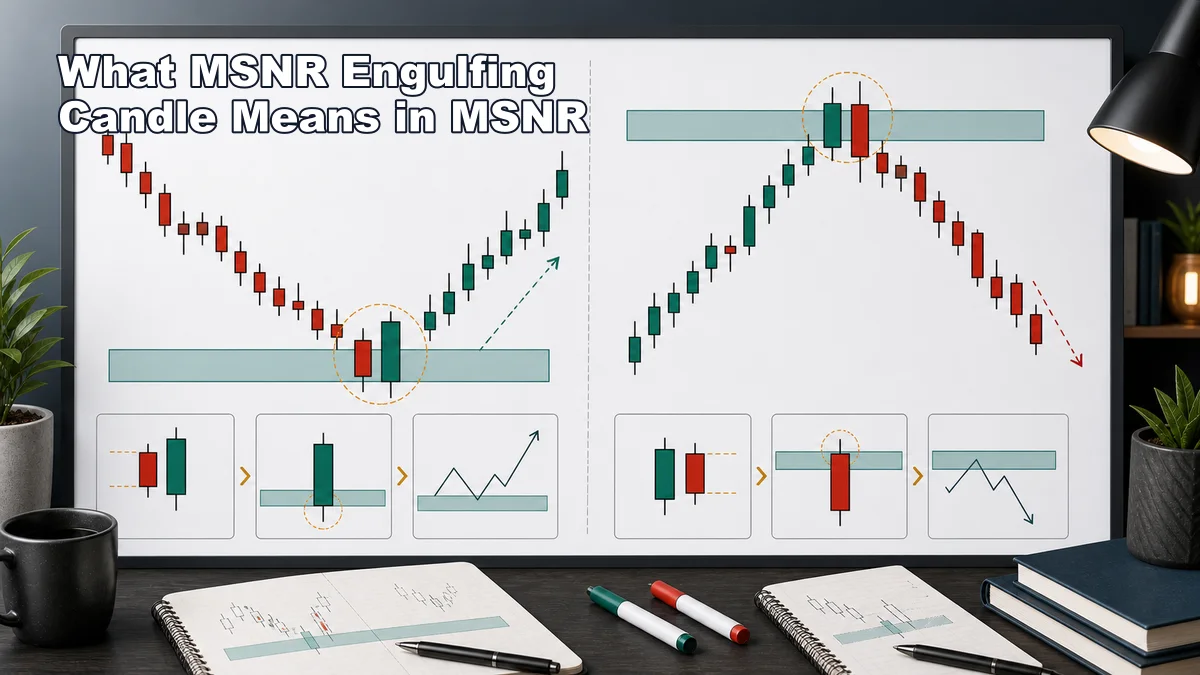
An engulfing candle is a candle whose body takes control over the previous candle’s body range. A bullish engulfing candle usually closes above the prior bearish body, suggesting buyers gained control during that candle. A bearish engulfing candle usually closes below the prior bullish body, suggesting sellers gained control.
In MSNR, the pattern matters most when it forms at support or resistance. A bullish engulfing candle in the middle of a random move is not the same as a bullish engulfing candle after price tests a clean support zone. A bearish engulfing candle after price has extended into resistance is not the same as a bearish engulfing candle inside a messy range.
The engulfing body shows pressure. The zone gives the pressure a location. Trend bias helps decide whether the pattern supports the broader flow or fights it. In an uptrend, a bullish engulfing candle at support may fit a pullback continuation idea. In a downtrend, a bearish engulfing candle at resistance may fit a continuation idea. Countertrend engulfing setups can still happen, but they usually need stronger context and more careful risk control.
Not every engulfing candle must fully cover the previous wick. Many traders focus on the candle body because the body shows where price opened and closed. The most important question is not whether the pattern matches a textbook perfectly. The question is whether the candle shows a meaningful shift at a meaningful SNR zone.
A useful MSNR engulfing setup has five parts: a clean zone, a test of that zone, an engulfing close that shows control, a logical invalidation point, and enough room to the next target. If the pattern is strong but the target is too close, the trade may still be poor.
Why It Matters Before Taking a Trade
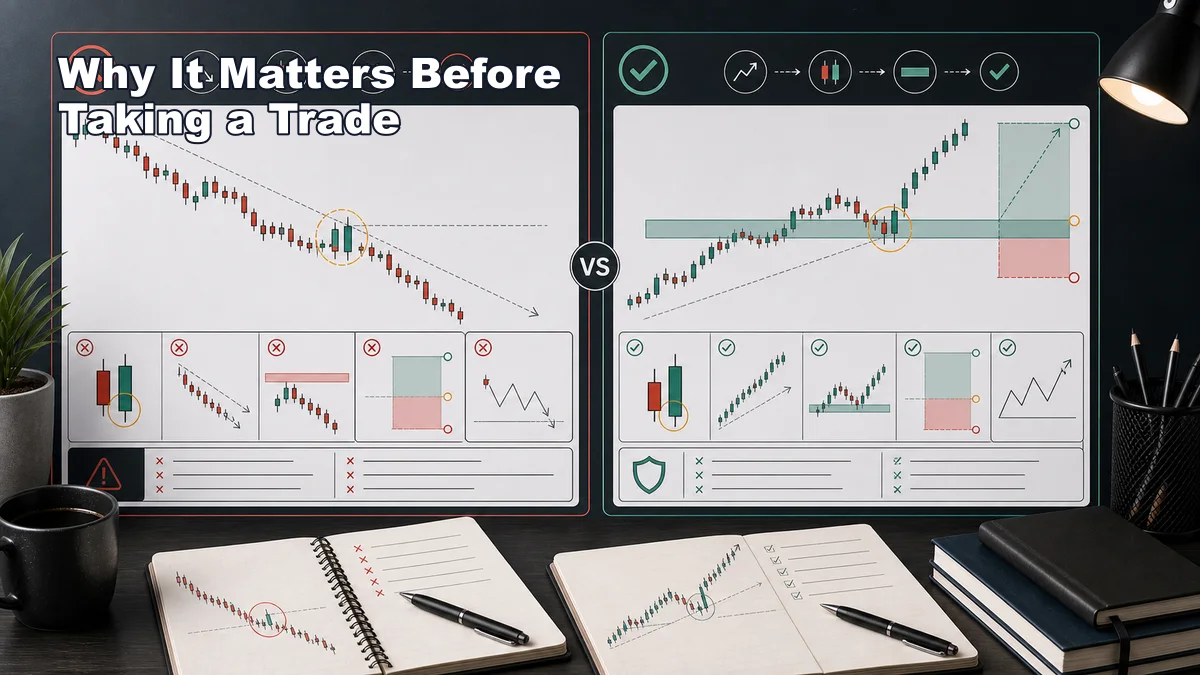
The engulfing candle matters before taking a trade because it can show stronger participation than a small hesitation candle. If price tests support and a bullish engulfing candle closes with strength, the trader has evidence that buyers responded. If price tests resistance and a bearish engulfing candle closes with strength, the trader has evidence that sellers responded.
However, evidence is not certainty. Engulfing candles can appear late, especially after a fast move. They can also appear during news volatility, inside low-quality ranges, or near a nearby opposing zone. A trader who buys every bullish engulfing candle or sells every bearish engulfing candle will likely overtrade.
The practical value is filtering. A good MSNR engulfing filter asks whether the pattern appears at a clean SNR zone, whether the higher timeframe supports the idea, whether the candle closes with useful body control, whether invalidation is clear, and whether reward-to-risk still makes sense.
Trend bias is especially important. A bullish engulfing candle at support during an uptrend may be a continuation trigger. The same bullish engulfing candle during a strong downtrend may only be a weak pullback. A bearish engulfing candle at resistance during a downtrend may be a continuation trigger. The same bearish engulfing candle in a strong uptrend may be a risky countertrend idea.
This does not mean countertrend trades are impossible. It means they need a stronger reason, such as a higher-timeframe resistance, clear exhaustion, failed breakout, or liquidity sweep. Even then, the trader must define invalidation before entry.
Step-by-Step Chart-Reading Workflow
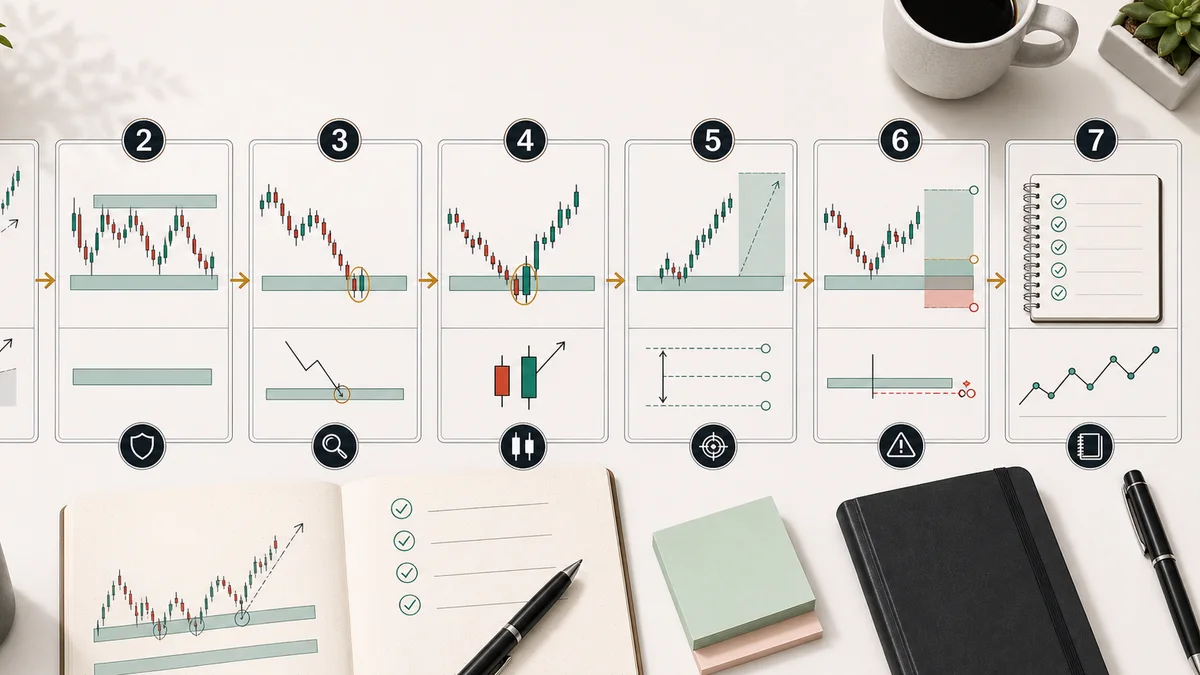
Use this workflow when reading an MSNR engulfing candle strategy. The order keeps the pattern connected to a real trade plan.
- Check the higher timeframe. Identify trend bias, major support, major resistance, and nearby obstacles before looking for the entry candle.
- Draw the clean SNR zones. Mark only the support and resistance areas that have obvious reactions, range boundaries, or breakout-retest value.
- Wait for price to test the zone. The engulfing candle matters because it appears at a decision area.
- Judge the candle body. Does the engulfing candle close with real body control, or is it small and indecisive?
- Compare with trend bias. Is the pattern trading with the broader structure, against it, or inside a range?
- Check nearby targets. A bullish engulfing candle into resistance or a bearish engulfing candle into support may offer poor room.
- Define invalidation. Decide whether the setup fails beyond the engulfing candle, beyond the zone, or after a close back through the pattern.
- Choose the entry rule. Enter on the close, on a pullback, or after follow-through. Use one tested rule instead of changing after the outcome.
- Journal the result. Record the zone, bias, candle quality, entry, stop, target, and whether the filter helped.
For examples, imagine price pulls back into support during an uptrend. A small bearish candle forms inside the zone, then a bullish candle closes above the previous body and back away from support. This may be a continuation setup if the stop can sit below invalidation and the next resistance is far enough.
Now imagine price rallies into resistance during a downtrend. A bullish candle tests the zone, then a bearish candle closes below the previous body and back away from resistance. This may be a short setup if the trader can define invalidation above the reaction and target the next support area responsibly.
Entry, Invalidation and Stop-Loss Logic
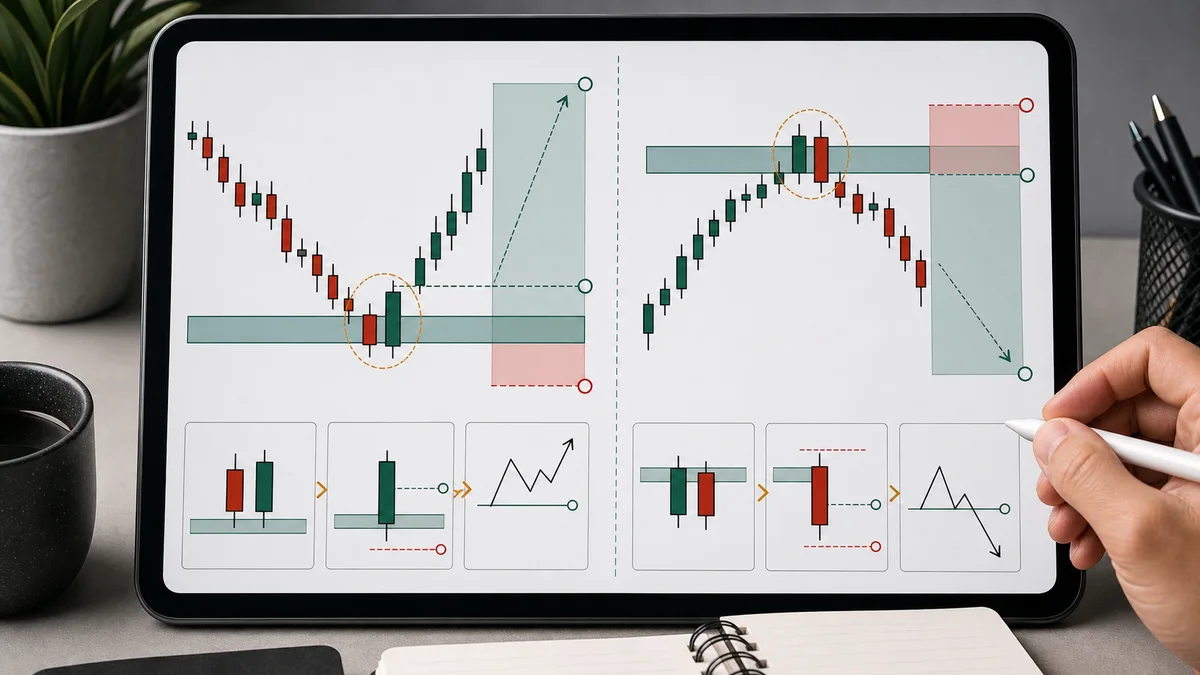
Entry rules should be chosen before the trade, not after the candle prints. One common entry is the close entry: enter after the engulfing candle closes. This confirms the body, but it may create a wider stop. Another entry is the pullback entry: wait for price to retrace part of the engulfing candle before entering. This can improve price, but the trade may leave without you. A third entry waits for the next candle to confirm direction.
For a bullish engulfing setup at support, invalidation may sit below the support zone, below the engulfing candle low, or below the reaction swing. The best choice depends on the timeframe and how the zone was drawn. If price closes strongly back below the support after the engulfing candle, the original long idea is probably weakened.
For a bearish engulfing setup at resistance, invalidation may sit above the resistance zone, above the engulfing candle high, or above the reaction swing. If price closes strongly back above resistance after the bearish engulfing candle, the original short idea is probably weakened.
Stop-loss placement should respect invalidation. A stop inside the engulfing candle may be too tight if normal noise can retest the pattern. A stop far beyond the zone may be too wide if it damages reward-to-risk. If the engulfing candle is huge, the setup may be valid as analysis but poor as a trade.
Targets should be realistic. A bullish engulfing trade may target the next resistance zone, previous swing high, or range high. A bearish engulfing trade may target the next support zone, previous swing low, or range low. If the next target is close, waiting for a pullback or skipping the trade may be better than chasing the candle close.
A practical filter is the “room after confirmation” test. After the engulfing candle closes, measure whether there is still enough distance to the next obstacle. If most of the move has already happened inside the signal candle, the trade may not be worth taking. This filter keeps the trader from confusing a strong candle with a good entry.
Common Mistakes and Checklist
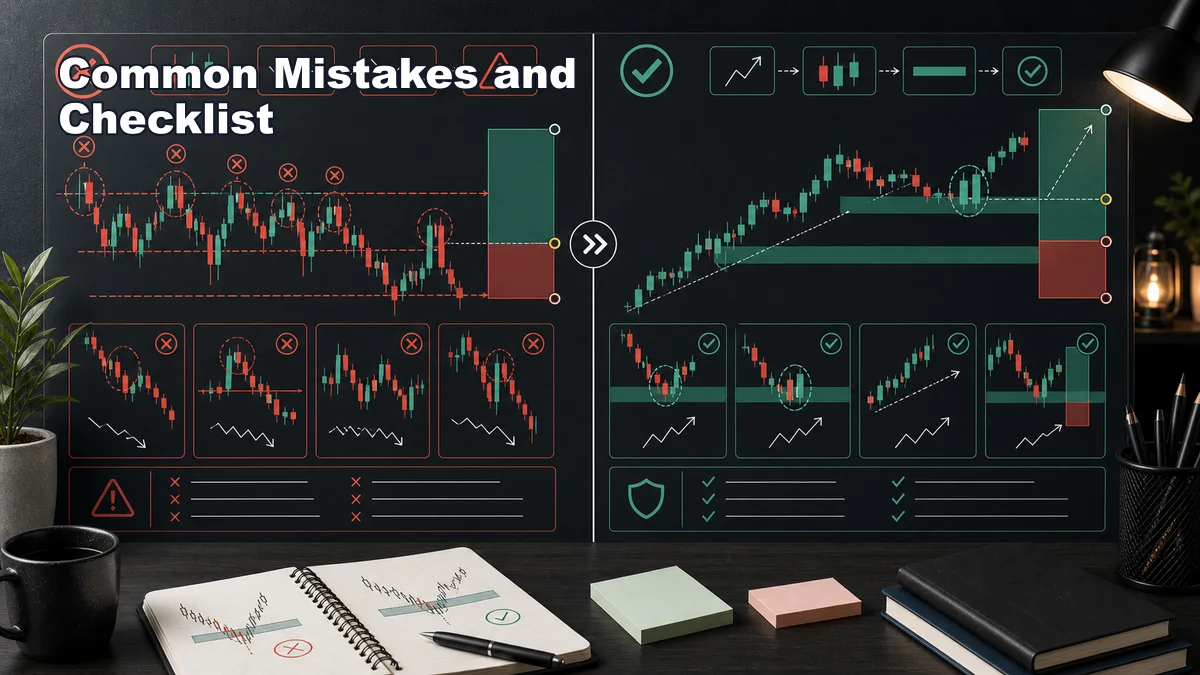
The most common mistake is trading engulfing candles in isolation. A pattern without SNR context is not an MSNR setup. The second mistake is chasing a candle that closes far from the zone. The candle may show real pressure, but the entry can still be late.
- Ignoring the zone: an engulfing candle should form at or near meaningful support or resistance.
- Ignoring trend bias: countertrend engulfing setups need stronger evidence and tighter review.
- Entering every engulfing candle: many patterns form in noise and should be skipped.
- Chasing huge candles: large signal candles can make stops too wide and targets too close.
- Forgetting invalidation: the trader must know where the pattern is wrong before entry.
- Moving the stop after entry: changing the stop to protect a losing idea destroys the test data.
- Using filters only after losses: filters should be defined before the trade and reviewed consistently.
Use this checklist before entry:
- Is the engulfing candle at a clean MSNR support or resistance zone?
- Does the body show meaningful control?
- Does the higher timeframe support, oppose, or neutralize the idea?
- Is the setup with trend, countertrend, or range-based?
- Is invalidation clear before entry?
- Does the stop-loss location match invalidation?
- Is there enough room to the next support or resistance target?
- Is the entry rule close, pullback, or follow-through?
- Will the setup be journaled with screenshots and filter notes?
Download the MSNR Checklist: Use this engulfing-candle checklist beside the full MSNR trading strategy guide. The best sequence is zone first, bias second, engulfing confirmation third, invalidation fourth, risk always.
FAQ
What is an MSNR engulfing candle?
An MSNR engulfing candle is an engulfing pattern that forms around a meaningful support or resistance zone and is used as confirmation inside a broader MSNR trade plan.
Is a bullish engulfing candle at support always a buy signal?
No. It can support a long idea, but the trader still needs higher-timeframe context, invalidation, stop-loss logic, and enough room to the next target.
Is a bearish engulfing candle at resistance always a sell signal?
No. It may support a short idea, but it can fail if the broader trend is strong, resistance is weak, or the candle closes too late for good reward-to-risk.
What is the best filter for engulfing candle trades?
The best filter is context: clean SNR zone, trend or range bias, strong body close, clear invalidation, and enough distance to the next obstacle after confirmation.
Key takeaways
- The MSNR engulfing strategy uses an engulfing candle as a possible trigger after price interacts with a predefined support or resistance zone.
- The candle is not the zone and does not guarantee reversal; its definition, close rule and surrounding structure must be fixed.
- Mark the zone first, wait for the completed engulfing close and place invalidation where the setup is disproved.
- A valid plan separates location, trigger, invalidation, position size and exit logic.
A validation workflow you can reproduce
- Define the sample: choose the market, timeframe, session and date range before reviewing outcomes.
- Write the rule: Mark the zone first, wait for the completed engulfing close and place invalidation where the setup is disproved.
- Record invalidation: identify the observable price event that disproves the setup.
- Include execution costs: account for spread, commission and slippage where relevant.
- Validate separately: test the finished rule on data that was not used to create it.
When this concept is unreliable
The strategy is unreliable when engulfing candles are traded in the middle of a range or the pattern definition changes between examples. Keep failed and skipped examples in the journal so the review is not limited to attractive winners.
Use this concept within a complete analysis
This method should remain connected to its parent framework and adjacent decision steps. Use Support Becomes Resistance in MSNR: Role Reversal Guide, What Is MSNR Trading? Meaning, Logic and Beginner Rules, How MSNR Uses Close and Open Prices Instead of Random Wick Lines, MSNR Terminology: SNR, Fresh Level, Storyline, Rejection and Confluence, MSNR Chart Setup: What Tools, Timeframes and Templates You Need and How to Practice MSNR Without Risking Real Money to compare definitions, establish context and avoid treating one signal as a complete trading system.
References and methodology
Terminology note: SMC, ICT and MSNR terms are practitioner conventions, not standardized exchange or regulatory definitions. This article defines the convention it uses and avoids inferring participant identity from candles alone.
- CME Group — Technical Analysis
- CFTC — Eight Things to Know Before Trading Forex
- CME Group — Chart Types: Candlestick, Line and Bar
Practise before considering real capital
Use historical charts or a demo account to test the written rules before considering live execution. Review the XM account and demo information. Availability, protections and trading conditions depend on jurisdiction, so review the applicable legal documents yourself.
Affiliate disclosure: Học Làm Trader may receive a commission if you open an account through this link, at no additional cost to you. This relationship does not determine the educational conclusions.
Risk warning: This article is for education and general information only. It is not investment advice, a trade signal or an invitation to trade. Trading can result in loss of capital, and past examples do not guarantee future results. Assess your own circumstances and risk tolerance.