


The ICT Judas Swing is a concept traders use to describe a deceptive early move that runs liquidity in one direction before price reverses into the more important move of the session. It is often discussed around London or New York timing, especially when price first moves above or below an obvious range, session high, session low, or previous-day level.
The idea sounds dramatic, but the practical lesson is simple: the first move of an active session can be misleading. It may take stops, attract breakout traders, and create the liquidity needed for a reversal. A trader should not treat every early push as a Judas Swing. The setup needs context, liquidity, reaction, displacement, and invalidation.
This article supports the Smart Money hub and the ICT Models category. For the foundation, read ICT Trading: Complete Beginner Guide. For the previous related article, study ICT Optimal Trade Entry Explained, and connect the structure logic with ICT Market Structure Explained.
Nothing here is financial advice or a trading signal. ICT setups can fail, and session trading can be volatile. The CFTC describes off-exchange forex as very risky, and Investor.gov warns that leveraged day trading can carry risks that may not be obvious at first.
Author and review note: Written by the HocLamTrader Editorial Team for educational chart study. Updated May 24, 2026. Examples are conceptual and should be tested with your own market, session, spread, news calendar, and risk rules.
Definition: What Is the ICT Judas Swing?

An ICT Judas Swing is a move that appears to start the session direction but later proves false. For example, price may push above the Asian session high during London, trigger buy-side liquidity, fail to continue, and then reverse lower. In a bullish version, price may push below a session low, take sell-side liquidity, reclaim the level, and then expand higher.
The concept is connected to liquidity, timing, and market structure. The early move creates the event. The reversal and displacement create the evidence. The trader still needs an entry model, invalidation, and a target. A wick through a level is not enough.
In plain English, the Judas Swing warns traders not to chase the first obvious breakout of an active session. The first move may be designed by market behavior to draw traders into the wrong side before the more important move develops.
How to Identify an ICT Judas Swing

Start with session structure. Many traders mark the Asian session high and low before London, or the pre-New York range before New York. These ranges can become liquidity pools because breakout traders and stop orders often sit beyond them.
Next, mark the obvious liquidity. A bearish Judas Swing may push above equal highs, a session high, or the previous day high. A bullish Judas Swing may push below equal lows, a session low, or the previous day low. The level should be obvious enough that other traders may react to it.
Then watch the reaction. If price breaks the level and accepts beyond it, the move may be a real breakout. If price breaks the level, fails to hold, and returns back through the range, the Judas Swing idea becomes more interesting.
Finally, look for displacement and structure shift. A bearish model needs a strong move lower after the false push up. A bullish model needs a strong move higher after the false push down. Without displacement, the setup may still be noise.
Why the ICT Judas Swing Works
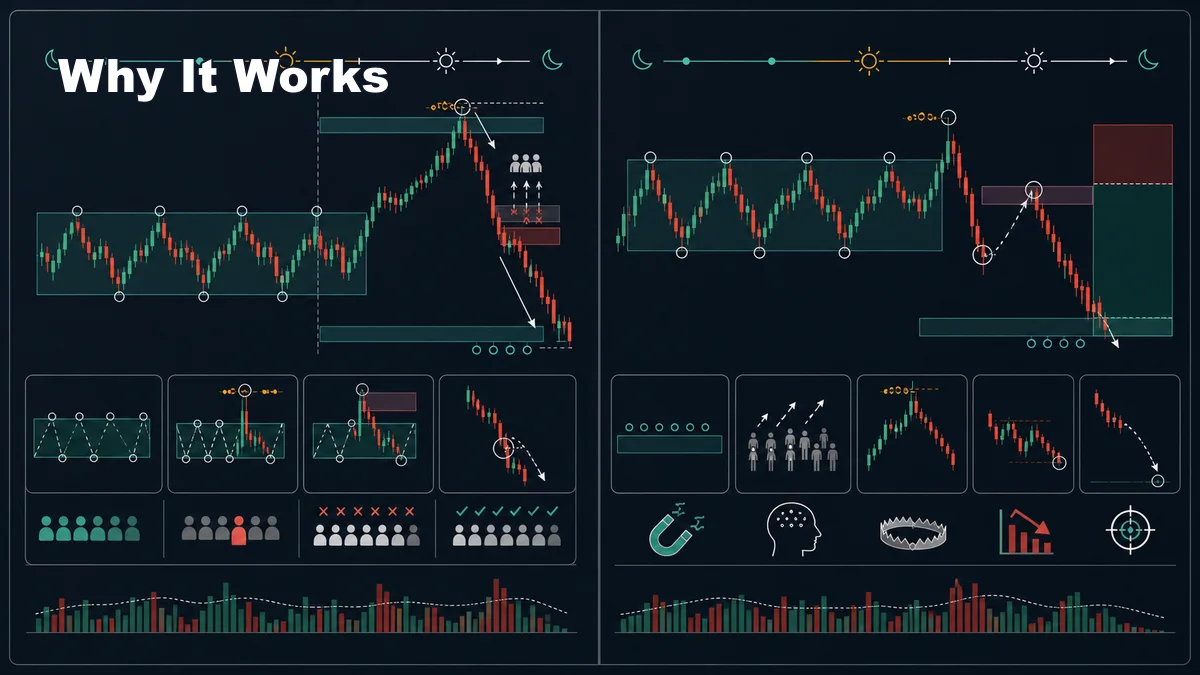
The Judas Swing works as a framework because obvious session levels attract decisions. Traders place stops above highs and below lows. Breakout traders enter when those levels break. When an active session begins, price may move toward those orders first. If the breakout fails, trapped traders can help fuel the reversal.
Timing matters because liquidity and volatility often increase during London and New York. A quiet Asian range may create clean reference points. When the next session opens, price may first run one side of that range before reversing toward the other side.
The model is useful because it keeps traders from chasing. Instead of buying the first break above a session high or selling the first break below a session low, the trader waits to see whether price accepts beyond the level or rejects back through it.
However, the Judas Swing is not automatic. Sometimes the first move is the real move. That is why confirmation matters. The trader needs rejection, displacement, structure shift, and defined risk before treating the early move as a trap.
Step-by-Step Usage in an ICT Plan
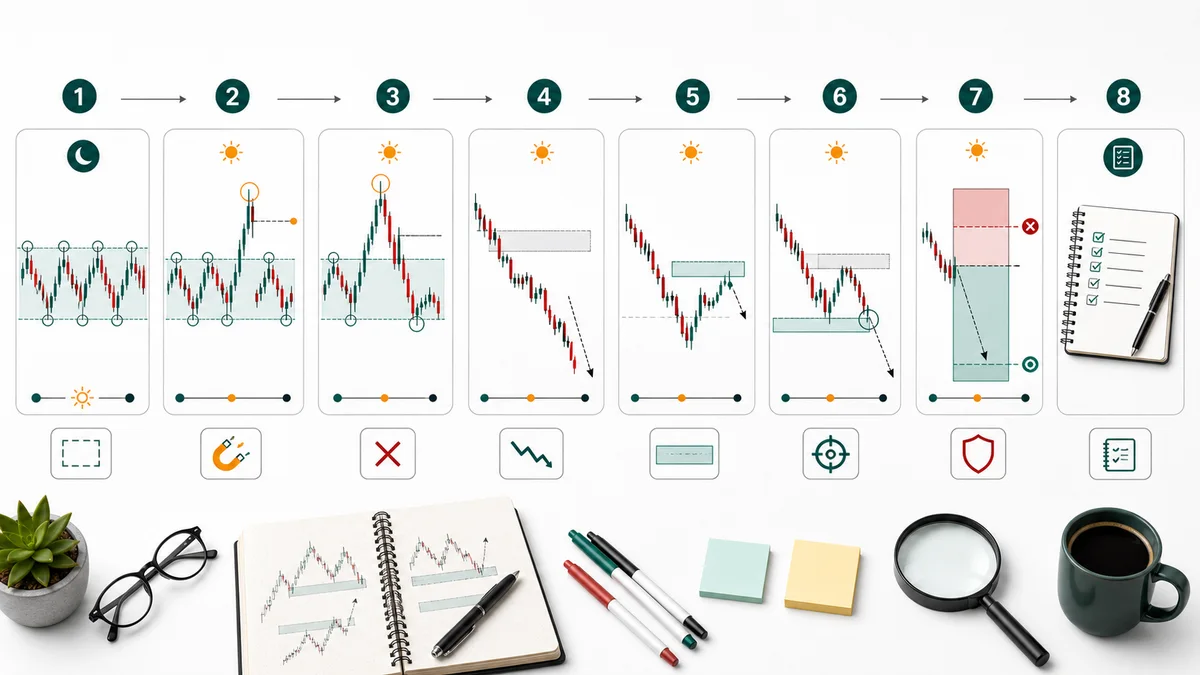
Step one is to define the active session. Decide whether you are studying London, New York, or another session model. Mark the relevant pre-session range, previous day high and low, and nearby equal highs or lows.
Step two is to wait for liquidity to be taken. Do not enter before the event. A potential bearish Judas Swing first runs buy-side liquidity. A potential bullish Judas Swing first runs sell-side liquidity.
Step three is to wait for failure. Price should return back through the swept level or range boundary. A breakout that holds beyond the level is not a clean Judas Swing.
Step four is to require displacement. After the false move, price should move with urgency in the opposite direction and ideally break meaningful short-term structure.
Step five is to plan the retracement. Many traders use a fair value gap, order block, or OTE-style retracement inside the displacement leg. The entry area should connect directly to the reversal sequence.
Step six is to define invalidation and target. Invalidation often sits beyond the Judas Swing extreme. Targets often use opposing liquidity, such as the other side of the session range or a previous high or low.
Confirmation Rules for ICT Judas Swing
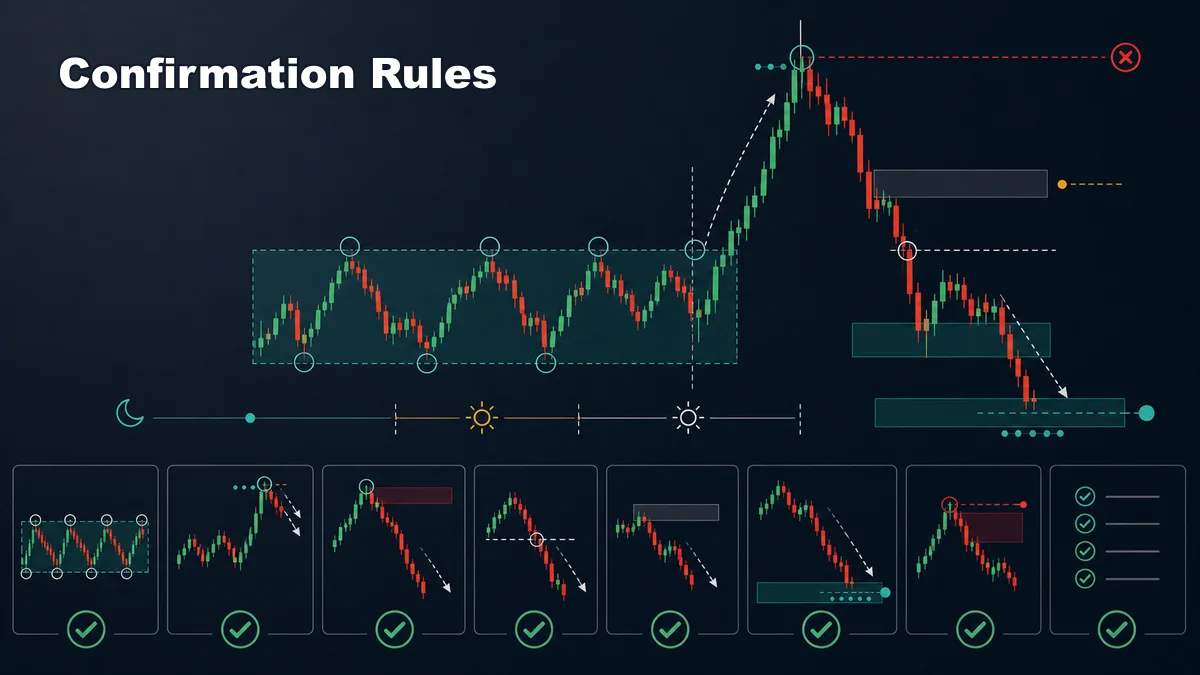
The first confirmation rule is location. The false move should occur around meaningful liquidity: session high, session low, equal highs, equal lows, previous day high, previous day low, or another obvious reference point.
The second rule is failure. A Judas Swing needs a failed move. If price runs above a high and continues higher, the bearish idea is weak. If price runs below a low and continues lower, the bullish idea is weak.
The third rule is displacement. The reversal should show urgency. A slow drift back into the range may not be enough. A strong move that breaks structure and leaves an imbalance gives better evidence.
The fourth rule is entry quality. The retracement area should come from the displacement leg. A fair value gap, order block, or OTE zone is stronger when it forms after the liquidity sweep and structure shift.
The fifth rule is risk. If the stop is random or the target is too close, skip the trade. A Judas Swing setup should make invalidation and opposing liquidity easier to identify, not harder.
Examples of ICT Judas Swing

Example one: London opens and price pushes above the Asian session high. Breakout buyers enter, but price cannot hold above the range. It falls back inside, breaks a short-term low with displacement, and leaves a bearish fair value gap. A trader may wait for a retracement into that gap, place invalidation above the sweep high, and target sell-side liquidity near the Asian low.
Example two: New York opens and price runs below the morning low. Sellers chase the breakdown, but price reclaims the low quickly. It breaks a short-term high with strength and creates bullish displacement. A trader may wait for a retracement into a bullish imbalance, define invalidation below the sweep low, and target buy-side liquidity above.
Example three: price breaks above a session high and holds above it. It retests the old high as support and continues higher. This is not a bearish Judas Swing. It is closer to breakout acceptance.
Example four: price wicks below a low but does not reclaim, displace, or break structure. The move may be noise or continuation. Without confirmation, there is no clean Judas Swing setup.
Common Mistakes With ICT Judas Swing
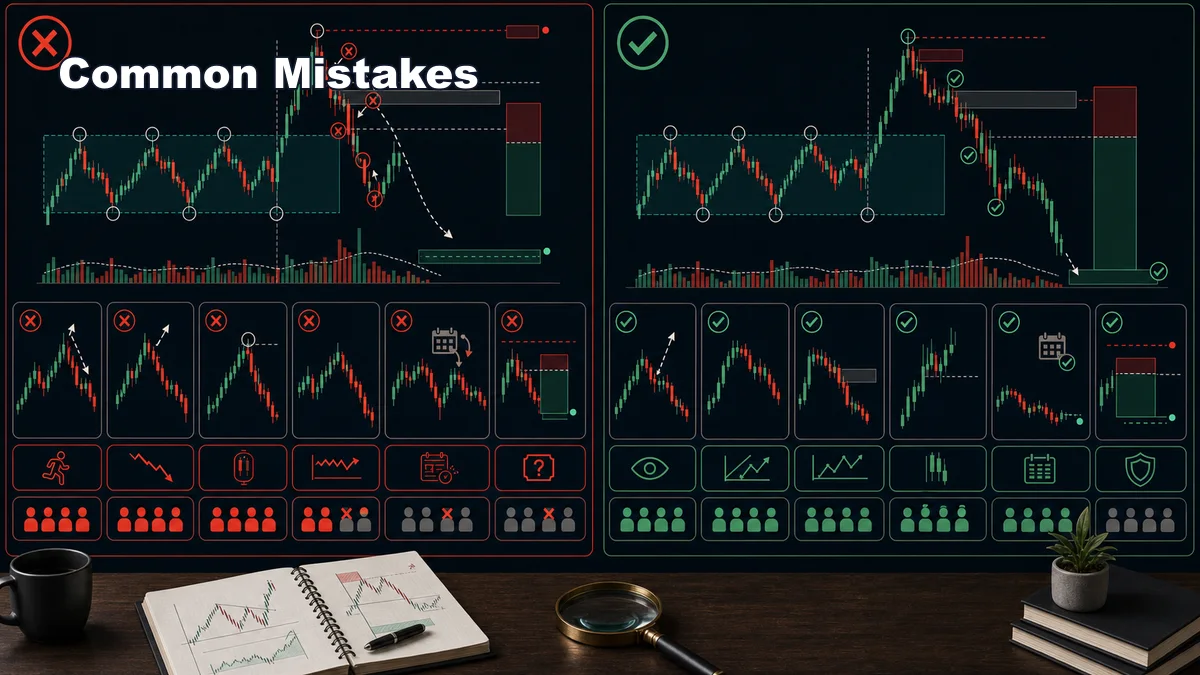
The first mistake is fading every session breakout. Not every first move is false. Some breakouts are real and continue strongly. Wait for failure and displacement before calling it a Judas Swing.
The second mistake is ignoring higher-timeframe context. A bearish Judas Swing into major higher-timeframe support may have limited room. A bullish Judas Swing into major resistance may also be weak. Context matters.
The third mistake is entering on the wick. A wick through liquidity is only an event. The setup needs reclaim, displacement, structure shift, and risk planning.
The fourth mistake is trading during major news without caution. News can create fast spreads, slippage, and violent continuation. A chart may look like a Judas Swing after the fact, but execution can be poor.
The fifth mistake is unclear invalidation. If the setup is bearish, acceptance above the sweep high can invalidate the idea. If the setup is bullish, acceptance below the sweep low can invalidate the idea. The stop should follow the reason for the trade.
Read next: Continue with the Smart Money hub, the ICT Models category, ICT Optimal Trade Entry Explained, and ICT Market Structure Explained to place Judas Swing setups inside a complete ICT sequence.
Frequently Asked Questions
Is the ICT Judas Swing always a reversal?
No. The first move can become a real breakout. A Judas Swing needs failed acceptance, displacement, confirmation, and defined invalidation.
Which session is best for Judas Swing examples?
Many traders study London and New York because participation often increases during those sessions, but the setup still needs liquidity and structure.
Can beginners trade the Judas Swing alone?
Beginners should first learn liquidity, market structure, displacement, and risk planning. The Judas Swing is a sequence, not a standalone signal.