


Elliott impulse waves An Elliott impulse is a five-wave directional structure in which waves 1, 3 and 5 move with the larger trend and waves 2 and 4 correct it. Three formal rules constrain the count, but real-time degree selection and corrective complexity remain subjective. The method should be treated as a testable chart-reading framework rather than a forecast. Before using it, define the market condition, confirmation event, invalidation price, transaction costs and maximum risk. This guide explains the rules, a repeatable workflow, common failure modes and the most relevant supporting concepts.
Definition: What Are Elliott Wave Impulse Waves?
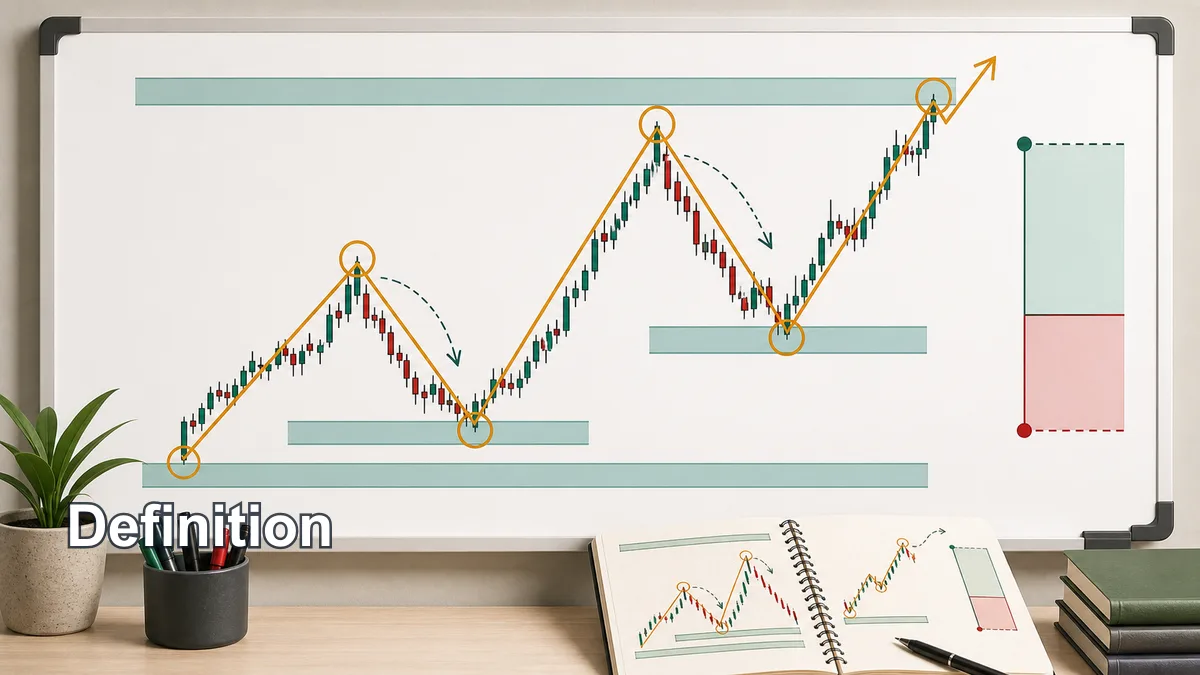
An Elliott Wave impulse wave is a five-wave movement in the direction of the larger trend. In a bullish impulse, price moves up through waves 1, 3, and 5, while waves 2 and 4 are corrective pullbacks. In a bearish impulse, the same idea is inverted. Waves 1, 3, and 5 move down, while waves 2 and 4 correct upward.
The purpose of the impulse is progress. It shows the market moving away from a base, a range, a correction, or a previous swing area. The structure is not just five labels on a chart. It should show directional pressure, expanding or sustained momentum, and pullbacks that do not fully destroy the trend.
Traditional Elliott Wave rules give impulse waves a basic structure. Wave 2 should not retrace beyond the start of Wave 1. Wave 3 should not be the shortest of waves 1, 3, and 5. In a standard impulse, Wave 4 should not overlap the price territory of Wave 1. There are advanced exceptions such as diagonals, but beginners should master the clean impulse first.
The most useful way to think about an impulse is as a trend leg with internal rhythm. It has a launch, a pullback, a strong continuation, another pause, and a final push. That rhythm is why impulse waves often connect well with market structure, support and resistance, candlesticks, momentum, and risk planning.
How to Identify Elliott Wave Impulse Waves
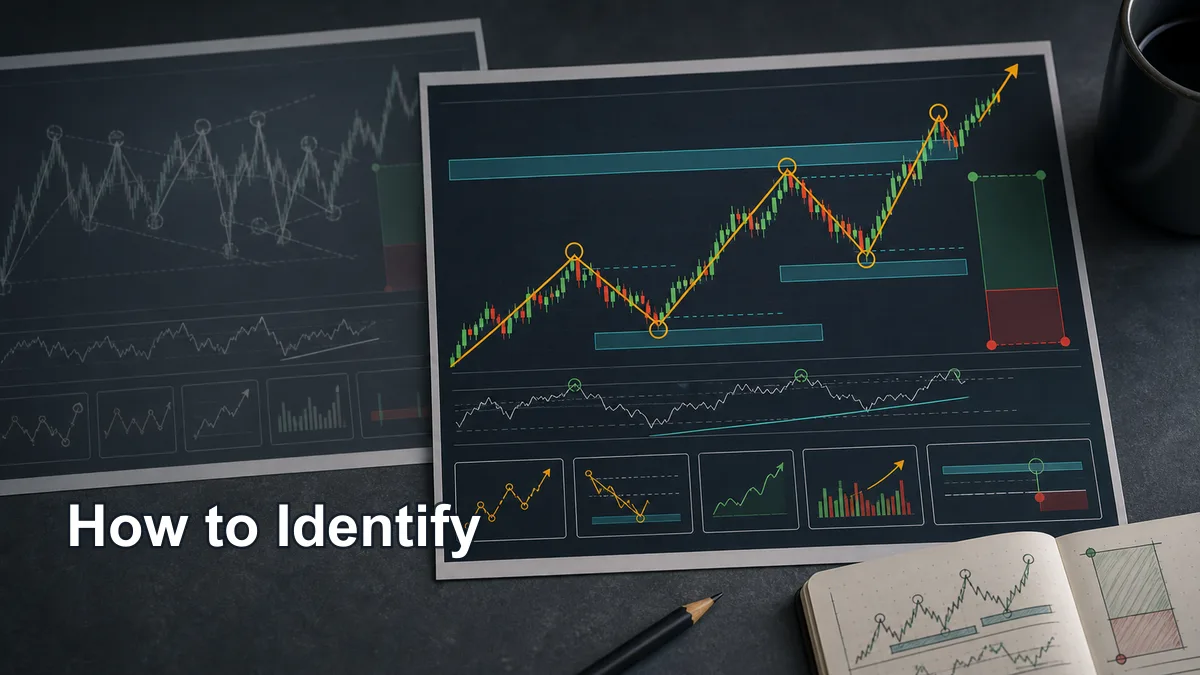
Start by looking for a clear directional leg. In a bullish impulse, price should usually create higher highs and higher lows. In a bearish impulse, price should usually create lower lows and lower highs. If the chart is sideways and overlapping, it may be a correction or range rather than a clean impulse.
Next, check the five-part rhythm. Wave 1 starts the new push. Wave 2 corrects it but should not erase it. Wave 3 is often the strongest and most obvious part of the move. Wave 4 usually pauses, consolidates, or pulls back in a shallower way. Wave 5 attempts one more push in the trend direction.
Then apply the rules. If your Wave 2 moves beyond the start of Wave 1, the count is invalid. If your Wave 3 is shorter than both Wave 1 and Wave 5, the count is suspect. If Wave 4 overlaps deeply into Wave 1 territory in a structure you are calling a standard impulse, the count may be wrong or may belong to a different pattern type.
Finally, compare the count with context. The best impulse waves often start after a correction completes, after price breaks a range, or after a major support or resistance area is rejected. A wave count in the middle of a messy range is usually less useful than one that begins from a clear decision point.
Why Elliott Wave Impulse Waves Work
Impulse waves work because markets rarely move in a straight line. Even strong trends usually expand, pause, pull back, and continue. Elliott Wave gives names to that behavior. Instead of seeing a pullback and immediately assuming the trend is finished, the trader asks whether the move may be Wave 2 or Wave 4 inside a larger impulse.
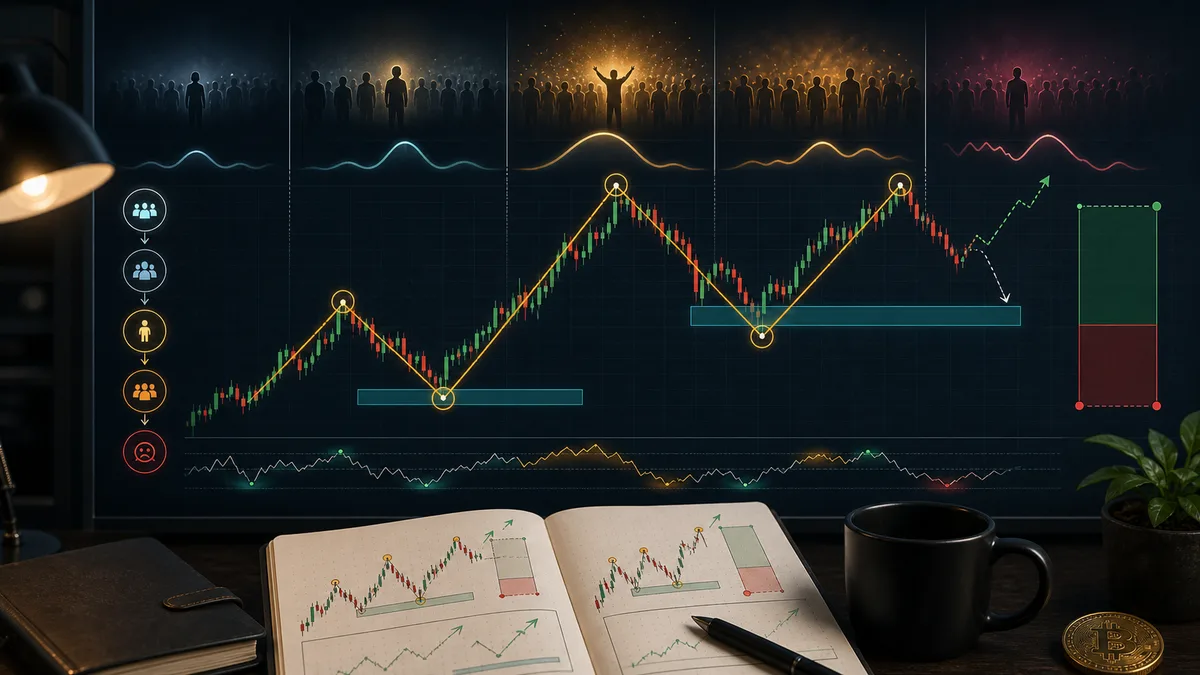
The model also reflects crowd psychology. Early buyers or sellers enter during Wave 1. Some traders doubt the move during Wave 2. More participation enters during Wave 3 when the trend becomes obvious. Wave 4 often shows hesitation or profit-taking. Wave 5 can represent the final push, sometimes strong, sometimes tired.
This does not mean every market must obey a perfect Elliott Wave count. The value is not perfection. The value is structure. If a trader can identify where the market may be inside a trend leg, the trader can plan better questions: is this pullback normal, is momentum expanding, has a rule been violated, and where is the count wrong?
Impulse analysis becomes stronger when combined with other tools. Support and resistance can define where Wave 2 or Wave 4 might react. Candlesticks can help confirm rejection. Multi-timeframe analysis can show whether the impulse aligns with the bigger trend. Risk rules decide whether the trade idea is worth taking.
Step-by-Step Usage: A Practical Impulse Wave Workflow
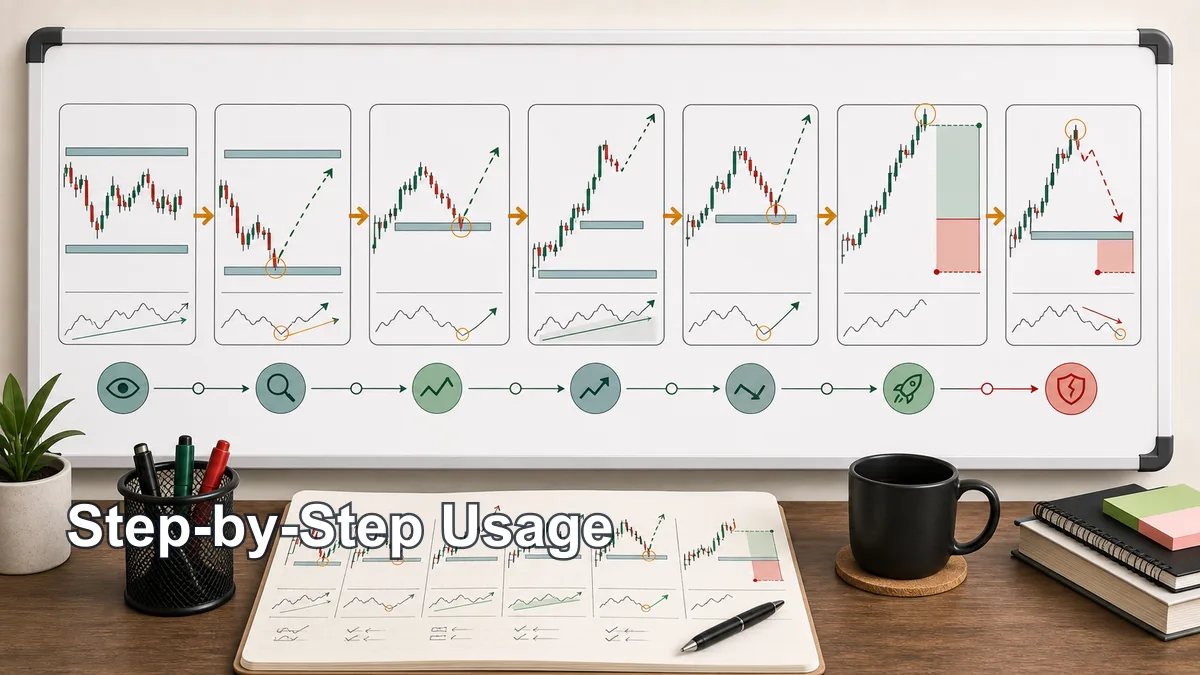
Step one is higher-timeframe context. Decide whether the market is trending, correcting, ranging, or reversing. Do not start by labeling the smallest candles. Start with the larger swing structure so the impulse count has a useful location.
Step two is the possible origin. Look for the point where the new directional move begins. This may be a swing low, swing high, range breakout, failed breakdown, or completed correction. Mark the start of Wave 1 and the end of Wave 1 only if price actually shows directional change.
Step three is the Wave 2 test. If price pulls back, ask whether it holds above the start of Wave 1 in a bullish count or below the start of Wave 1 in a bearish count. If that level breaks, the count is invalid. If it holds and price turns, the impulse scenario remains alive.
Step four is Wave 3 confirmation. A strong Wave 3 often breaks beyond Wave 1 with momentum. This is where traders look for participation, cleaner candles, wider range movement, or a clear structure shift. Step five is Wave 4 management. A Wave 4 pullback should not make the chart look completely broken.
Step six is Wave 5 planning. Wave 5 is not an invitation to chase blindly. It is the stage where traders watch for target zones, weakening momentum, divergence, or rejection near higher-timeframe levels. Step seven is review. Save the chart before and after the move so you can judge whether the wave count helped or only decorated the chart.
Confirmation Rules for Impulse Wave Analysis
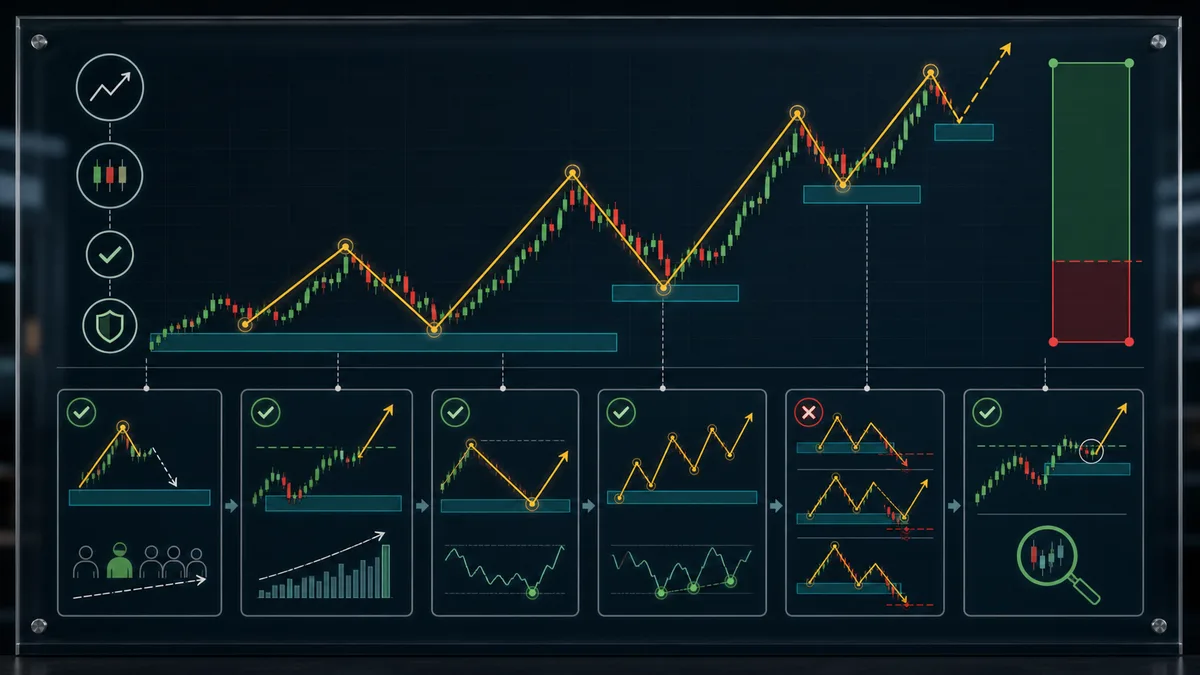
The first confirmation rule is rule compliance. A beautiful-looking count is not useful if it breaks a core rule. Wave 2 must not erase Wave 1. Wave 3 must not be the shortest of the motive waves. Wave 4 should respect the standard impulse structure. When a rule fails, adjust the analysis instead of defending the old count.
The second rule is structure confirmation. In a bullish impulse, price should eventually break above the Wave 1 high. In a bearish impulse, price should eventually break below the Wave 1 low. If price cannot make progress after Wave 2, the impulse may not be active.
The third rule is momentum confirmation. Wave 3 does not need to be the longest, but it often should feel decisive. If the supposed Wave 3 is slow, weak, overlapping, and smaller than everything around it, be careful. You may be labeling a correction as an impulse.
The fourth rule is invalidation before entry. Every wave idea needs a level where it is wrong. For a Wave 3 continuation idea, invalidation may be the start of Wave 1 or the low of Wave 2 depending on the setup. For a Wave 5 idea, invalidation may be the Wave 4 low in a bullish structure. The exact level depends on the trade plan, but it must exist before the order.
Examples of Elliott Wave Impulse Waves
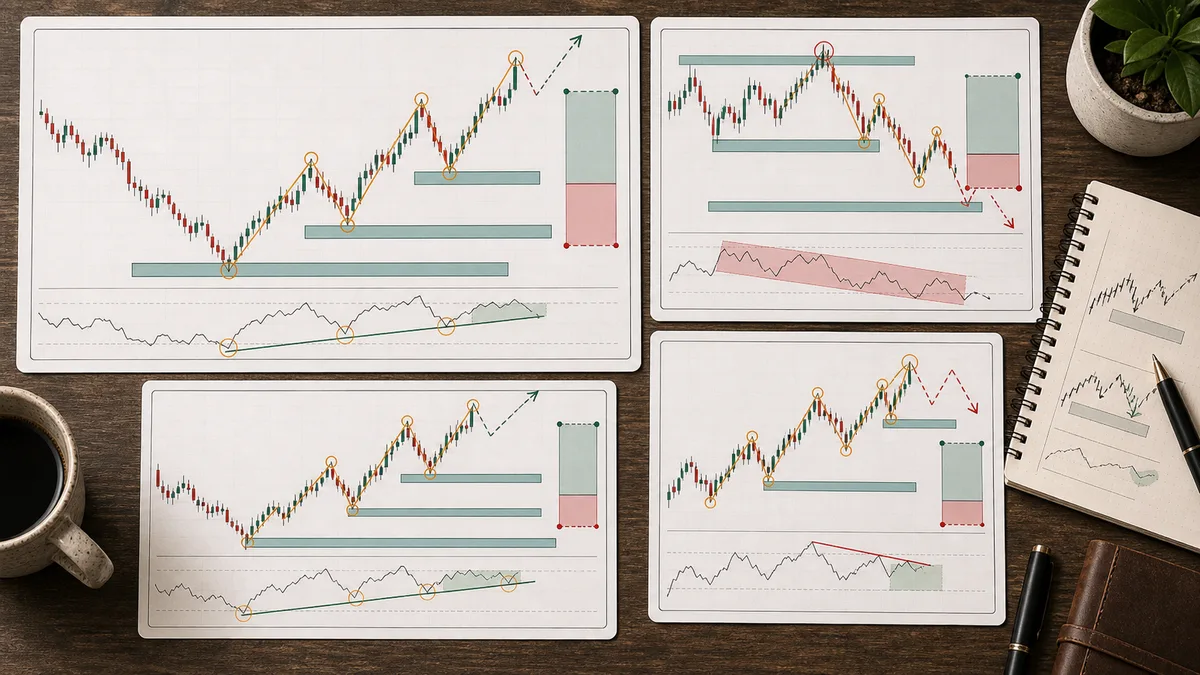
Imagine price has been correcting downward inside a larger uptrend. It forms a swing low, pushes up strongly, then pulls back without breaking that low. That first push may be Wave 1 and the pullback may be Wave 2. If price then breaks above the Wave 1 high with stronger momentum, the trader may begin treating the move as a possible bullish impulse.
A second example is a bearish impulse after a failed breakout. Price breaks above resistance, cannot hold, then sells off sharply. The first selloff may be Wave 1. A retracement back toward the failed breakout area may be Wave 2. If sellers then drive price below the Wave 1 low, Wave 3 may be underway.
A third example is a late Wave 5. Price has already completed a strong Wave 3 and a clean Wave 4 pause. The final push breaks slightly beyond the Wave 3 extreme but momentum is weaker. This does not automatically mean short or sell. It means the trader should stop treating the market as early trend and start watching for completion evidence.
The point of examples is not to memorize pictures. It is to train the eye to connect count, context, rule, and risk. A count without invalidation is storytelling. A count with confirmation and risk can become a usable trading scenario.
Common Mistakes When Reading Impulse Waves
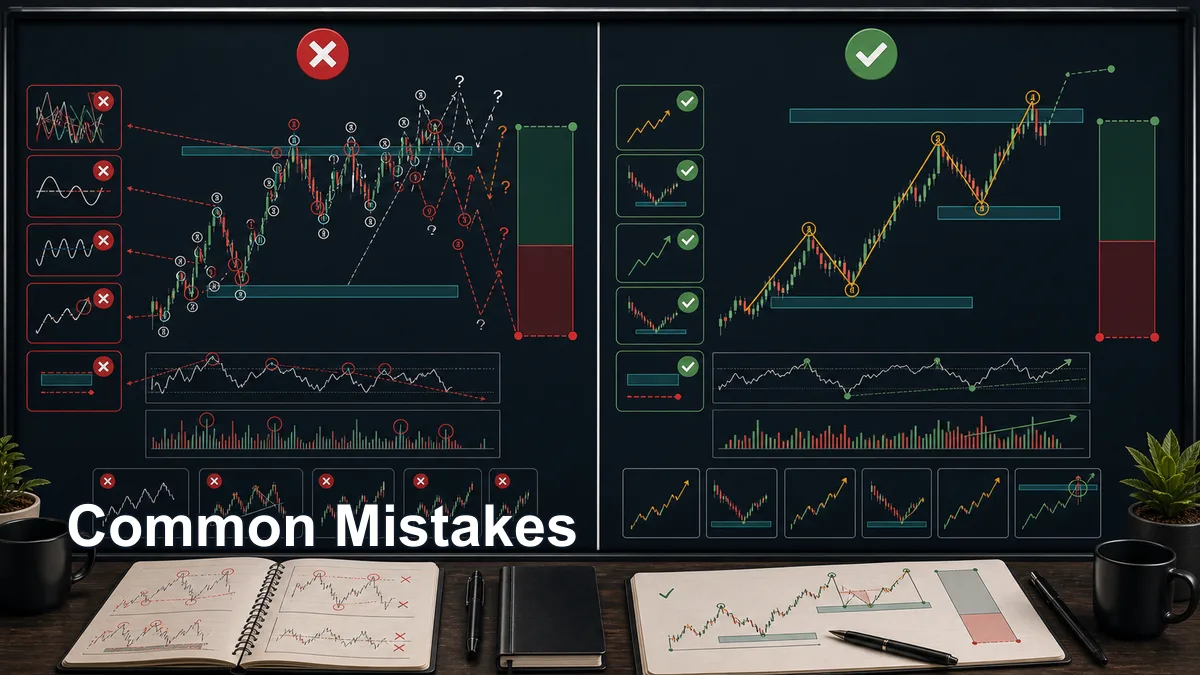
The first mistake is counting every small move. Elliott Wave is fractal, but that does not mean every candle needs a label. Beginners often zoom in too far and create a complex count where the higher timeframe is still unclear. Start with the major swings first.
The second mistake is ignoring invalidation. If Wave 2 breaks the start of Wave 1, the count is wrong. If the trader keeps the label anyway, the analysis becomes belief instead of evidence. The market is allowed to invalidate your idea. Your job is to respond quickly.
The third mistake is chasing Wave 5. By the time a Wave 5 is obvious, the impulse may be mature. A late entry can have poor reward-to-risk because the next phase may be a correction. Wave 5 can still extend, but it should be planned with caution, not emotion.
The fourth mistake is using Elliott Wave alone. A wave count should be paired with price action, levels, confirmation, and position sizing. The fifth mistake is making the count too complicated. If a beginner needs ten alternate counts to justify one trade, the setup is probably not clean enough.
Impulse waves are useful when they simplify the chart. They become harmful when they make the trader stubborn. Use the model to ask better questions, define scenarios, and respect invalidation. That is where Elliott Wave becomes practical instead of decorative.
Key takeaways
- An Elliott impulse is a five-wave directional structure in which waves 1, 3 and 5 move with the larger trend and waves 2 and 4 correct it.
- Three formal rules constrain the count, but real-time degree selection and corrective complexity remain subjective.
- Start with invalidation rules, maintain an alternate count and use proportions as descriptions rather than fixed targets.
- A valid plan separates location, trigger, invalidation, position size and exit logic.
A validation workflow you can reproduce
- Define the sample: choose the market, timeframe, session and date range before reviewing outcomes.
- Write the rule: Start with invalidation rules, maintain an alternate count and use proportions as descriptions rather than fixed targets.
- Record invalidation: identify the observable price event that disproves the setup.
- Include execution costs: account for spread, commission and slippage where relevant.
- Validate separately: test the finished rule on data that was not used to create it.
When this concept is unreliable
Impulse counting is unreliable when a rule violation is ignored or wave degree is changed solely to preserve the preferred forecast. Keep failed and skipped examples in the journal so the review is not limited to attractive winners.
Use this concept within a complete analysis
This method should remain connected to its parent framework and adjacent decision steps. Use Trading Theories: Complete Guide to Technical Analysis Frameworks, Gann Fan Trading Strategy Explained, Wyckoff Accumulation Explained, Gann Theory: Complete Beginner Guide, Wyckoff Method: Complete Beginner Guide and Elliott Wave Theory: Rules, 5–3 Structure and Limits to compare definitions, establish context and avoid treating one signal as a complete trading system.
References and methodology
Practise before considering real capital
Use historical charts or a demo account to test the written rules before considering live execution. Review the XM account and demo information. Availability, protections and trading conditions depend on jurisdiction, so review the applicable legal documents yourself.
Affiliate disclosure: Học Làm Trader may receive a commission if you open an account through this link, at no additional cost to you. This relationship does not determine the educational conclusions.
Risk warning: This article is for education and general information only. It is not investment advice, a trade signal or an invitation to trade. Trading can result in loss of capital, and past examples do not guarantee future results. Assess your own circumstances and risk tolerance.
Not every five-wave-looking move is a standard impulse. The guide to Leading and Ending Diagonals explains the permitted overlap and wave position. When the market is moving against the larger trend, compare the structure with Zigzag, Flat and Triangle corrections.
Related reading: Leading vs Ending Diagonal: How to Read Elliott Wave Diagonals