


Gann Theory is one of the most distinctive frameworks in technical analysis. Instead of looking only at trendlines, support, resistance, or indicators, Gann Theory studies the relationship between price and time. It uses angles, geometry, proportional movement, cycles, and square-based tools to ask whether a market is moving in balance, accelerating, losing rhythm, or approaching a meaningful reaction zone.
For beginners, Gann can feel mysterious because many traders present it as if it were secret knowledge. It does not need to be treated that way. At its practical core, Gann Theory is a way to organize market movement through price-time structure. A trader marks an important high or low, applies a properly scaled grid or angle, then watches how price reacts around those projected levels and time windows.
This guide explains what Gann Theory is, the core principles behind it, key Gann tools and models, how to identify Gann structure on charts, a practical workflow, examples, and related guides. It is designed as the parent pillar for the Gann Theory category inside the THEORIES hub, so future cluster articles can link back here and build a clear internal learning path.
Nothing in this article is financial advice or investment advice. Trading involves risk, and no angle, cycle, square, or chart tool can predict the future with certainty. The CFTC warns traders to be cautious of trading products that promise unrealistic returns. Gann Theory can help with structure and planning, but every idea still needs confirmation, invalidation, and risk control.
Definition: What Is Gann Theory?
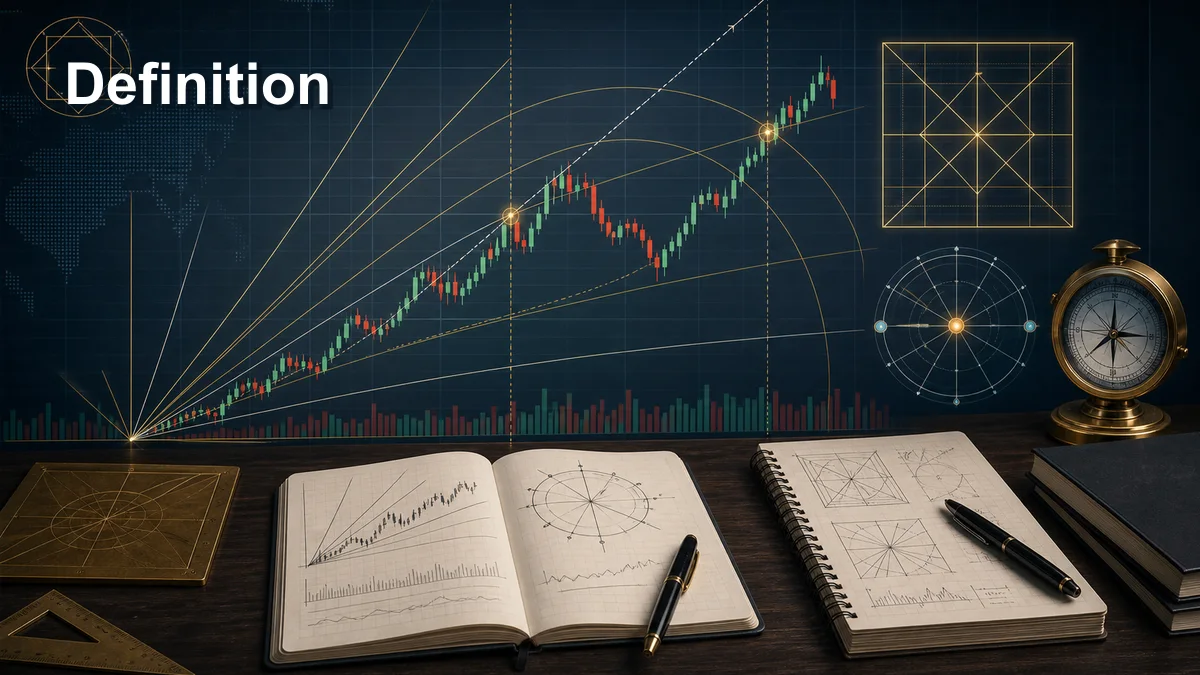
Gann Theory is a technical analysis framework associated with W.D. Gann, a trader known for studying price, time, geometry, and market cycles. The central idea is that markets may move in measurable relationships. Price movement is not studied alone. Time is also part of the analysis. A market that rises quickly through price but takes little time may have a different meaning from a market that rises slowly in a balanced price-time rhythm.
The most recognizable Gann tool is the Gann fan. A Gann fan projects diagonal angles from an important high or low. The most famous angle is often described as the 1×1 angle, which represents a balanced relationship between one unit of price and one unit of time. Other angles show faster or slower rates of movement. Traders use these angles as potential support, resistance, acceleration, or weakness references.
Gann Theory also includes square-based concepts, such as square charts, price-time squares, and Square of Nine style thinking. These tools attempt to connect price levels with geometric proportion. Some traders use them to estimate possible turning areas, while others use them as confluence with traditional support, resistance, and trend structure.
A beginner should not think of Gann Theory as a magic forecasting system. It is better to treat it as a structured chart-reading method. The theory asks whether price is respecting a geometric rhythm. If price repeatedly reacts around an angle, square level, or time cycle, that area may deserve attention. If price ignores the tool completely, the analysis may be poorly anchored, poorly scaled, or simply not relevant to that market phase.
Gann Theory is different from simple trendline analysis because it depends heavily on scale. If the chart is scaled incorrectly, the angle can lose meaning. A normal trendline connects two or more price points. A Gann angle projects a rate of movement through both price and time. That makes it more sensitive and more demanding than ordinary diagonal lines.
The practical purpose of Gann Theory is to create a map. The map can show where price may find support, where resistance may appear, when a market may be stretched, and where a possible time-based reaction window could form. The map is not the trade. The trader still needs evidence from price action, structure, volatility, and risk.
Core Principles of Gann Theory
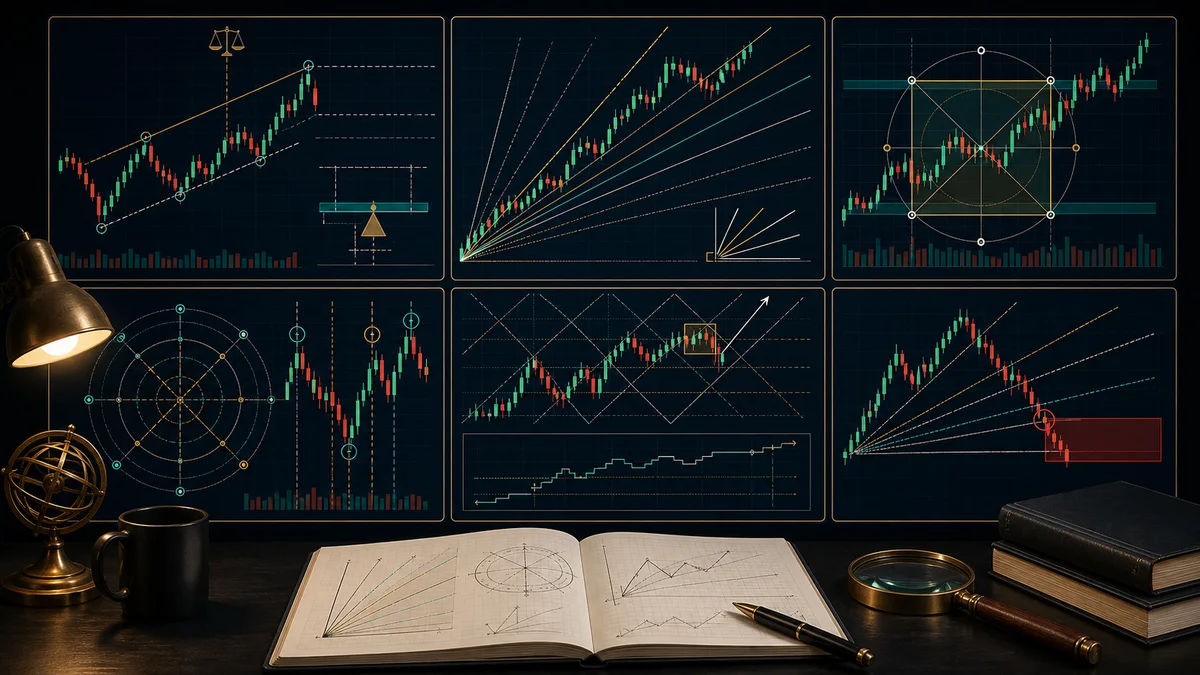
The first principle is price-time balance. Gann analysis assumes that price and time should be studied together. A market can move too fast, too slow, or in a balanced rhythm. When price respects a projected angle, the trader may interpret that as a sign that the current rhythm is still intact. When price breaks that angle with acceptance, the rhythm may be changing.
The second principle is the 1×1 angle. Many Gann traders treat the 1×1 angle as a baseline for balance. If price is rising above a properly scaled 1×1 angle, the uptrend may be strong. If price loses the 1×1 angle, the trend may be weakening or shifting into a slower rhythm. This idea sounds simple, but the phrase properly scaled is crucial.
The third principle is chart scaling. Gann angles are sensitive to the relationship between price units and time units. If the chart scale changes, the angle can visually change. A Gann fan placed without attention to scale can become decorative rather than analytical. Beginners should learn how their platform draws Gann tools before trusting the lines.
The fourth principle is geometric support and resistance. Gann traders often watch diagonal angles, square levels, and proportional price zones as possible reaction areas. These zones should be treated like support and resistance, not as guaranteed turning points. A level becomes more interesting when it aligns with market structure, a previous swing, liquidity, or candlestick reaction.
The fifth principle is time cycles. Gann Theory places unusual importance on time. Traders may count bars from major highs or lows, watch repeated cycle intervals, or study whether reactions occur near projected time windows. Time analysis is difficult, so beginners should use it as a context clue rather than a standalone entry trigger.
The sixth principle is confluence. A Gann angle by itself may not be enough. A better setup may combine an angle, a horizontal level, a higher-timeframe zone, a trend structure, and a clear risk point. Confluence does not guarantee a win, but it reduces the chance that the trader is reacting to one arbitrary line.
The seventh principle is invalidation. Gann analysis can become vague if the trader keeps redrawing tools after every failed reaction. Before entering a trade, define what would prove the idea wrong. If price accepts below a key angle, breaks a square level, or ignores the projected cycle window, the setup may be invalid.
The eighth principle is simplicity. Gann tools can become visually overwhelming. A chart covered with too many fans, squares, arcs, and cycle lines can make the trader less objective. Beginners should start with one anchor point, one or two angles, and one simple price-time question. Complexity should be earned through testing, not added for decoration.
Key Gann Patterns and Models
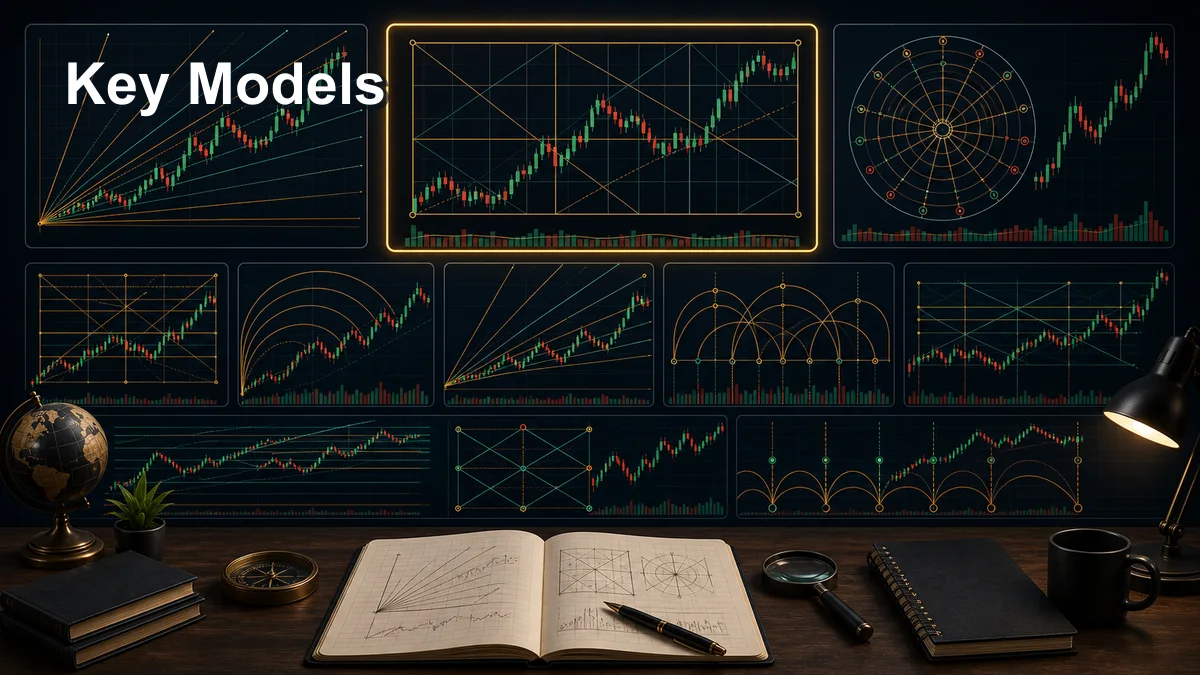
The first key model is the Gann fan. A Gann fan is drawn from an important swing high or swing low. It projects several diagonal angles that represent different rates of movement. In an uptrend, the angles may act as dynamic support. In a downtrend, they may act as dynamic resistance. The quality of the anchor point matters more than the number of lines.
The second model is the Gann box. A Gann box helps traders divide price and time into proportional sections. It can be used to study whether a market is moving in balanced increments or reacting around geometric divisions. Some traders use a Gann box around a major swing move, then watch how price behaves at the internal divisions.
The third model is the Square of Nine style concept. This approach connects price levels with geometric relationships on a square or spiral-like structure. Many beginners find this model confusing because it can involve calculations and non-obvious relationships. The practical takeaway is that some Gann traders use square-based geometry to estimate possible support, resistance, or reversal zones.
The fourth model is the 50 percent rule and proportional retracement. Gann traders often paid attention to halfway points, quarter divisions, and proportional movement. A market that retraces around half of a prior move may be showing balance. This overlaps with other technical analysis methods, but Gann traders often connect the retracement with time and angle structure.
The fifth model is price-time squaring. Price-time squaring asks whether a price movement and a time movement have reached a balanced relationship. For example, a trader may study whether a move has traveled a certain number of price units over a meaningful number of bars. This model is more advanced, but it reflects the heart of Gann thinking: price and time are linked.
The sixth model is cycle timing. Gann traders may watch repeated time intervals from important highs and lows. If a market has reacted every certain number of bars, the next similar window may become a zone of attention. This should not be used blindly. Cycles can expand, contract, or disappear completely when market conditions change.
The seventh model is angle failure. A failed Gann angle can provide useful information. If price respects an angle several times and then breaks through it with strength, the market may be shifting rhythm. A trader may stop looking for support at that angle and instead watch the next angle, horizontal level, or structure zone.
How to Identify Gann Theory on a Chart
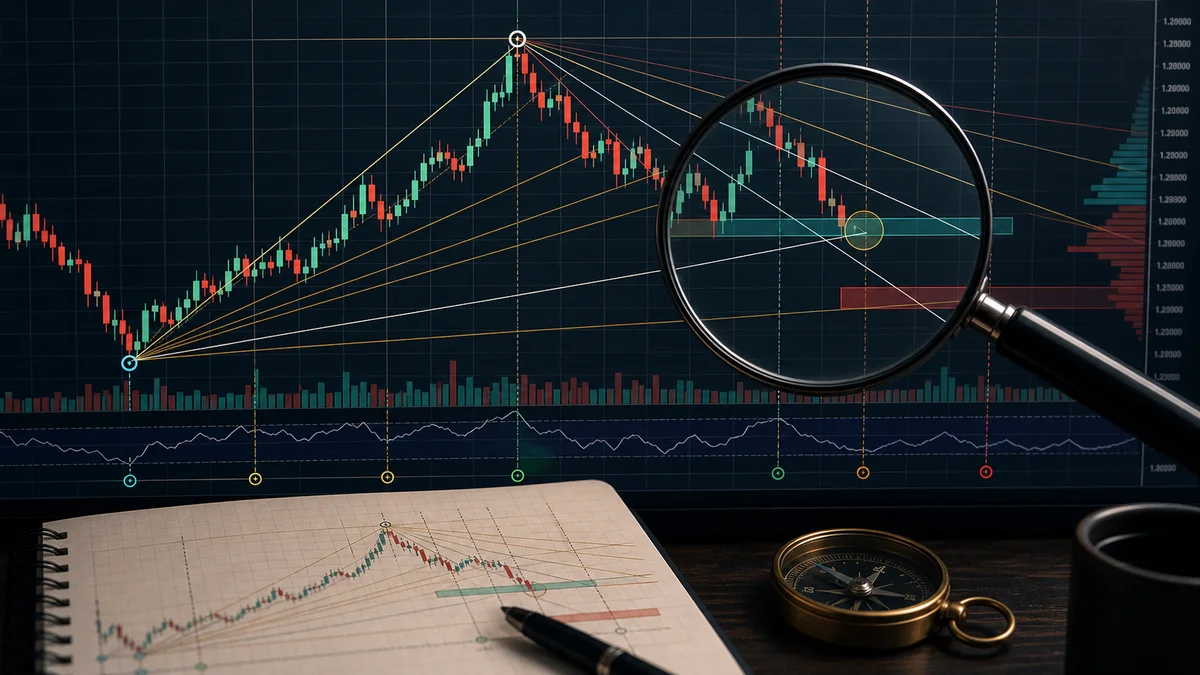
Start by choosing a meaningful anchor point. The anchor is usually a major swing high or swing low. It should be obvious on the timeframe you are trading. If the anchor point is random, every angle projected from it becomes weaker. A major low after a long decline or a major high before a strong selloff is usually more useful than a minor candle in the middle of noise.
Next, check the chart scale. Before drawing a Gann fan or box, learn how your charting platform handles price and time units. Some tools adjust automatically, while others require manual scaling. If the tool looks different every time you zoom, your analysis may be unstable. Keep screenshots of the same setup to make your testing consistent.
Then apply the primary angle or grid. Beginners can start with the 1×1 angle and a small number of supporting angles. Do not cover the chart with every possible line. The purpose is to observe whether price respects the projected rhythm. If price reacts repeatedly around an angle, that line may be relevant. If it does not, remove it.
After that, compare the Gann tool with market structure. Does the angle line up with higher lows, lower highs, support, resistance, or a breakout level? Does a projected time window appear near a major level? Does the Gann box division match a previous reaction area? The tool becomes more useful when it supports what price structure is already showing.
Next, look for reaction evidence. A touch of a Gann angle is not an entry by itself. Watch for rejection, displacement, a structure shift, a retest, or a failed continuation. If price slices through the angle without reaction, the market may be telling you that the line is not important.
Finally, record the setup. Gann analysis can become subjective, so journaling is essential. Save the anchor point, scale, tool settings, reaction area, confirmation trigger, invalidation, and outcome. Over time, your journal will show whether the tool adds clarity or only makes the chart look impressive.
A Practical Gann Theory Trading Workflow
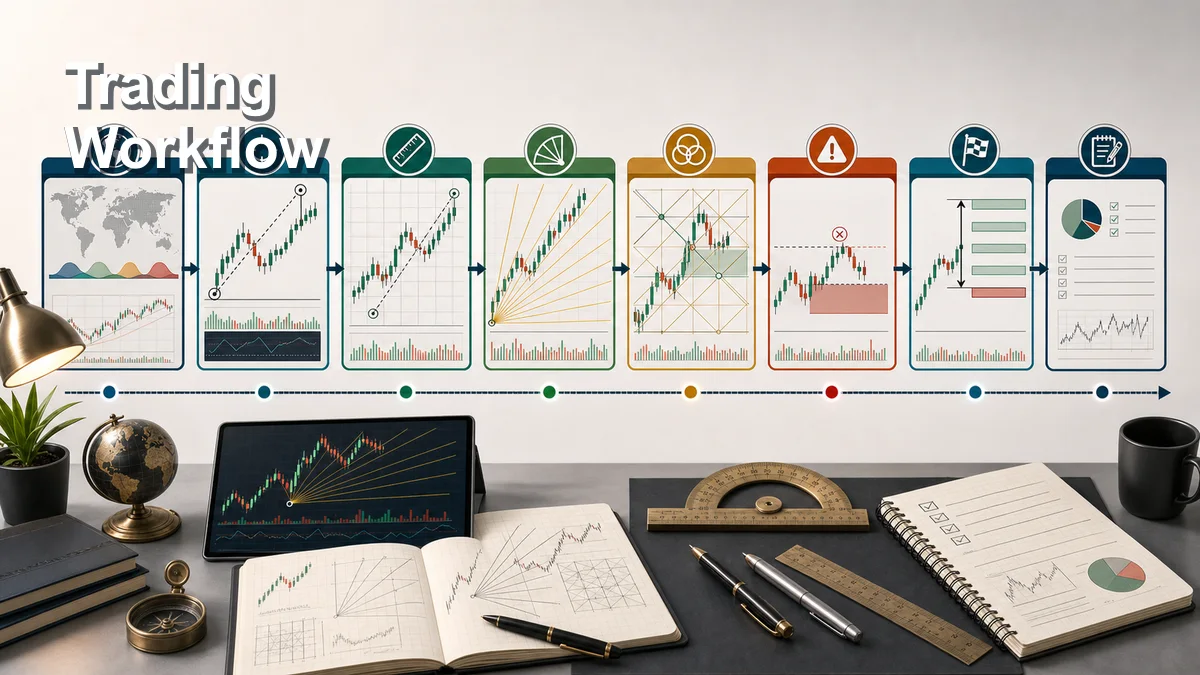
A practical workflow starts with market context. Decide whether the market is trending, ranging, reversing, or approaching a major level. Gann tools are easier to interpret when you know the environment. A fan in a strong trend may help track rhythm. A box in a range may help divide price and time. A cycle window near a major level may help you prepare for reaction.
Step two is anchor selection. Choose the high or low that started the move you want to study. Do not keep moving the anchor until the chart looks perfect. If several anchors seem possible, test them separately and choose the one that produces the clearest repeated reactions.
Step three is scaling and tool placement. Apply the Gann fan, box, or grid consistently. If your platform allows custom settings, document them. Consistency matters because a small scale change can alter the angle structure. A trader cannot improve a method that changes every time it is used.
Step four is confluence filtering. Look for overlap between Gann levels and ordinary technical analysis. A Gann angle near a prior swing, support zone, trendline, or liquidity area is more useful than an isolated angle in empty space. The more independent reasons an area has, the more attention it deserves.
Step five is confirmation. Wait for price behavior. A bullish idea may need rejection from an angle, a higher low, and displacement away from the zone. A bearish idea may need rejection from resistance, failure to reclaim an angle, and a lower-timeframe structure shift. The exact trigger depends on your model, but the rule is the same: let price respond first.
Step six is risk planning. Define invalidation before entry. If a long trade depends on the 1×1 angle acting as support, acceptance below that angle may invalidate the idea. If a short trade depends on a square level acting as resistance, a strong close above the level may invalidate the idea. Do not widen the stop just because the geometry looks elegant.
Step seven is target selection. Targets can come from the next Gann angle, a square division, prior support or resistance, opposing liquidity, or a measured move. A target should be reachable within the market context. If the target requires price to ignore several major levels, the plan may be too optimistic.
Step eight is review. After the trade, ask whether Gann analysis actually improved the decision. Did the angle provide useful support or resistance? Did time analysis warn you before a reaction? Did the tool create confidence without evidence? Review is where Gann Theory becomes a tested method instead of a beautiful chart overlay.
Gann Theory Examples
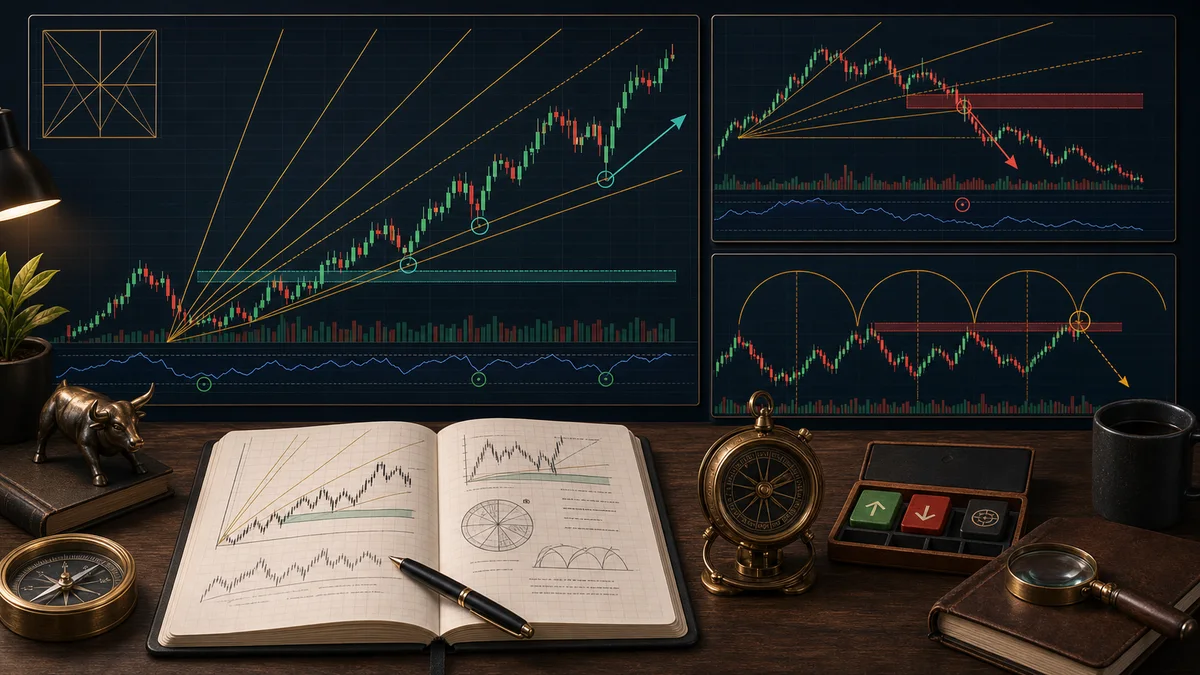
Example one: price forms a major low and begins a clean uptrend. A trader anchors a Gann fan at the low and notices that price repeatedly reacts around the 1×1 angle. Each pullback into the angle creates a higher low and then continuation. In this case, the angle is not a signal by itself. It is a rhythm reference that aligns with trend structure.
Example two: price rises above the 1×1 angle for several sessions, then breaks below it with strong bearish candles. The trader does not immediately buy the next touch. Instead, the trader asks whether the rhythm has changed. If price retests the broken angle from below and rejects, the angle may now act as resistance rather than support.
Example three: a Gann box is placed around a large swing move. Price reacts several times around internal divisions of the box. When one of those divisions aligns with a prior resistance level, the trader watches for confirmation. If price rejects and forms a lower high, the area may become a short idea. If price accepts above it, the level is not resistance anymore.
Example four: a trader counts time from a major low and expects a reaction near a projected cycle window. Price reaches that window while also testing higher-timeframe resistance. The trader does not short only because the date arrived. The trader waits for a rejection candle, structure shift, or failure to continue. Time creates alertness, not automatic entry.
Example five: a beginner places three Gann fans, two boxes, several cycle tools, and many horizontal levels on the same chart. Every candle seems important, but no trade plan is clear. The lesson is that more geometry does not mean better analysis. A simple, testable setup is more valuable than a crowded chart.
Example six: a Gann angle appears to support price perfectly on one zoom setting, but when the chart scale changes, the angle no longer matches the reactions. This is a scaling problem. The trader should not force the setup. Gann tools require consistent chart settings, especially during testing and screenshot review.
Related Guides and Next Learning Path
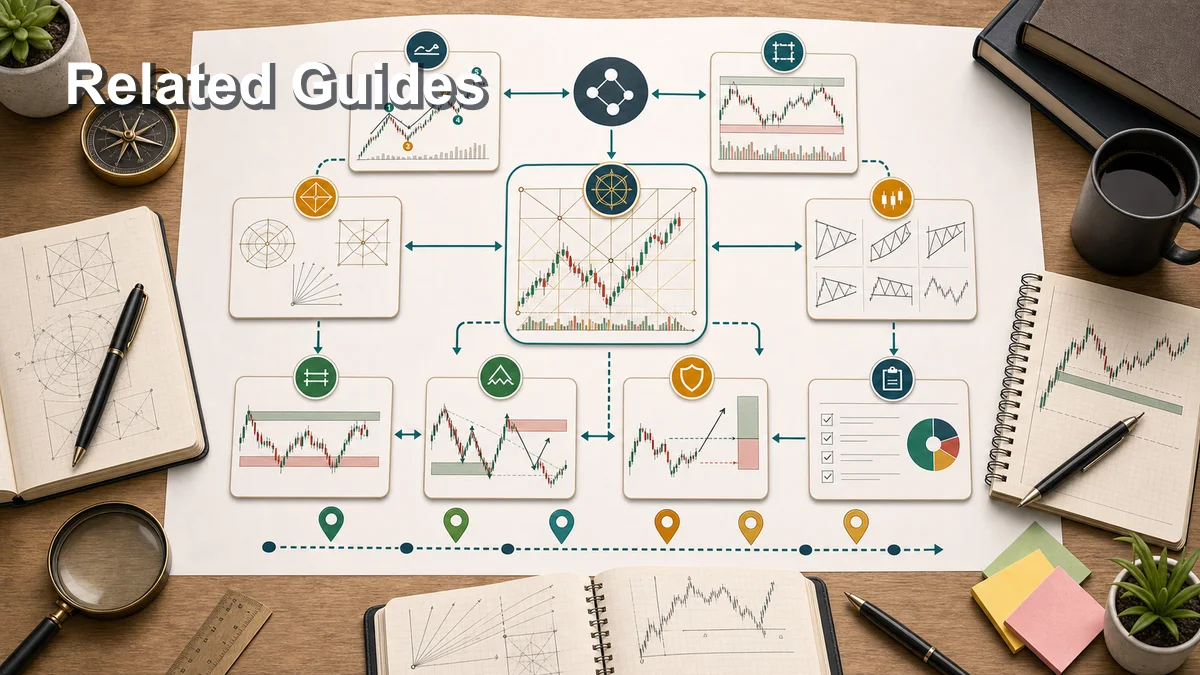
Gann Theory belongs inside the THEORIES hub because it is one of the major technical analysis frameworks traders use to organize market behavior. This article should become the parent guide for future clusters in Gann Theory.
The first related guide to study is Trading Theories: Complete Guide to Technical Analysis Frameworks. It explains how Gann Theory fits beside Dow Theory, Elliott Wave, Wyckoff, price action, chart patterns, and other market frameworks.
Next, study Chart Patterns. Pattern analysis helps you understand swings, breakout structure, failure, and measured movement. Those ideas make Gann angles and geometric levels easier to interpret because price still needs structure.
You should also review Market Structure and Multi-Timeframe Analysis. A Gann tool on a small timeframe becomes more meaningful when it aligns with a higher-timeframe trend, range, support, resistance, or liquidity area.
Future Gann Theory cluster articles can go deeper into Gann angles, Gann fan trading strategy, Gann box explained, Square of Nine trading guide, Gann time cycles, and common Gann Theory mistakes. Each cluster should link back to this pillar so the category develops a clear internal structure.
For beginners, the best path is simple: learn what price-time balance means, practice with one anchor point, use a clean Gann fan or box, check confluence with ordinary structure, wait for confirmation, define invalidation, and journal the result. Gann Theory can be powerful as a planning framework, but it becomes dangerous when traders treat geometry as certainty. Use it to organize decisions, not to remove risk.