


how to read candlesticks A candlestick displays the open, high, low and close for a selected period, with the body showing the open-close distance and wicks showing extremes. Its meaning changes with timeframe, location and surrounding bars; color alone does not identify buyers, sellers or the next direction. The method should be treated as a testable chart-reading framework rather than a forecast. Before using it, define the market condition, confirmation event, invalidation price, transaction costs and maximum risk. This guide explains the rules, a repeatable workflow, common failure modes and the most relevant supporting concepts.
Definition: What Does It Mean to Read Candlesticks?
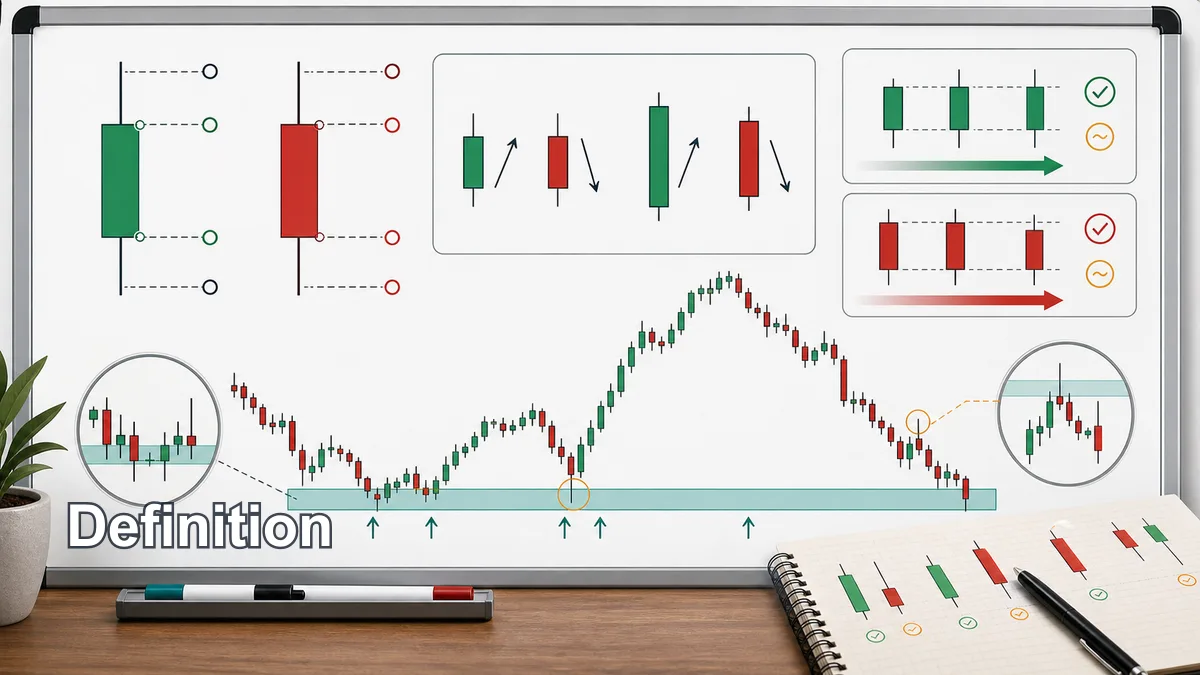
To read candlesticks means to interpret what each candle says about buyer and seller behavior. A candle usually shows the open, high, low, and close for a specific period. The body shows the distance between open and close. The upper wick shows how far price traded above the body. The lower wick shows how far price traded below the body.
A large bullish body suggests buyers closed the period with control. A large bearish body suggests sellers controlled the period. Long wicks show rejection, volatility, or failed attempts to continue. Small bodies show hesitation or balance. When several candles appear together, they can show a shift in pressure, a pause, a trap, or continuation.
Forex and crypto traders use the same candle logic, but market conditions differ. Forex often has session-based liquidity, economic news releases, and spread changes around rollover. Crypto trades continuously, so weekend conditions, exchange liquidity, funding, and sudden volatility can matter. The candle shape is the same, but the environment changes the meaning.
The key is simple: do not read a candle by itself. Read the candle at a location. A bullish rejection candle at support after a clean pullback means more than the same candle in the middle of a choppy range. A bearish engulfing candle near higher-timeframe resistance means more than one that forms after price has already fallen far.
How to Identify Important Candlestick Clues
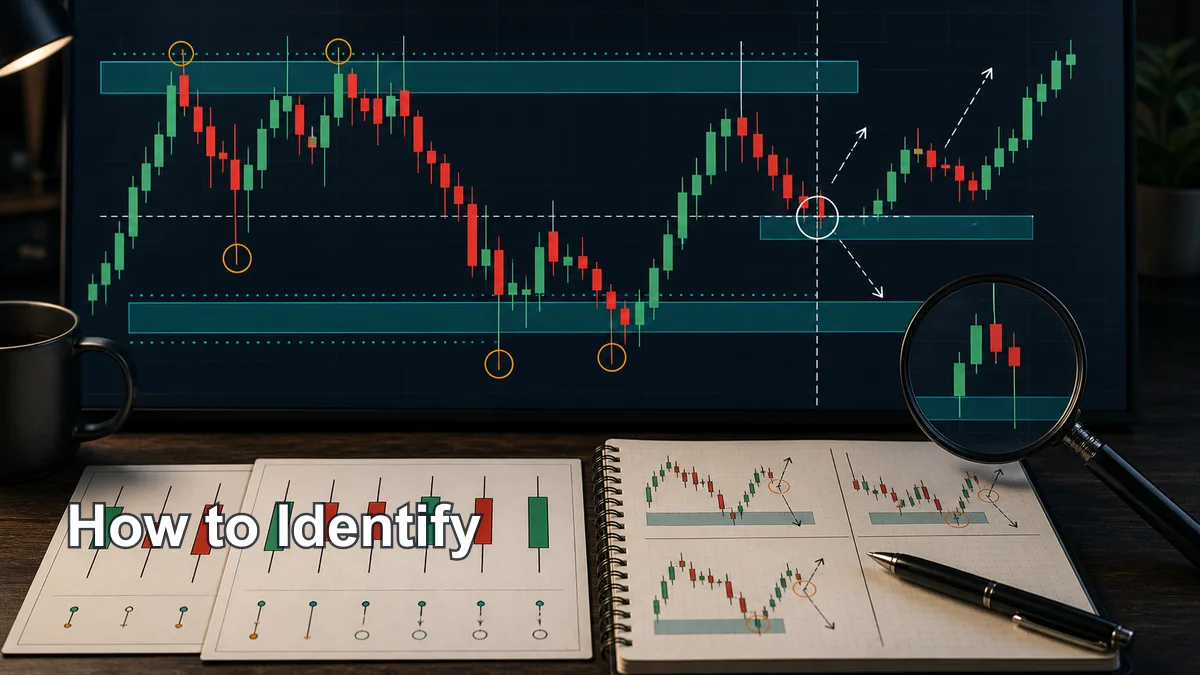
Start with body size. A strong body closing near the candle high often shows bullish pressure. A strong body closing near the candle low often shows bearish pressure. A small body after a fast move can show hesitation or exhaustion, especially near a major level.
Next, study wicks. A long lower wick means price pushed down but closed higher. That can show demand, stop hunting, or rejection of lower prices. A long upper wick means price pushed up but closed lower. That can show supply, profit-taking, or rejection of higher prices. Wicks matter most around support, resistance, previous highs, previous lows, or liquidity areas.
Then check where the candle closes. In fast markets, price may wick through a level and then close back inside the range. That is different from a strong close beyond the level. For both forex and crypto, the close is often more useful than the wick because it shows where the period ended after the battle.
Finally, compare candles to recent structure. Does the candle break a short-term high or low? Does it form after several weak candles? Does it appear at the end of a pullback? Does it show follow-through after a breakout? Important candles usually change the story of the chart.
Why Candlestick Reading Works in Forex and Crypto
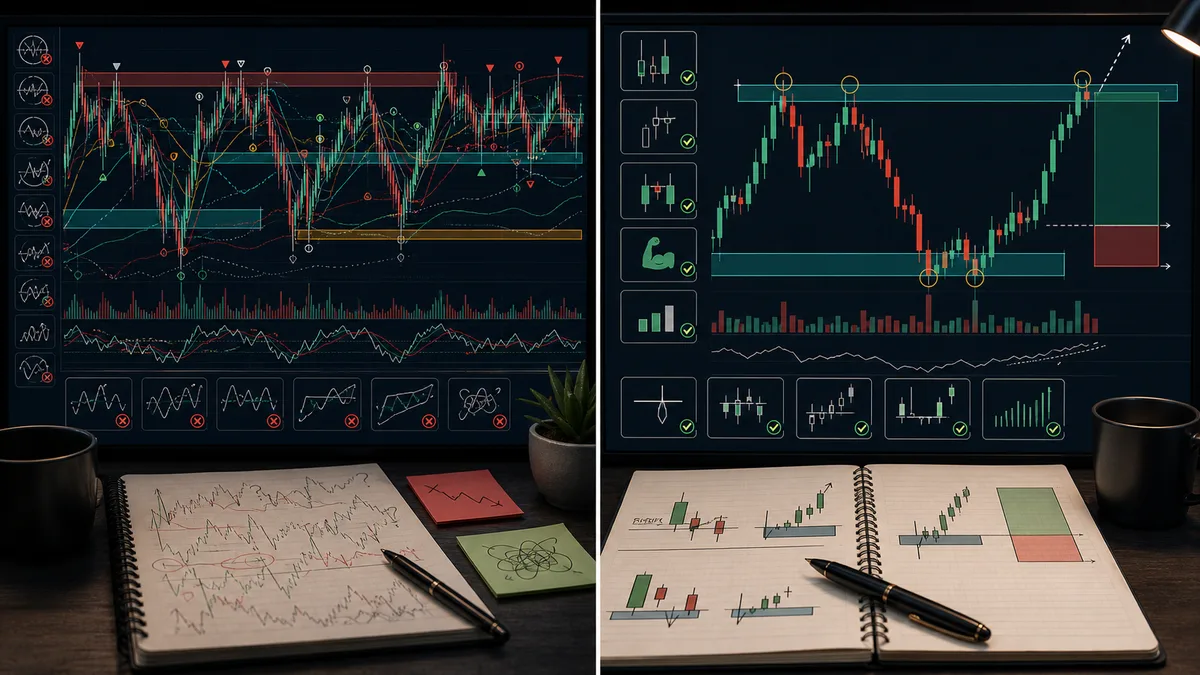
Candlestick reading works because every candle is a summary of a market decision. During the candle, buyers and sellers compete. By the close, the chart shows who made progress, where price was rejected, and whether momentum expanded or stalled. This does not predict the future, but it gives the trader evidence.
In forex, candles can reveal how price behaves around sessions and news. A clean rejection near a previous day high may show that buyers failed to maintain the breakout. A strong close through a session range may show acceptance beyond a level. In crypto, candles can reveal similar behavior, but sudden volatility and thin weekend liquidity can make confirmation even more important.
Candles also help traders avoid indicator overload. Many indicators are based on price data. Candles show the raw behavior first. Indicators can still be useful, but if the candle action is unclear, adding more tools rarely fixes the trade idea.
The best candle reading combines four pieces: location, candle behavior, follow-through, and risk. Location tells you where the market is making a decision. Candle behavior tells you what happened there. Follow-through tells you whether the market agreed. Risk tells you where the idea is wrong.
Step-by-Step Usage: A Candlestick Reading Workflow
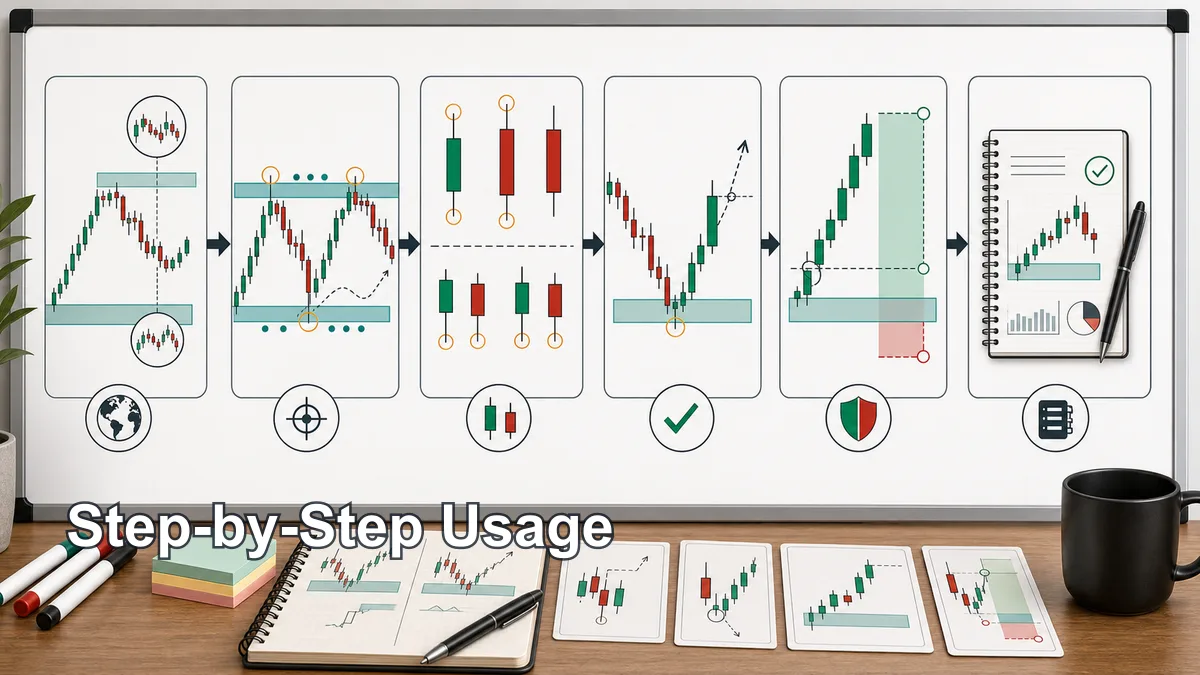
Step one is higher-timeframe context. Before reading the entry candle, decide whether the market is trending, ranging, or reacting from a major level. A five-minute bullish candle can be weak if the one-hour chart is directly under resistance.
Step two is location. Mark support, resistance, previous highs, previous lows, range boundaries, and higher-timeframe zones. If price is not near a meaningful area, the candle pattern may not deserve attention.
Step three is candle behavior. Ask what price tried to do and how the market responded. Did price reject the level? Did it close strongly beyond it? Did it form a small body after a large move? Did it engulf the previous candle? The behavior matters more than the pattern name.
Step four is confirmation. Confirmation can be a follow-through candle, a break of a minor high or low, a retest, or a close beyond a decision area. Beginners often benefit from waiting for confirmation because it reduces impulsive entries.
Step five is risk and target. Define invalidation before entry. If a bullish candle depends on support holding, a clean break below support can invalidate the idea. If a bearish candle depends on resistance holding, acceptance above resistance can invalidate it. Step six is review. Save examples and compare which candle signals worked in forex, which worked in crypto, and which failed.
Confirmation Rules Before Trading a Candle
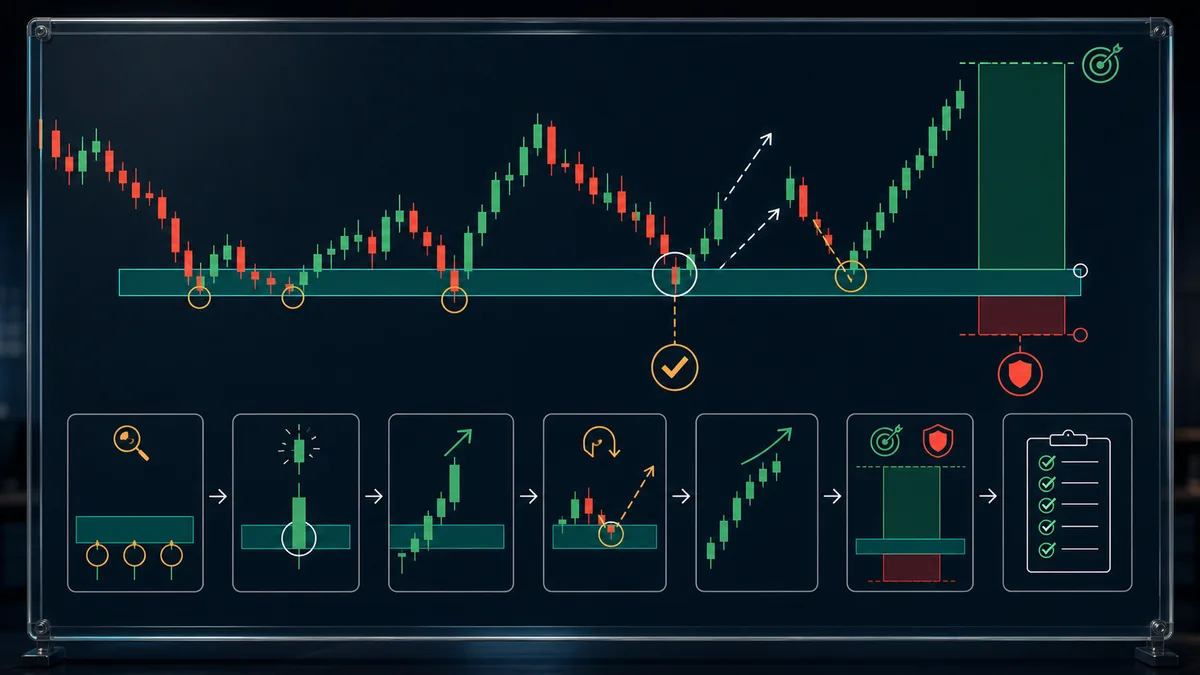
The first rule is level quality. A candle signal at a clean higher-timeframe level is usually stronger than one in the middle of noise. The second rule is close quality. A candle that closes with intent is stronger than a candle that only creates a dramatic wick and then loses direction.
The third rule is follow-through. If a bullish rejection forms but the next candles cannot move higher, the signal is weak. If a bearish rejection forms but price immediately reclaims the level, the short idea weakens. Follow-through does not guarantee success, but it shows whether other participants are supporting the candle.
The fourth rule is structure. A candle that breaks a minor swing point can matter more than a candle that only looks attractive. The fifth rule is target space. A long setup directly under resistance may not be worth taking even if the candle looks bullish. A short setup directly above support can have the same problem.
The sixth rule is execution quality. Spreads and order behavior matter, especially in fast markets. Investor.gov explains that market orders guarantee execution but not execution price. That matters when a candle moves quickly and the trader enters late.
Examples of Candlestick Reading
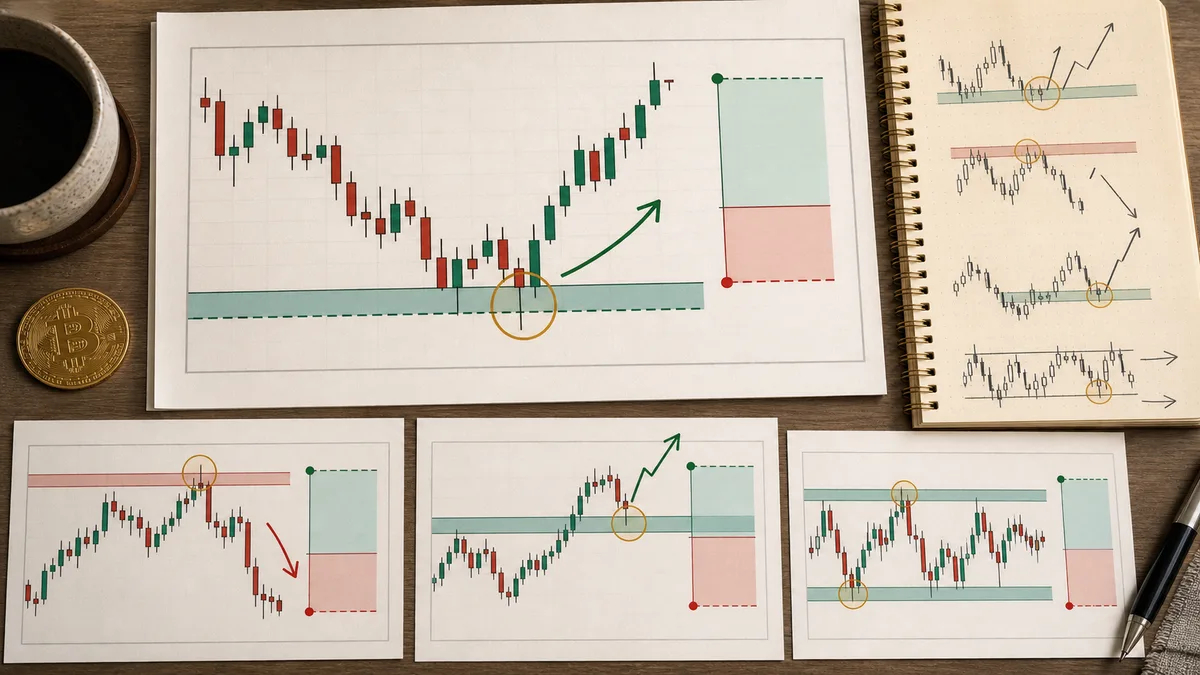
Example one: a forex pair pulls back into a previous resistance zone that may now act as support. A candle forms with a long lower wick and closes near the high. This suggests lower prices were rejected. If the next candle breaks above the rejection candle, a long idea may form with invalidation below the wick or below the zone.
Example two: a crypto chart rallies into a major resistance level after several strong bullish candles. A candle forms with a long upper wick and closes back below resistance. This shows buyers pushed higher but could not hold. If the next candles break a minor low, a bearish reaction idea may form.
Example three: price breaks above a range high with a large green candle. A beginner may want to buy immediately. A more patient trader waits for a retest. If the broken high holds and a smaller bullish candle forms, the trade has cleaner invalidation than a chase entry.
Example four: price forms a bullish engulfing candle in the middle of a choppy range. The candle looks strong, but there is resistance nearby and no higher-timeframe support. This is a weaker example. The candle shape is not enough without location and target space.
Example five: during a volatile crypto weekend, a candle wicks through both sides of a small range and closes near the middle. That candle may show noise rather than useful information. Sometimes the best reading is to stand aside until the next clean close.
Common Mistakes When Reading Candlesticks
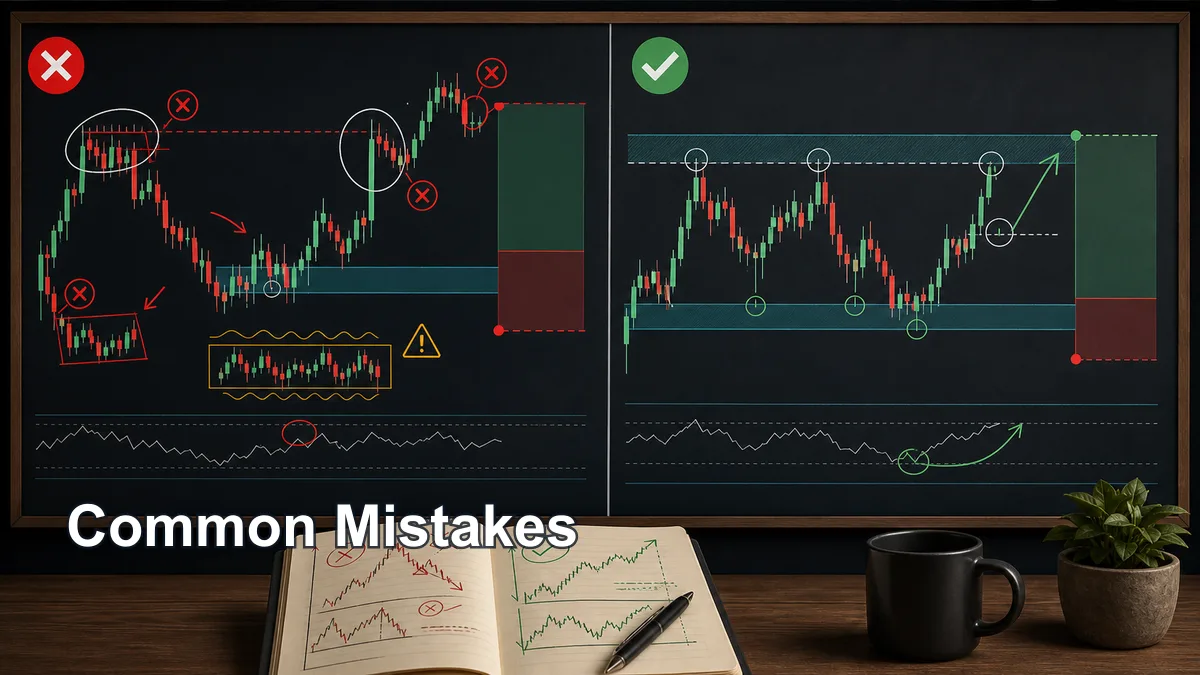
The first mistake is memorizing names without understanding behavior. A hammer, engulfing candle, doji, or inside bar is only useful if you know what the market tried to do and where it happened. Pattern names are shortcuts, not trade plans.
The second mistake is ignoring higher-timeframe context. A bullish candle on a small crypto chart may be forming directly under daily resistance. A bearish candle on a small forex chart may be forming directly above a major support zone. Context decides whether the candle deserves attention.
The third mistake is entering too late after a large candle. A big candle can show strength, but it can also mean the easy part of the move has already happened. If the stop is too wide and the next obstacle is close, the trade may be poor even if the candle looks powerful.
The fourth mistake is ignoring spread and volatility. Forex spreads can widen around rollover or news. Crypto can move sharply during thin liquidity periods. A candle setup that looks clean historically can be difficult to execute live.
The fifth mistake is skipping invalidation. Every candle idea should have a point where it is wrong. Read the candle, check the level, wait for confirmation, define risk, and journal the result. That is how candle reading becomes a skill instead of guesswork.
Key takeaways
- A candlestick displays the open, high, low and close for a selected period, with the body showing the open-close distance and wicks showing extremes.
- Its meaning changes with timeframe, location and surrounding bars; color alone does not identify buyers, sellers or the next direction.
- Read candle range and close location first, then compare the bar with structure and volatility.
- A valid plan separates location, trigger, invalidation, position size and exit logic.
A validation workflow you can reproduce
- Define the sample: choose the market, timeframe, session and date range before reviewing outcomes.
- Write the rule: Read candle range and close location first, then compare the bar with structure and volatility.
- Record invalidation: identify the observable price event that disproves the setup.
- Include execution costs: account for spread, commission and slippage where relevant.
- Validate separately: test the finished rule on data that was not used to create it.
When this concept is unreliable
Candlestick interpretation becomes unreliable when a single bar is detached from context or lower-timeframe noise is treated as a major signal. Keep failed and skipped examples in the journal so the review is not limited to attractive winners.
Use this concept within a complete analysis
This method should remain connected to its parent framework and adjacent decision steps. Use Candlestick Patterns: Complete Guide for Traders, Bullish Candlestick Patterns Every Trader Should Know, Chart Patterns: Complete Guide for Traders, Classic Chart Patterns Cheat Sheet, Price Action Trading: Structure, Setups and Risk and Market Structure: Complete Guide for Traders to compare definitions, establish context and avoid treating one signal as a complete trading system.
References and methodology
- CME Group — Technical Analysis
- CFTC — Eight Things to Know Before Trading Forex
- CME Group — Chart Types: Candlestick, Line and Bar
- CME Group — Technical Patterns: Reversals
Practise before considering real capital
Use historical charts or a demo account to test the written rules before considering live execution. Review the XM account and demo information. Availability, protections and trading conditions depend on jurisdiction, so review the applicable legal documents yourself.
Affiliate disclosure: Học Làm Trader may receive a commission if you open an account through this link, at no additional cost to you. This relationship does not determine the educational conclusions.
Risk warning: This article is for education and general information only. It is not investment advice, a trade signal or an invitation to trade. Trading can result in loss of capital, and past examples do not guarantee future results. Assess your own circumstances and risk tolerance.
A long upper shadow has different meaning depending on body location and context. The Gravestone Doji lesson shows how OHLC structure, resistance and a confirmed close fit together.